Inside/Outside State College is a regular column by Jeff Deitrich offering views on downtown and the outdoors within a 30-minute driving distance.
I started writing this column on March 3. That’s the fifth anniversary of the day my dad died from cancer.
My dad taught me to fish when I was a small boy, out the lane from my grandparent’s house on Little Fishing Creek between Mingoville and Hublersburg. Often my two brothers, several cousins and a couple of uncles were there, too, fishing down at the Sinkhole or at the Big Hole just below the bridge on their lane. The Big Hole had been carved out deep by Hurricane Agnes in 1972 with a waterfall undercutting old-willow-lined banks that held trout straight below your feet.
For some completely unfathomable reason, I loved it innately more than my siblings or my cousins, and it stuck with me for life.
Dad and I shared countless hours on the stream together, and countless more either alone or with other friends pursuing trout. I say countless, but I’ve actually counted all of them ever since I was a teenager, along with every trout I’ve caught. It was a passion I shared with my dad.
We still went fishing even while he was ill during that sad COVID shutdown year, and he caught trout each time – including two on Wallace Run from the last hole he ever fished. As the months passed and his health deteriorated before my eyes, I read to him many stories from our fishing adventures that I had logged over the years. Eventually his mind failed, and he often didn’t seem to know what was going on. During one such time, I looked him in the eye and said, “We had a lot of fun trout fishing, didn’t we, Dad?”
His eyes cleared, and he knew where he was. “We sure did,” he said, and smiled. They were the last lucid words he ever said to me. I am so grateful for them.
I miss him terribly and the adventures we shared finding new streams in the back of beyond all over central Pennsylvania. I probably miss him even more since I have no children of my own to share fishing with.
My dad and trout fishing filled my soul. There is one hole there now from which no trout can be caught. But there is also another pool filled with memories that I expect I will cherish with my final lucid thoughts many years from now—and more time for me to make new memories.
This season, we can all make new memories beginning with opening day for everyone on April 4. The mentored youth day is a week earlier, March 28. I hope you take the time to share the experience with a friend or a child this year – or even on your own. You’ll find a guide to all of the best streams within a very loose 20 minutes or so of State College below. There are more than 50 to choose from! I don’t know of a guide this comprehensive anywhere else.
I must say that it’s a tad unfortunate that the image many people have of trout fishing is of opening days where too many fishermen line the stream banks. That’s not the image in my soul. Those of us who pursue the sport throughout the entire year seek open stretches of water with no competition—just one person, perhaps with a friend, surrounded by nature, pitting skill, knowledge and a thread of line against the instincts and athleticism of a fish.
Many of the greatest moments that I’ve experienced have come in solitude, yet they were made greater still by sharing them later with my father and other fishermen.
The incessant impulse to go fishing doesn’t resonate with everyone, but for those who fall under its spell, it can transcend life. For some, like me, their greatest passion becomes fishing. It doesn’t matter whether you’re a spinner fisherman, like me, or a fly fisherman, or if you love using worms, minnows and any other form of bait—or even what you are fishing for.
We each have our rhythms.
We each must be patient.
We each enjoy our natural surroundings—the sounds of the water, the smell of decaying and burgeoning foliage and flowers, the sight of a fawn curled up in the nearby grass, not moving a muscle.
And, yes, we all enjoy the pure thrill and adrenaline rush of a trout taking our spinner, our fly, our bait. Most of us also enjoy the taste of our catch, whether grilled, baked or fried. It’s nice to have a hobby that turns into dinner when you get home.
Trout fishing can be something fully engaging—something simultaneously soothing and exciting that we know we can lose ourselves in and be passionate about without pain or fear or guilt.
We rise before dawn to be the first on the stream. We’re there in the middle of a downpour, convinced that our persistence will be rewarded with more trout than the next guy. Usually it is. Some of us plan our vacation time around trout fishing.
It feels tremendously satisfying to be absorbed in the moment—to watch that trout follow a spinner from the depths of a hole 40 feet away, strike it twice and miss, and then take it just three feet from the end of the rod—to experience anticipation, a tense thrill, the possibility of failure and then the joy of success all within a few moments in time.
Perhaps that combination of feelings so intertwined in such a short time is my elixir.
It seems to me that trout fishermen all share these feelings to some degree. They feel the compulsion to drink that elixir. They share a love of and respect for our natural environment. And they share a basic love of life and of themselves that enables them to spend hours alone, or “with a friend” but fishing separately, and return home feeling as though they’ve had the best times of their lives.
It is a feeling I wish for all of you this fishing season.
Jeff Deitrich is the author of the how-to book, Spinner Fishing for Trout, and a memoir, Our Paradise, about his childhood fishing adventures, along with many outdoor magazine articles on trout fishing.
PA FISH & BOAT COMMISSION STOCKED STREAMS
Full list of stocked streams can be found here.
Bald Eagle Creek (Flows toward Sayer’s Dam) – The most heavily stocked stream in the area, it is the easiest place to find a stocked trout all the way from well southwest of Port Matilda to Sayer’s Dam. For the upstream section, go west on Route 322/I-99. For the lower section, take I-99 north, then Route 144 through Bellefonte and on to Milesburg. Wide enough to form some massive holes, trout can hold here through the summer, though the lower end toward Milesburg often gets so warm that trout move upstream to its tributaries.
From the confluence of Spring Creek at Milesburg down to Sayers Dam, the stream stays at a far more stable temperature and holds many large trout in very sizable water. It’s more like a larger continuation of Spring Creek than of Bald Eagle in this section.
Bald Eagle Creek (Flows toward Tyrone) – A lot of people don’t recognize that we have a second Bald Eagle Creek in the same valley. From northeast of the town of Bald Eagle downstream to Tyrone, this stream offers good fishing in mostly forested land upstream from the Old Route 220 Bridge, sometimes behind several businesses, like the section off Enterprise Drive behind the Smith T Warehouse. Downstream it passes more houses and businesses along the railroad tracks into town.
Black Moshannon Creek and Lake – Some of the most remote fishing in our area is well downstream of the dam, including a very long stretch with no road access surrounding the confluence with Benner Run. See below for its special regulations section. Its lake is one of the only stocked lakes near town, along with…
Cold Stream Lake – Cold Stream flows into its lake on the outskirts of Philipsburg, which you can see from Route 322. The lake and surroundings are mostly open and especially good for kids.
Honey Creek – Both Honey and Kish Creek (below) join unstocked Tea Creek near Reedsville. Honey and its tributaries, Treaster Run and Havice Creek, are generally calm valley streams flowing through both woods and meadows.
Kishacoquillas Creek – Running through much of Big Valley and Amish country around Belleville, Kish Creek is mostly gentle until entering the narrows below Reedsville. That section along Route 322 is the most popular among anglers, but venturing off the beaten path is a great idea.
Laurel Run (Whipple Lake) – Both upstream and downstream from the dam offer good stocked fishing. The water is a bit slower and meandering upstream and a bit faster downstream. Note that on Whipple Lake, normal trout regulations apply, but all other fish are catch-and-release and may not be killed or had in possession.
Little Fishing Creek – Stocked downstream from Hublersburg, the water is often slow and off-color from passing through many muddy cow pastures. Lots of springs keep the water relatively cool through the summer.
Marsh Creek – Flowing primarily through fields north of Howard, this stream is good in the spring but warms significantly in the summer.
Penns Creek – Stocked through its upper reaches soon after flowing out of Penn’s Cave, it passes houses and fields en route to Coburn, where it turns south and cuts through Seven Mountains. This section grows more and more remote, but that doesn’t stop fishermen from pursuing its many incredible trout. Wading can be difficult in this broad, limestone-fed stream, but the trout are worth it! See the note on its special regulations section below.
Seven Mountains Boy Scout Pond – Boy, I had a lot of fun fishing here as a kid. PFBC just added this pond back onto its stocking schedule this year. It’s pretty easy to get to just a short distance off Route 322 onto Sand Mountain Road. Great for young kids!
Shaver’s Creek – Flows into and out of Lake Perez at Stone Valley Recreation Area. It is stocked downstream from the lake and there is a relatively open meadow stream.
Sinking Creek – Flows out of Colyer Lake and then gently through woods and farmland en route to its confluence with Penns Creek at Spring Mills.
Sixmile Run – Stocked from just upstream of Route 504 all the way to the mouth at Moshannon Creek. This is a fast-flowing forested stream in this section with a great deal of overhanging brush and rhododendron.
South Fork of Beech Creek – One of the most placid streams around, its trout are often wary in the crystal-clear, slow-moving water. It is stocked primarily off the Snow Shoe exit of I-80. Beaver dams frequently turn up at different locations on this stream.
Wallace Run – Stocked only during the pre-season, this stream runs past many houses and businesses between Gum Stump and its mouth on Bald Eagle Creek near Wingate. In some sections the stream has had its banks contained and so takes a straight path, tumbling over rocks with few large holes. Upstream from Gum Stump, it is a good wild trout stream.
BALD EAGLE SPORTSMEN’S CLUB STOCKED STREAMS
This club does a great job of supplementing the state’s stocking, including a good number of trophy-sized fish. Become a member at baldeaglesportsmens.club, and be aware that they hold an annual Bald Eagle Creek Trout Tournament, April 11 & 12 this year, and another called Big Boys Backyard, in its 11th year, on May 16 especially for trophy trout.
Bald Eagle Creek (Flows toward Sayer’s Dam) – The Club focuses its stocking on the upper stretches both upstream and downstream of Port Matilda.
Bald Eagle Creek (Flows toward Tyrone) – The section off Enterprise Drive behind the Smith T Warehouse gets a lot of trout and a lot of fishermen just after a stocking. As with most streams, try it again a few weeks later, especially after a good, warm rain.
Bell Hollow Run (aka Sparrow Run) – Outdoor writer Mark Nale’s home water, this stream saw significant flow control barriers built into it just upstream from the mouth just a few years ago.
Big Fill Run – The Club’s headquarters and cooperative trout nursery is along Big Fill Run. This is a tumble-down mountain run for most of its length.
California Hollow Run – This run is in many ways the start of the smaller Bald Eagle Creek and is stocked near and upstream from where it crosses Old Route 220.
Dick’s Run – Just southwest of Unionville, this tiny meadow stream can hold a surprising number of quality trout.
Halfmoon Creek – Flowing gently from the Scotia Barrens to its confluence with Spruce Creek, this stream offers enjoyable fishing close to town.
Laurel Run (Flatrock) – This fast-moving stream flows into Port Matilda and is stocked a short distance upstream.
Reese Hollow Run – A short distance southwest of Port Matilda, this is a small stream with some good undercut banks as it winds through the last half mile before joining Bald Eagle Creek.
Wallace Run – The Club supplements PFBC’s stocking with additional trout on Wallace Run between Gum Stump and the mouth.
Van Scoyoc Run – This is a nice laurel- and rhododendron-ringed stream that tumbles off the mountain into Bald Eagle Valley.
SPECIAL REGULATIONS WATERS
These waters are open year-round; you don’t need to wait for opening day of trout season. They do, however, have regulations regarding when/if you can keep any trout, and what you can use to fish for them.
Black Moshannon Creek – About a mile below the outflow of the dam, there is a 1.3-mile stretch designated Delayed Harvest, Artificial Lures Only that begins about a mile downstream from the lake and goes 0.3 miles past the Huckleberry Road Bridge. Trout may be kept only after June 15 through Labor Day, and the minimum size is nine inches. No live bait may be used.
Lick Run – This stream flows only a short distance through the borough of Howard and into Sayers Dam. It is designated as a Trophy Trout water, though in my 50+ years of fishing, I have never seen a trout larger than the 14 inches required to keep one. It is one of only three streams in the state with this specific designation. Still, it’s a good, though tiny, native brown trout stream.
Penns Creek – The stretch of Penns Creek from its confluence with Elk Creek nearly 7 miles downstream is designated as an All Tackle Slot Limit section, meaning that it is open to fishing year-round, but you are limited in what you can keep by size and date. Trout may only be kept from opening day to Labor Day and must be 7-12 inches long, and the limit is two per day. No trout larger or smaller may be kept.
The section between the bridge on Route 45 in Spring Mills and the confluence with Elk Creek below Milheim has a no-kill regulation for brown trout. Another oddity is the legal season. Trout may be taken between 8 a.m. on opening day through midnight starting the third Monday in February, and no trout species of any kind may be kept/killed after Labor Day. All other trout species have normal regulations during the legal dates from opening day to Labor Day.
This same regulation applies to Kishacoquillas Creek from 1.5 miles above the confluence with Tea Creek downstream to the Penn Central Railroad bridge.
Spring Creek – The entire length of Spring Creek is designated as a Catch-and-Release-Only, Artificial Lures Only water, except for the Fisherman’s Paradise stretch, which is Fly Fishing Only. It is catch-and-release due to kepone poisoning. In spite of that, it is one of the area’s most productive and easily accessible trout streams and holds many very large, but wily, trout!
Spruce Creek – The two public sections of this stream are both regulated as catch-and-release, artificial lures only. Those sections include the 0.49 mile stretch at the Penn State Experimental Fisheries Area, about 0.60 mile above the village of Spruce Creek, and the 0.15 mile PFBC property at Indian Caverns near Franklinville.
FAMOUS STREAMS
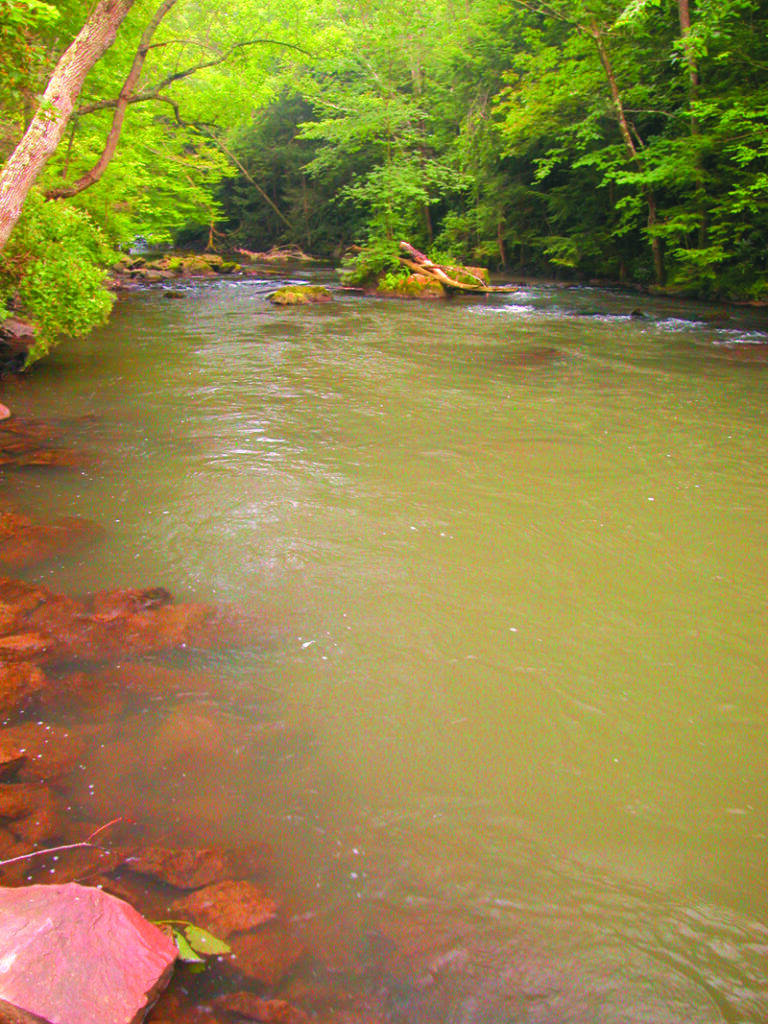
We are blessed with some of the finest limestone trout streams in all of the United States surrounding State College. Penn’s Creek has been called the “Best Trout Stream in the East” by Field & Stream magazine on more than one occasion, and it might not even be the best one. Past presidents, like Eisenhower and Carter, preferred Spruce Creek, though you’ll need to buy the privilege or know someone well to fish all but a 0.6-mile section that is public.
Fishing Creek – Just across the county line into Clinton County, this one is a bit farther away than 20 minutes, but it is also where State College fly fishing legend and all-around great guy Joe Humphries caught his then-state-record brown trout. The Narrows section upstream of Route 64 is Trophy Trout water – trout must be at least 14 inches to be kept.
Little Juniata River – This has tremendous numbers of healthy trout throughout, including upriver past Tyrone, but the most famous section is in The Narrows along Route 22 downriver. That is the stretch where fishermen bring home trophies. Just below the narrows at Ironville, PFBC regulations become catch-and-release, all tackle permitted all the way to its mouth below Huntingdon.
Penn’s Creek – Everyone loves the Green Drake Hatch, usually around the end of May, but the timing can vary! A great way to get to the middle section below Coburn fast is through the old railroad tunnel under the mountain.
Spring Creek – The entire length of this stream is open year-round, and the local Trout Unlimited Spring Creek Chapter has counted some of the highest quantities of fish per hectare in the section between Shiloh Road and Fisherman’s Paradise. Spring Creek has been a renowned trout fishing stream for two centuries by now. Perhaps its zenith came about 100 years ago when photos showed anglers literally shoulder to shoulder on opening day. Spring Creek is full of many long, mossy growths, so it lends itself well to fly fishing and far less so to spinner fishing.
Spruce Creek – If you become very wealthy or an exceptional fly fisherman, then you might have a slim chance to join the Spruce Creek Rod & Gun Club and fish their amazing water. I was fortunate enough to do so once with the late author Charlie Meck, who used to teach the PSU fly fishing course. Less than three hours later, my right arm was tired from the fifteen horses I lassoed. Charlie sidled up to me as I was about to join him for lunch at the clubhouse and said, “We’re gonna stock 300 trout through here tomorrow.” I replied, “Good grief, why?!?” It was already fantastically spectacular! The rest of us have to pay for the privilege to fish on private property or try our luck in the two public stretches noted above.
WILD TROUT STREAMS
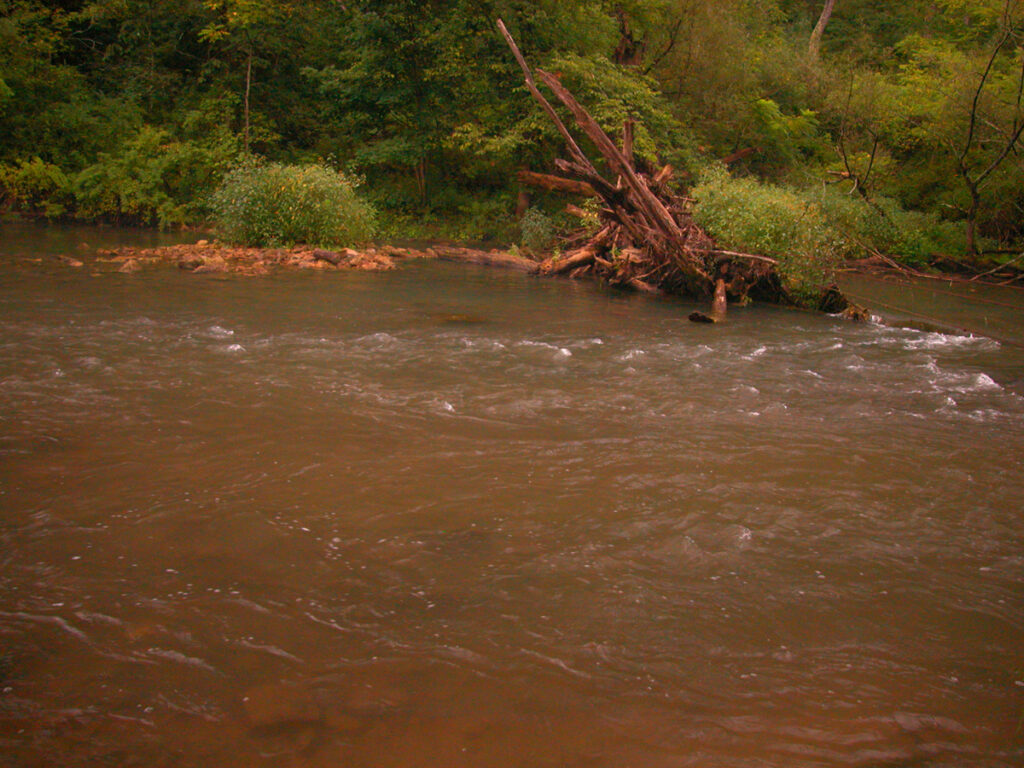
There are so many tiny, good streams in our area. Scores of small, unstocked streams reproduce trout on their own. While most of the fish are small, they are fantastic for young explorers and are indeed the stuff of memories!
Off Bald Eagle Creek
Bald Eagle takes in one small unstocked stream after another from the north that have very small watersheds and are quite tiny by trout fishing standards. Steel Hollow Run is the notable exception, but it is quite small as well. Given their sizes, most rarely produce a trout as long as nine inches, but it’s a fantastic surprise when they do!
Port Matilda to Unionville
Laurel Run
Mudlick Run
Steel Hollow Run
Sunnyside Hollow Run
Unionville to Wingate
Brower Hollow Run
Bush Hollow Run
Dewitt Run
Wingate to Sayer’s Dam
Antis Run
Bullit Run
Holt Hollow Run
Moose Run
Nittany Creek – I’ll make a special note for this one, the only stream to join Bald Eagle from the south other than Spring Creek. This difficult, tiny gem flows through the gap that I-80 crosses between the Bellefonte and Milesburg exits. Then it meets Bald Eagle at Curtin Village. It can be exasperating to fish with lots of multiflora rose buses that sometimes encase entire holes, but there is a very healthy population of wild brown trout.
Off Spring Creek
Buffalo Run – One of many overlooked trout streams nearby, this small stream follows Route 550 on the State College side of Bald Eagle Mountain from past Route 322 below Skytop all the way to Bellefonte. It switches between a pasture stream and a forested stream and sometimes passes by houses, businesses and quarries, and it finally flows into Spring Creek just across the stream from Tussey Mountain Outfitters. It has no significant tributaries and stays relatively small despite its length.
Cedar Run – Flows into Spring Creek near Linden Hall from the Penns Valley side of Mount Nittany. Much of this is private property, so access is very limited. I’ve never had the pleasure but have heard stories about some surprisingly nice-sized fish there.
Logan Branch of Spring Creek – This used to be stocked heavily into the 1980s, but now it has a healthy population of its own without stocking. Running alongside Route 144 between the Pleasant Gap hatchery and its confluence with Spring Creek near the Match Factory in Bellefonte, its cloudy, spring-fed waters move at a good clip. The moss-laden streambed provides its own challenges, as does fishing alongside the open-air seating at Axemann Brewing.
Slab Cabin Run – This is truly State College’s stream. It takes a surprisingly circuitous route right through many parts of town. Beginning as a mountain stream along Route 26 on Pine Grove Mountain, it splashes down quickly into the valley, where it sinks just below Pine Grove Mills only to bubble up as a spring about half a mile farther along. From there it flows along the valley floor at a much gentler pace through cow pastures, past the borough’s water authority, across South Atherton Street below the Hill’s Plaza, then through the golf course at Centre Hills Country Club, where it dresses up a number of holes nicely along Branch Road. From there it follows Branch Road a short way and then turns to follow the Mount Nittany Expressway/Route 322 to Slab Cabin Park. Then it cheers the patrons of Voodoo Brewing as they sit and sip outside along the bike path between Puddintown Road and Boalsburg. Crossing Route 26 again as East College Avenue this time, it then winds into the fen at Millbrook Marsh Nature Center, where it joins Thompson Run (itself the subject of many stream improvement efforts by local anglers and conservationists). After Millbrook, it crosses under Route 322 along the bike path and then immediately crosses Puddintown Road, where it joins Spring Creek a short distance downstream.
Trout can be had along Slab Cabin’s entire length. I’ve caught trout as large as 17 inches near Pine Grove Mills. However, the best fishing and most substantial water is from Millbrook down to the confluence. Many wild brown trout live in this stretch. Naturally, it is the quickest stream to reach from virtually any State College location, but beware. These wily natives spook easily even in Slab Cabin’s usually-cloudy water.
Off Penns Creek
Elk Creek – Namesake of the Elk Creek Café & Aleworks in Milheim, this limestone stream tumbles through the narrows before entering town. It offers challenging fast-water fishing and some long, murky pools for native brown trout.
Laurel Run – You may realize that Laurel Run is the most common name for a stream in Pennsylvania, partly why mountain laurel is our state flower. This one comes off the mountain fast and joins Muddy Creek below in Georges Valley before they connect with Penn’s Creek.
Muddy Creek – As you can tell by its name, this stream muddies easily from the farms and pastures in Georges Valley, but it has fun fishing.
Potters Creek – This is the stream that tumbles off Seven Mountains on the northern side and runs through Potters Mills before joining Sinking Creek just east of Route 144 and just west of Egg Hill. It is mostly fast flowing until reaching the valley floor at Potters Mills.
Other
Laurel Run – This version of Laurel Run flows into the Lewistown Reservoir that you see coming down off Seven Mountains on Route 322. It can be challenging to find a good access point, which often leads to a lengthy walk in to the stream, but fishing with no competition for wild trout can be worth it!
Lingle Creek – Another one that is difficult to access, this stream joins Laurel Run after passing all but the seventh of the Seven Mountains. You must take the Milroy exit and work your way back north to Mount Pleasant to find Lingle Creek Road. Like many streams, it was stocked by the state years ago but is now a wild trout fishery.
Little Fishing Creek – From Mingoville upstream through Greensvalley, this is a great place for native brook trout. The fish are small, but often extremely eager.
Roaring Run – This stream joins Little Fishing Creek just before they both meet Fishing Creek in Lamar. It runs from a gap that leads to Krislund Camp along Route 445, Madisonburg Mountain Road.
The wild trout streams above are all listed on the original Professor Higbee’s Streams of Pennsylvania map. However, many other tiny streams and springs hold trout, too, sometimes all summer long.
Go get ‘em!