A few weeks ago my wife and I paid a visit to Jody Whipple, a local registered dietitian/nutritionist and the co-owner of Strategic Orthopaedics. Our visit was prompted by my recent heart issue; our desire to get a handle on the what, why and how of my lifestyle; and to explore if there were changes that should be made to minimize, or better yet, eliminate, the chance of any future heart issues.
One of the questions Jody asked me while we were there was, “How are you sleeping?” A simple, straightforward question that then took me about five minutes to answer. I felt compelled to provide context for the length of time I currently slept compared to the recent past and the not-so-recent past. I explained the methods I used to adjust my sleep. I mentioned how my sleep was affected by different things I ate and drank, medicines I took and where I slept. I gave details about the sleeping positions I might go through each night.
At one point I noticed my wife looking at me so I stopped my explanations. Later on our way home she remarked, “When Jody asked you how you slept, if it was me I would have said, ‘Not well.’”
That’s the thing with people like me: we have the need to be specific. It’s not that we prefer to use 50 words when two would do, or that we’re striving to be loquacious. And the more general the question, the more detailed our answer, because we have to cover all the possible bases so that we’re not providing bad information.
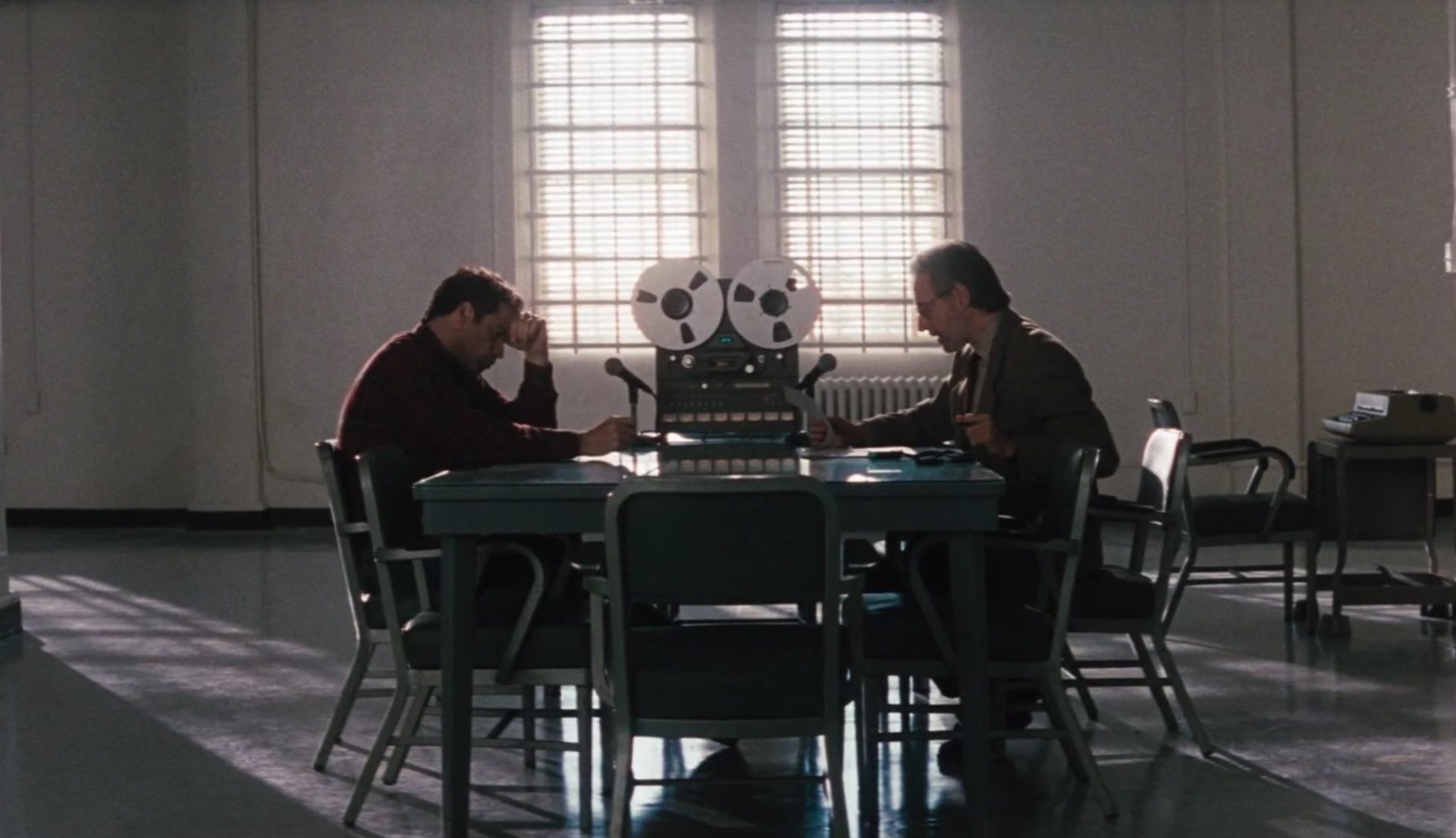
My favorite way of describing this trait to people is to use dialogue from the 1996 movie “Phenomenon.” It stars John Travolta as George Malley, a fictional auto repair-shop owner in a small California town who has a brain tumor that, rather than causing brain dysfunction, instead stimulates brain activity. In one scene he’s being tested by a doctor who is asking him questions. The doctor’s first question is for George to name as many mammals as he can in 60 seconds. George lists them alphabetically and includes slang names, breed names, mythical names and prehistoric names, and when finished points out to the doctor he wasn’t being very specific. The doctor promises to be more specific with the next question and the following dialogue ensues:
Dr. Bob Niedorf: Answer as quickly as you can… how old is a person born in 1928?
George Malley: Man or a woman?
Dr. Bob Niedorf: Why?
George Malley: Specifics, Bob.
Dr. Bob Niedorf: Okay, one more time. How old is a MAN born in 1928?
George Malley: Still alive?
Dr. Bob Niedorf: If a man is born in 1928, and he’s still alive, how old is he?
George Malley: What month?
Dr. Bob Niedorf: If a man was born October 3rd, 1928, and he’s still alive, how old is he?
George Malley: What time?
Dr. Bob Niedorf: 10 o’clock… p.m.!
George Malley: Where?
Dr. Bob Niedorf: Anywhere!
George Malley: Well, let’s get specific, Bob! I mean, if the guy’s still alive, born in California, October 3rd, 1928, 10 p.m., he’s 67 years, 9 months, 22 days, 14 hours and 12 minutes. If he was born in New York, he’s 3 hours older, now isn’t he?
The doctor in this scene finds the questioning process frustrating and irritating, but by the end does appear to realize the vagueness inherent in his questions and the rationality behind the answers he received. And although I’m nowhere near as detail-oriented as the character in this movie, I’ve always found this give-and-take amusing and a perfect example for those who ask me general open-ended questions and then wonder why I provided a book in response. It’s just the way my brain works.
This is a trait I’ve been reminded of by many people at many times in my life. Which is why I found a recent Penn State statement interesting in its specific non-specificity.
About two weeks ago, emails and social media posts from friends of mine who work at Penn State were accompanied by this language:
The Pennsylvania State University campuses are located on the original homelands of the Erie, Haudenosaunee (Seneca, Cayuga, Onondaga, Oneida, Mohawk, and Tuscarora), Lenape (Delaware Nation, Delaware Tribe, Stockbridge-Munsee), Shawnee (Absentee, Eastern, and Oklahoma), Susquehannock, and Wahzhazhe (Osage) Nations. As a land grant institution, we acknowledge and honor the traditional caretakers of these lands and strive to understand and model their responsible stewardship. We also acknowledge the longer history of these lands and our place in that history.
At first I wondered if this was a new university-wide requirement to be appended to all communications. A little investigation uncovered that it was a formal institutional statement that my friends were using to honor National Native American Heritage Month, which is celebrated every November. This past summer, Penn State’s Office of Educational Equity and Office of the President had developed this land acknowledgement in cooperation with the Indigenous Peoples Student Association (IPSA) and the Indigenous Faculty and Staff Alliance (IFSA). Its purpose is to recognize and respect Indigenous peoples as the original stewards of this land, and the enduring relationship between Indigenous peoples and their historic territories.
Which is a wonderful, thoughtful and respectful sentiment that all parties should be commended for creating, and shines a light on a topic that has been the subject of contention for centuries – the appropriation of land in this country by government entities inside and outside the United States.
Except to my mind the specific language in the statement – “original homelands,” “traditional caretakers of these lands,” and “responsible stewardship,” – was not very specific after all, and opened up questions of accuracy rather than creating a feeling of good-spirited acknowledgement as I imagine the authors intended.
For example, were they truly the “original” homelands, or just the land the tribes occupied when the white men arrived? The Seneca were the most dominant and most feared Indian nation on Earth. Is it possible that they had migrated, conquered other tribes and occupied land that wasn’t their original homeland – assuming it’s even possible to determine where their original homeland was anyway?
Is it possible the traditional caretakers of the land were other peoples or races? That humans other than the tribes occupied the lands before them? And how far back in time should we go to determine who the “traditional” caretakers were, and who makes that decision?
And how do we define responsible stewardship? If we strive to model it does that mean we must eliminate all the trappings of modern society? Buildings, cars, planes, phones, electricity, running water? These are just a few of the specific pieces of information that the statement left unclear and requiring more detail.
Granted, I appreciate any and all efforts to understand and teach history whenever and wherever possible. Even seemingly minor gestures such as the additional language signage where the Allegheny River crosses I-86 just east of Salamanca, N.Y. in the Allegany Reservation of the Seneca Nation of Indians is a great reminder of history. The signage labels the river as the Allegheny River, but also as the Ohi:yo’ – the Seneca name for it.
Of course, the last sentence in the institutional statement, “We also acknowledge the longer history of these lands and our place in that history,” is a perfect caveat if any of the preceding details turn out to be questioned. In other words, the statement is simply a work of compromise to keep all parties happy – even though the specific result is vague and confusing.
I just wish all parties concerned had gotten more specific and engaged in something more concrete than just language.