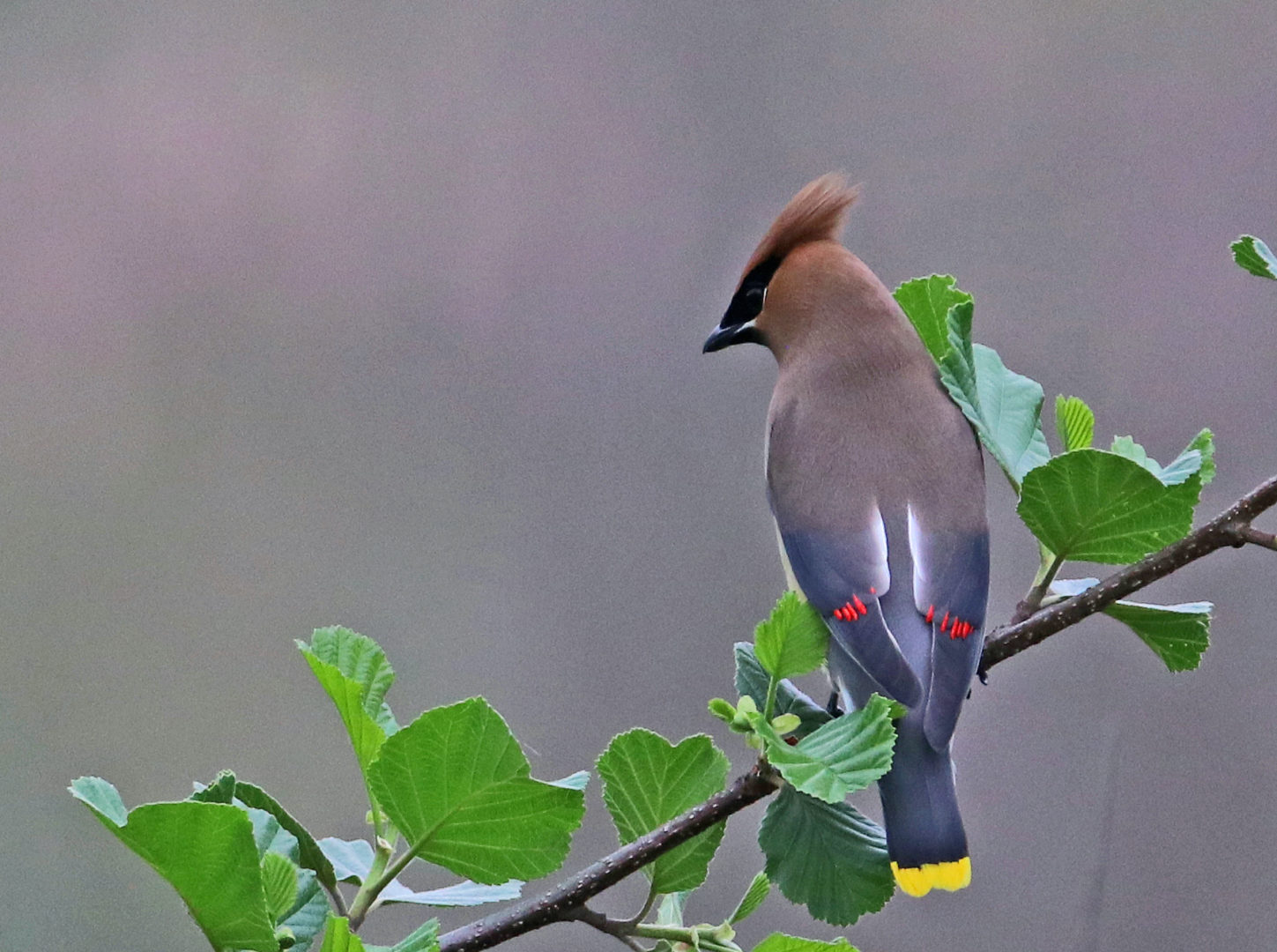
The cedar waxwing, Bombycilla cedrorum, is one of the last Pennsylvania birds to begin nesting each year, but they nest slightly earlier than the goldfinch. As spring comes to a close, many pairs are building their first nests, and they often nest again in July or August.
Waxwings get their name from the unique reddish-orange “drops” that form at the ends of the secondary flight feathers on each wing. The drops actually look and feel like hard plastic, but the species was named long before the invention of that synthetic compound. The “cedar” part of their name is derived from the bird’s propensity for eating the fruit from cedar trees.
Berries are the cedar waxwing’s primary food, with fruit making up about 80 percent of their diet. Aside from cedar, the fruits of honeysuckle, hawthorn, dogwood and mountain ash, as well as raspberries, strawberries, cherries, blueberries, mulberries and serviceberries, are all consumed. Waxwings also feed on insects, often taking advantage of large hatches of aquatic insects, such as mayflies, as they fly over streams and swamps.
Spotting cedar waxwings at this time of the year through the winter is usually feast or famine, for they often travel to food sources in flocks. Find the berries and you are more likely to find cedar waxwings. In late September, they appear to be feasting on red and orange honeysuckle berries, as well as the white berries on red-panicle dogwood.
I have been participating in Christmas Bird Counts since 2008, with a route in Marsh Creek Valley. My family group only spotted waxwings during five of the 14 years we have been counting. Our high count was 55 in 2014, but we passed that in 2021 when we saw 59.
Waxwings sport crests, have sleek bodies and long wings. Adults measure about 7 inches (head to tail) and they are slightly smaller than cardinals. Their eyes, feet and beaks are jet black, and they have a black facial mask. Their mostly tan plumage blends into cream or yellow on their breasts and gray on their wings, back and tail. For photographers, waxwings’ feathers are so fine that it often makes photos of the birds appear to be out of focus.
Waxwings’ slate gray tails end with a distinctive band of yellow, which makes an excellent identifying mark. For the past 60 years, increasing numbers of birds have been sighted with orange rather than yellow tail bands. According to Cornell University, the color change occurs when birds eat large quantities of berries from imported Tartarian or Morrow bushes during their feather molt.
Both sexes share nest building, with nests often constructed high in trees. Nest materials include twigs, weeds and long pieces of grass. I have observed waxwings gathering nesting materials on two occasions, both in June. The first time, the bird had white pine needles in its mouth, and the second time a twig. Their three to five brown-speckled gray eggs hatch after a 12- to 13-day incubation period. Young are fed insects for the first few days and then a steady diet of berries. It is believed that their late nesting is timed to coincide with the availability of abundant fruits. Young leave the nest after about 16 days of care.
A second brood is often fledged in August or September. While some birds stay the winter in the Keystone State, foraging on dried berries and fruits, others fly farther south.
Cedar waxwings have adjusted their diet to include introduced fruit trees, and they have benefited from the banning of the insecticide DDT. Evidence suggests that cedar waxwing populations have more than tripled in Pennsylvania since 1968. They are found nesting in every county. Their population in Pennsylvania is estimated to be 760,000.
Aside from their ecological role in helping to control insect outbreaks, waxwings are the major dispersers of the seeds from fruiting woody plants. This is good, but they also spread seeds from invasive non-native species.