
“At a time when there are those who seek to ban books, bury history…..while darkness and denialism can hide much, they erase nothing.” –President Joe Biden at an event recognizing Emmett Till.
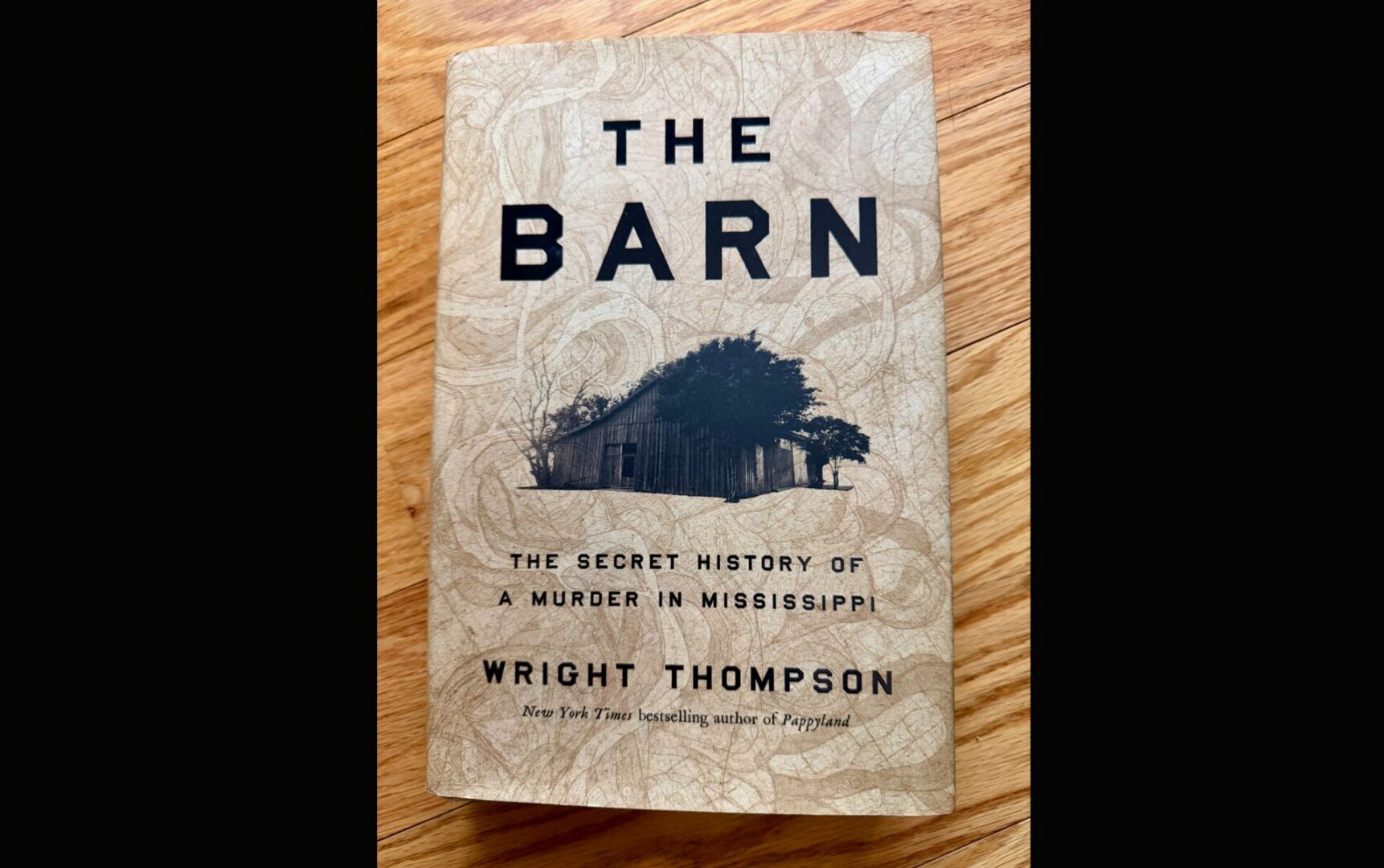
That quote appeared in the book “The Barn” written by Wright Thompson, which I read this fall. Given recent events and that Black History month is ending, this is a good time to talk about this powerful book. It centers on a barn in rural Mississippi where a 14-year old Black child, Emmett Till, was murdered in 1955 by racists who believed he had whistled at a white woman.
Thompson’s book is a forceful reckoning. That killing is an important chapter in American history. As you read “The Barn,” you understand the mistakes of the past repeat themselves because we ignore history’s hardest lessons. Ignorance prevents growth.
A little over 14 years ago, I met Thompson for the first time when he was here as an ESPN writer covering the events following my father’s death. At that time, it became apparent that Wright was a unique writer, one keenly aware of history as the driving force into our present.
His perspective is grounded in where he comes from. Mississippi has produced an outsized number of great writers. The complex history fuels passion and incredible storytelling by those attuned to the world around them. Many of them recognize unresolved history looming over the present with the potential to haunt the future.
“The past is never dead. It’s not even past.” –William Faulkner.
But is this only true in Mississippi? A reading of this nation’s history shows this is everywhere. The more we live, the more we see the repeating cycle of human nature in America.
“The Barn” arrives at a time where America’s past is proving that it, too, is not dead. The confluence of geography and a moment in time met with tragic results on that horrible night in 1955. “The Barn” ties these factors together at the rural Mississippi barn where 14-year-old Emmett Till was violently murdered, his body broken and beaten and then dumped into a river.
Almost immediately when Emmett went missing, the machinery of powerful people worked to turn reality into absurdity to protect guilty members of their tribe.
Emmett’s mother, Mamie Till, was shown a photo of her son’s mutilated body. The interrogators suggested that she could not recognize her own son. They invented a story that the NAACP had planted someone else’s body in the Tallahatchie River. At trial they advanced an insane defense that Emmett Till was alive and well in Chicago or Detroit and that his mother had gone along to collect a life insurance payout.
They asked the jury to “protect their ancestors” and do their duty as “Anglo-Saxons” against what they believed was an NAACP plot against the white people of Mississippi.
In “The Barn” it is revealed that Jackson Daily News reporter Bill Spell “would confess later in life that Mississippi Senator Eastland’s office was actively digging up dirt on the Till family and actually delivering prewritten hatchet jobs to the Jackson paper where he worked.”
Thompson wrote: “That’s the closest the true pathology of my home gets to the surface, when something insane feels easier to believe than a grieving mother’s tears.”
It worked. The murderers were found not guilty by an all-male and all-white jury. The murderers were so emboldened by double jeopardy protections that they confessed to the whole thing in an interview with Look magazine. Decades later, the story was barely covered in school textbooks, with less than 200 words attributed to a murder that helped spark the Civil Rights movement. Suppressed history must not sleep forever.
But is that pathology limited to Mississippi at that time or is it something innate to human nature and America even now?
People advanced claims about actors falsely staging a fake attack with “crisis actors” at Sandy Hook. In that school shooting, 26 people were killed, including 20 young children. We have a government telling us that what we were seeing with Renée Good or Alex Pretti was not true. Powerful people tried to dig into the lives of Renée Good or Alex Pretti or George Floyd or Trayvon Martin searching for some way to justify their murders.
By contrast, after shootings of protestors in 1970 at Kent State and Jackson State, the Nixon administration investigated and told the truth, finding fault with the men who’d shot those students.
But the galvanization of defending those who did the killing runs deeper. In her book, Mamie Till, the mother of Emmett wrote about her son’s killer J.W. Milam: “Milam boasts about killing Emmett to teach him a lesson and also send a message to others.”
Sending a message is echoed in the 2026 videos of agents asking Minneapolis protestors, “Didn’t you learn your lesson last week?” after the killings of two peaceful people. It is echoed in reactions from government officials refusing to admit wrongdoing or even asserting absolute immunity for their agents.
In “The Barn”, lessons of the past are warnings of what the future could hold. There are people who think the past should remain there. But Thompson makes a different case about why it still matters:
“The attitudes and intentions are why we should bring it up, to interrogate the present to see what of the past remains. Because our present-day potential for violence is alive and undiminished.
“Buried violence is a perennial bulb that is fertilized by fear and watered by insecurity.”
That is why an unvarnished look at our history matters. Because simply burying violence never heals what was unjust. Justice denied allows future generations to believe in the cause of the perpetrators, and it allows them to feel a legitimacy for their cause.
Wheeler Parker was in the house when the white men came to take his cousin Emmett Till in the dark of that terrifying night. His words decades later reflected on not just our ability to physically kill one another, but also to use levers of power to kill history’s truth.
Parker said, “Nobody kills like America. We’re raised on violence.”
That is not an anti-American statement; it’s an honest assessment.
Contrary to prevailing sentiment these days, our greatest leaders have always been honest critics about the nation we love. It is the highest form of love possible. From our first days we’ve been on a path toward a “More Perfect Union” because our founders saw our imperfections.
In “The Barn”, Thompson cites fellow Mississippian and author Wille Morris. In his book “North Towards Home”, he expresses both his love and his critiques of home.
Thompson wrote that Morris “showed me it was possible both to love and hate a place. It taught me to be suspicious of those who only did one of the two.”
In an era where many demand fealty to a mythology of perfectionism, the lessons of “The Barn” remind us how much our history matters. Without it we will wander blindly into repeating the mistakes and inflaming divisions of the past.



