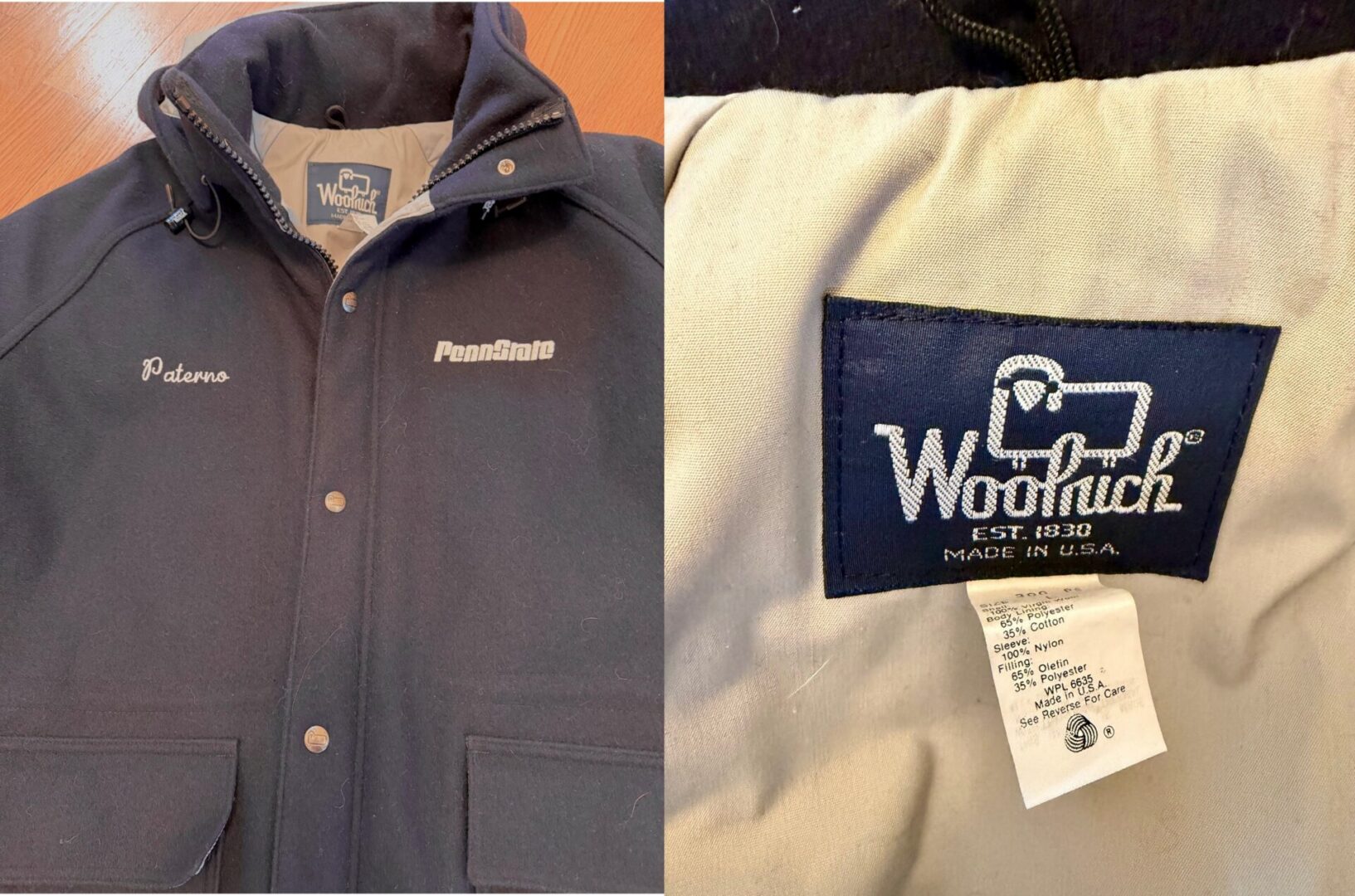
On the Monday before the Penn State outdoor hockey game, I was going through our basement cedar closet, looking for the best extreme cold weather coat. That is where I found a blue wool Woolrich coat from the early 1990s. For those who don’t know, Woolrich coats were a big deal to many in Central Pennsylvania.
To gauge its warmth, I took a two-hour test walk around campus on Wednesday. That included a pit stop to watch the men’s hockey practice in Beaver Stadium.
While at practice I noticed a big operation to clear the snow from the stands. Penn State’s employees from facilities staff to Teamsters at the Office of the Physical Plant were moving mountains of snow.
A couple of the guys struck up a conversation and one of them asked if my coat belonged to my father. After hearing it was from Woolrich, we all recalled childhood memories driving to Woolrich to shop at the company store just north of Lock Haven.
For many Pennsylvania families, it was an annual rite of late fall going there to buy cold weather gear for the upcoming winter. There was stuff for kids and families. And they made cold weather hunting gear and work gear for construction workers who worked outside during the bitter winter. There were thick wool blankets to bundle up by the hearth of the fireplace on dark cold nights.
For those outside of PA who may have been raised to believe Eddie Bauer or Columbia Sportswear or LL Bean were American originals, Woolrich started producing outdoor gear in a small town in Pennsylvania in 1830. The gear kept trappers, hunters and loggers warm as they worked the forests and mills in the hills and valleys along the mighty Susquehanna River.
During the Civil War they made blankets for the military. That extended to both World War I and II. The explorer Richard Byrd wore Woolrich clothing on his 1939-40 Antarctic expedition. The American original was the gold standard of excellence. And as the company grew it added factories in other states.
During the last several decades the company has had ebbs and flows of success. In the late 1990s and early 2000s it started to market itself aggressively to grab market share in an outdoor apparel sector crowded with national names. Some production left the country, but they still made things here in PA. The company store was still open, and like my mother had done for us, we took our own kids to the Woolrich store.
But back to the Woolrich coat I was wearing two weeks ago…
Long before fancy sideline gear and before spandex became a thing, cold weather coaching gear consisted of a base layer of waffled cotton fabric garments called “long johns.” Parkas had long hoods that zipped into a Phillie Phanatic-esque snout, which were impractical for coaching. There wasn’t much selection for coaches to wear other than formal overcoats with scarves in an era when coaches donned suits and ties.
If you’re too young to remember long johns and using plastic bread bags to help slide your feet into snow boots, take the advice of Curt Cignetti and “Google it.”
Somewhere in the late 1970s, my mom found a white Woolrich winter coat for my father to wear on the sideline during games at Penn State. Someone at Woolrich noticed Joe Paterno in their coat on TV. In the early 1980s they sent him a specially made navy blue version of the same coat.
In the early 1990s, before the launch of Nike’s sideline apparel lines, Woolrich made coats for the Penn State coaching staff. And somewhere in the late 1990s, I’d found Woolrich’s flannel-line khaki pants for Joe to wear. And until the end of his career, Brad “Spider” Caldwell always had long johns in stock for him.
He’d take a quick walk on the field and if it was cold he’d head to the equipment manager. In his Brooklyn accent he’d ask, “Hey Spidah….you got my long johns?”
All these years later, the coat I’d found in our cedar closet was the one that had been made for my father. Between the second and third period at the outdoor hockey game, I was reaching into one of the pockets and noticed what I thought was some garbage.
Feeling around, I found several small pieces of paper. As I took them out one by one, I realized they were small notes placed in that pocket over three decades ago by the people who’d made that coat in Woolrich, PA. My father never removed them. Inspector 18 and 14 were there and inspector 12 really wanted to get noticed.
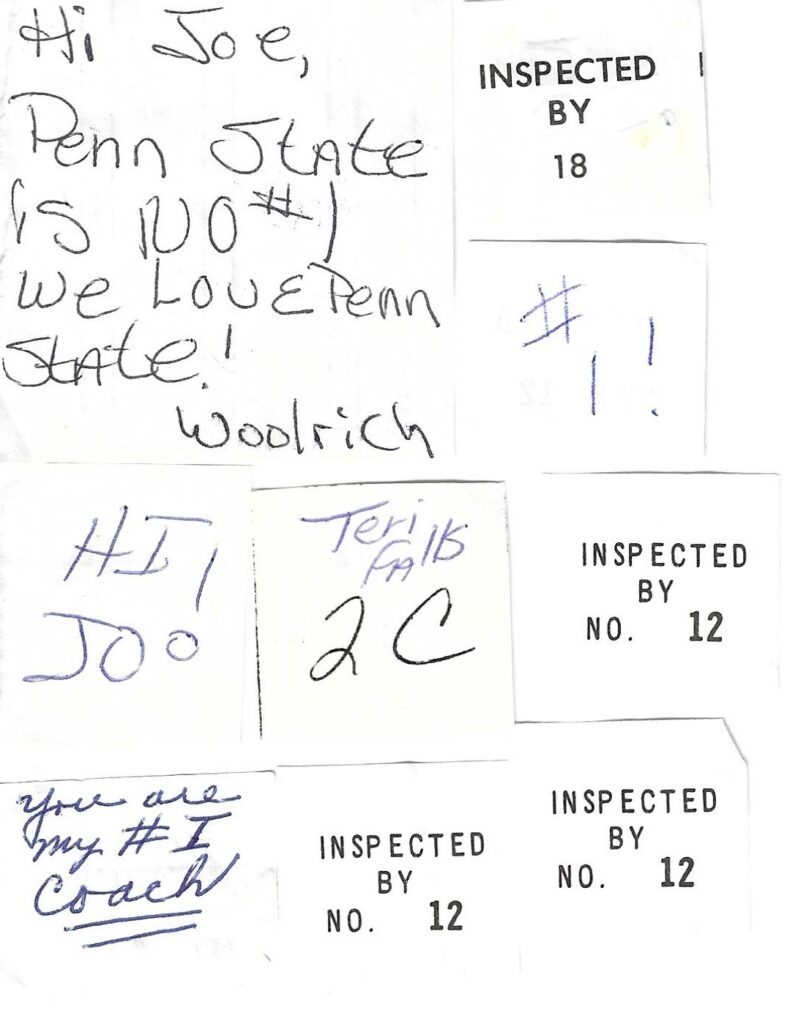
For the people who made the coat in that factory just a few dozen miles from Penn State, it was a point of pride. For my father, who always had an incredible affinity for the people across the Commonwealth, those notes probably had special meaning for him.
But all these years later, what an incredible thing to find… especially now that my father has been gone for over 14 years and Woolrich has changed so dramatically.
Woolrich is foreign owned. The company store no longer exists. The “brand” was bought by investors and companies in Europe and Asia, and the last bit of production left in the U.S. moved elsewhere.
On some representations of their logo the cities Milan, Tokyo and New York appear under the name Woolrich. They debuted their latest collection of ultra-high-end parkas during Milan fashion week. That’s Milan, Italy not Milan, PA in Bradford County.
Times have certainly changed. Those men working in that stadium grew up on Woolrich. Now you see Carhart and other outdoor cold weather gear. It’s not that these men left their roots or left Woolrich; Woolrich left them.
It’s a familiar story across rural America, companies run by people in far-away boardrooms atop towers of steel and glass make decisions that alter the lives of people they will never know.
But they cannot erase memories of those who know. Somewhere the seamstresses and inspectors who took a special pride in making this coat may still be around. Their notes are in a small plastic bag and will remain in that pocket.
After that recent Saturday afternoon, now with every time I wear that coat, I’ll recall the pride they put into that and every durable piece of enduring Woolrich clothes and blankets we still own. Part of me will think of my dad, but also of them. And I’ll smile to have been part of a shared history common to so many people around here.