

The theme of this year’s school psychology awareness week, which was Nov. 11-15, was “Find Your Focus.” In a world where options are endless and time can be spent on an unlimited variety of tasks and activities, finding one’s focus is arguably a critical aspect of any profession.
FOCUS ON FLOURISHING
FOCUS ON PREVENTION
School psychologists can help others flourish by facilitating systems-level practices focused on prevention and intervention. Many years ago, educator and researcher Dr. Eli Bowers discussed “an old Cornish test of insanity.” In this test, the person is placed in a small room facing a sink where there is a faucet, a pail underneath the faucet, and a ladle in the pail. The faucet is turned on and the person is advised to keep the water from overflowing from the pail. The individual who continues to ladle, however energetically and successfully without attending to the flow from the faucet is judged insane.
Bowers stated that “the flow of people needing help with personal, social and psychological problems is overwhelming the pails and the ladlers. We need to raise our vision to the spigot and begin to find ways to turn it down and eventually off.” This statement resonates with those of us working in the field of prevention science, including school psychology. The shift from finding problems intrinsic to the children and individuals we serve to solve problems related to the child’s environment has been made.
School psychologists now work with the school, community, parents, caregivers, teachers, administrators in order to prevent the child’s “bucket” from filling up to the point that the “ladle” is needed. Prevention work is now a focus amongst school psychologists. Dr. David Lilienstein, the president of the Association of School Psychologists of Pennsylvania, is an exemplar as a practitioner with a focus on prevention.
Throughout his career, he has maintained a focus on systems-level endeavors to ensure that all students have access to high quality academic and behavioral curriculum while also ensuring that those who need additional supports can access tiered interventions based on need. School psychologists can help school districts facilitate and ensure academic, social, and emotional growth through the beginning steps of the process including the selection of curriculum to monitoring students’ progress and helping the school team determine when additional supports may be warranted.
School psychologists possess a unique set of skills in school settings. They often are consulted as experts in analyzing student progress monitoring data once interventions have been put into place. They are well versed in education law and often serve as team members who can advise when the school’s child find obligations may be triggered. They are advocates, champions and dedicated team members focusing on student growth and improved school systems.
School psychologists love sharing what they do. Here are a few tips from school psychologists to make your home, community and the world a better place.
FOCUS ON THE GOOD
Focusing on the good is often easier said than done! Just like a busy school psychologist, parents can also struggle with maintaining their focus — especially when we are often faced with a multitude of responsibilities in our roles. One simple strategy that is incredibly effective is to focus on your child’s good. It will pay off. In fact, talking with your child about all that you are grateful for will have long-lasting benefits.
You can show gratitude and focus on the good by keeping a gratitude jar in your home. Using a mason jar or a fishbowl, every day, each member of the family is to write down one thing for which they are grateful and place it in the jar. Enjoy reading them together at the end of the week.
BE PRESENT
Being present for your child is critical. The trained school psychologist, Dr. Paul Jones, teaches future dentists how to work with kids using behavioral techniques in a more non-traditional school psychology role at Temple Dental School. According to Jones, parents and practitioners alike can “listen without thinking about a response. Be curious about what your child has to say.”
BE A SAFE HAVEN FOR YOUR CHILD
Like Szarko’s office, we should be safe havens for our children. We can provide them with a place to “unburden themselves” and a place to have “hope in abundance.” We can do this by letting our children know that we will always be there for them and that we are consistently responsive and sensitive to their needs.
More Community
View all Community
Through Painting, Improv and Teaching, Jackie Gianico Champions Everyday Creativity
Jackie Gianico blends education and the arts with her teaching, painting and performance.

ShelterFest Returns to Support Out of the Cold’s Mission
Out of the Cold is inviting the community to ShelterFest 2026, a four-day celebration of live music, local food and community support that helps ensure some of Centre County's most vulnerable residents have a safe place to sleep.
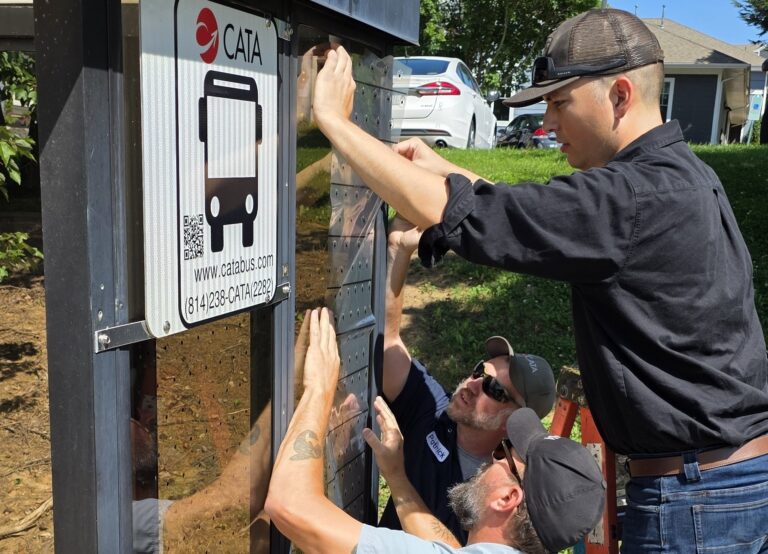
CATA Bus Shelter Gets a Bird-Friendly Upgrade
A Centre Area Transportation Authority bus stop is now serving as an example of how simple solutions can prevent bird collisions with glass. The U.S. Fish and Wildlife Service partnered […]


