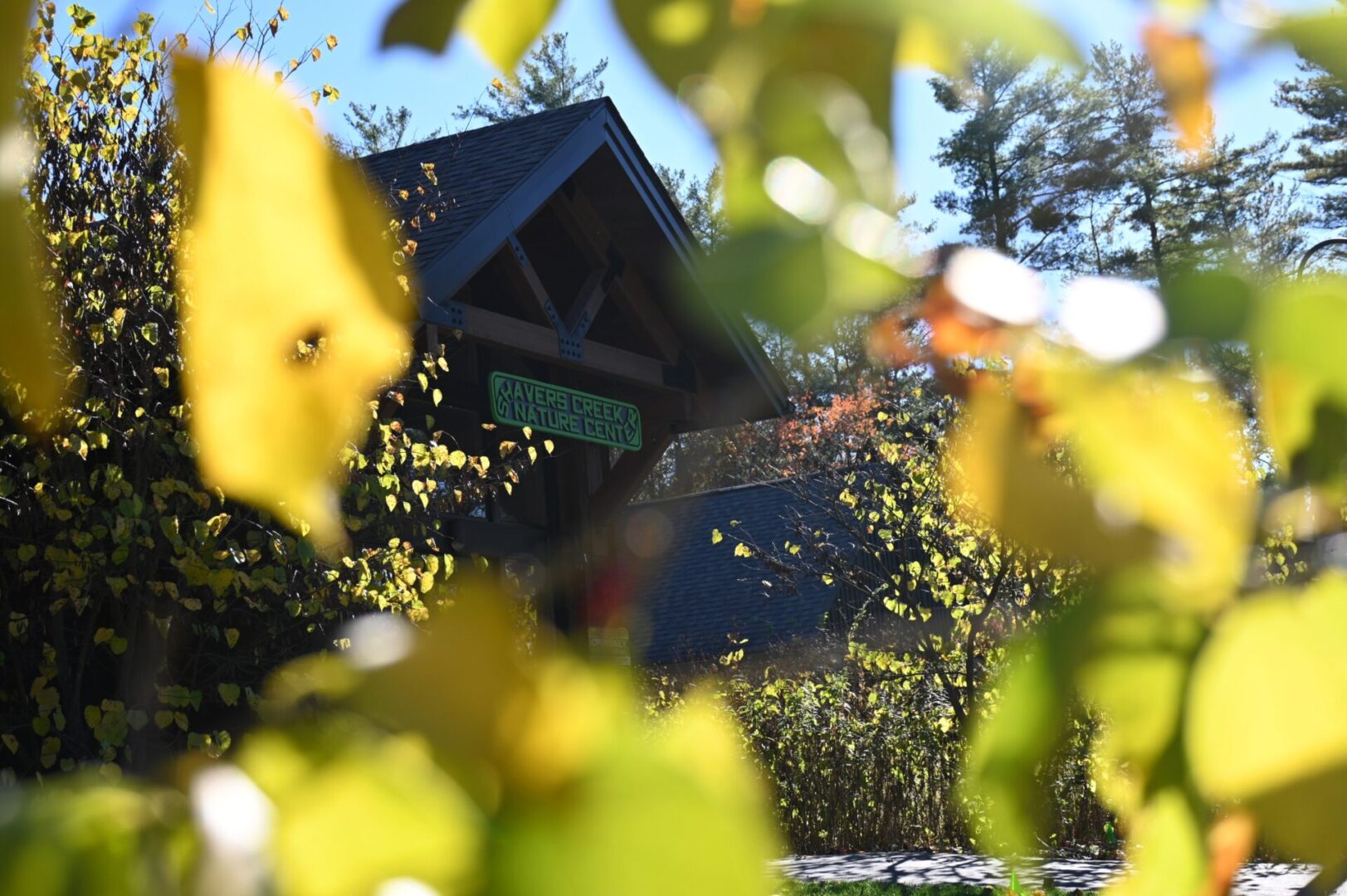
Shaver’s Creek Environmental Center will be temporarily closed to the public for several weeks while work takes place to expand visitor parking and improve stormwater management.
The Penn State-owned nature center in Petersburg will close starting Monday, Oct. 27 and will be intermittently closed to visitors throughout the fall and winter, according to a university release on Thursday. Visitors should check the Shaver’s Creek Environmental Center website for the latest hours and parking information.
“The parking lot expansion will be a big presence through the fall and winter but will ultimately assist us in serving the public by increasing capacity and accessibility for visitors, while also redirecting stormwater runoff away from roads and trails,” Joshua Potter, associate director of operations for Shaver’s Creek, said in a statement. “The project will expand our parking lot from 70 to about 155 spaces that will include accessible parking closer to the building and new electric vehicle charging stations.”
Expansion of the parking area was designed to accommodate visitors without infringing on the wildlife habitat or natural areas, Potter said, avoiding the white pine trees where birds unique to the site reside and an area that fosters growth of lady slippers, a slow-growing wild orchid.
“We settled on a small strip of forest in the middle of the current parking lots that is a little scrubby and has few mature trees,” Potter said, “While we’re not losing as much there, it will create a big open space that will give the appearance that we are.”
Tree removal will occur during the first multi-week closure, followed by earth moving and paving.
The last phase will involve planting a new stormwater drainage basin to address issues with trails and roadsides getting swampy or washed out during heavy rain events and water overtopping culverts and flowing into the center’s yard.
“Engineers are looking at how we can better manage runoff by using drainage basins to slow water down so it’s not rushing downstream causing issues for creeks, roads and trails,” Potter said.
He added that disturbed landscape during the project will be replanted