“Look deep into nature, and you will understand everything better.’ — Albert Einstein
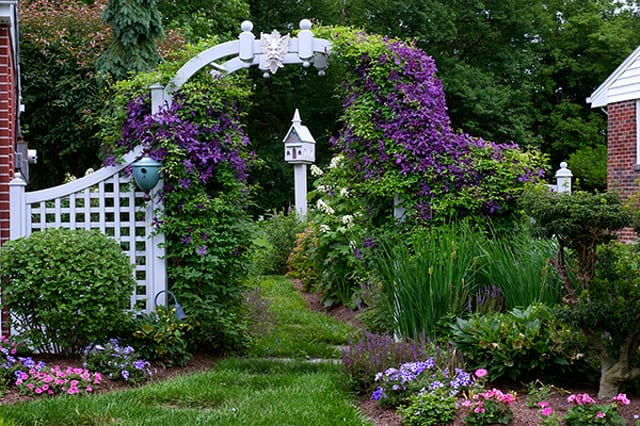
Truer words were never spoken in relation to gardening. It is only by understanding the basic requirements of plants and how they flourish that we will have any chance of showing off that trellis of stunning purple clematis to our friends.
If that sounds frightening to would-be gardeners who are non-science-oriented, do not fear. There are some initial steps to planning your spring garden that can make it foolproof (almost).
First, be aware that the United States Department of Agriculture has a map of the country online that reveals hardiness growing zones for every state. You can enter your zip code and find out exactly what yours is in Pennsylvania.
For example, State College’s is shown as Zone 6b. The importance of knowing this information is so that when visiting plant nurseries you can check plant tags for the range of zones in which that paperbark birch you saw in Fine Gardening magazine is more likely to flourish.
Second, what grows best in our gardens is extremely local. Your spot will vary from your neighbor’s. Therefore, it is important to know about your very own personal surface soil. (Gardeners always call growing medium soil, rather than dirt.) How can you find this out? It is possible to buy a soil test at a store, or, for a $9 fee, you can request it from the county offices of Penn State Extension.
Check out the extension’s website, www.agsci.psu.edu/aasl. They will send you a soil-test kit with directions. You take some samples from your garden and mail them back in, explaining the type of planting you want to do, such as turf grass, noncommercial flower or vegetable garden. Voila! After being analyzed in the university soil lab, the explained results are sent back to you.
The plants in my Bellefonte flower beds looked stunted and pale when I first took ownership of that garden. Upon receiving the results of my soil test, they revealed that it needed to have urea nitrogen added. I was able to purchase the urea at a local nursery and broadcast spread it according to the directions. It improved the vigor and appearance of the flowers. In this case, having the soil tested worked out very well.
Finally, since all plant life requires sunlight and water, knowing how much of both are provided by nature in your planting area helps. A rule of thumb is that full sun is equal to six-plus hours per day, partial sun is four to five hours per day, partial shade is two to four hours per day and shade is less than one hour of sun per day. By observation, over time, you can no doubt determine which areas in your garden receive the most direct sunlight.
I had very shady areas, sometimes referred to as deep shade, which led me to read plant tags’ light-requirment information, searching for shade-loving plants. The amount of water can be gauged, in part, by realizing which areas don’t drain as well as others, such as near a downspout. Some plants don’t like ‘wet feet,” or roots, while others thrive in boggy places. I saw one website that named poor drainage areas as “lake downspout,” “soggy lawn swamp,” “rainy river” and “eternal wet zone.”
If you have any of these chronic water problems, a rain garden (yes, this is a type of garden) may not be the answer — you may need a French drain.
Now that you have found your growing zone, tested and amended your soil, and observed the amount of average naturally occurring sunlight and general drainage, let the fun of choosing and planting that clematis — or whatever beautiful plants you have in mind — begin.