What’s new? What are some of the popular types of plants, outside décor trends, philosophies and practices that are all the rage? I’ve come across some interesting and perhaps surprising answers.
As 5 million of the 6 million new gardeners last year were 18- to 34-year-olds, according to the 2016 National Gardening Report, it’s no surprise that millennial demographic influences are being felt.
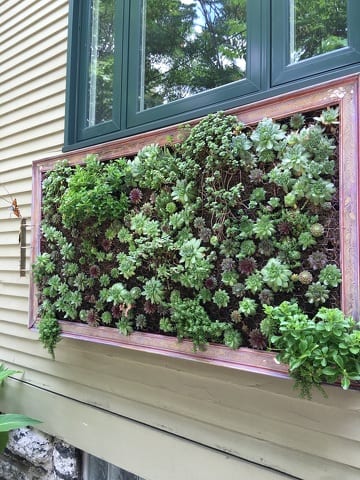
The types of plants that seem to be trending now are succulents. No doubt it is because of all the varieties available, their easy care and their great form and color. On a garden walk I took last summer in Buffalo, N.Y., succulents were very prominent. They were featured on wire or wooden trellises used to highlight exterior walls, as well as in many containers and as ground covers.
Since “everything old will be new again,” it comes as little surprise that as a result of popular interior designer Justina Blakeney’s The Jungalow Instagram blog, a 1970s-style interest with houseplants has also returned. Blakeney features them prominently in her Bohemian room designs (apparently fiddle-leaf fig is the “it” plant right now).
The idea is to bring nature into the indoors, whether at home or in the workplace, and display plants as part of the room aesthetics. One theory is that younger gardeners view nature as a positive counter to their technology-driven existence and want to be more enveloped by it.
DESIGN AND DÉCOR
There are also new trends in exterior garden design and décor. An article at Gardendesign.com mentions that designers are no longer seeing as much of a minimalist modern desire; instead, there is a renewed interest in more “real feeling” older-fashioned DIY projects, often using recycled materials. Things like railway ties, smaller furniture, free-form decks and porch swings are all making comebacks.
In addition, using one garden style of ornamentation, whether modern or traditional, and sticking with it, is becoming passé. It is not so much what styles are chosen, but how they are thoughtfully combined. This is a relief to those of us who fretted about putting a Victorian flower urn near a mid-century modern fence mirror. Things like handmade artisan wares are being combined with sleek modern design, something that was once avoided but is becoming more and more in style.
HYPER-LOCALISM
Another shift is back to hyper-localism, or regionalism, using building materials and plants which are locally found. This includes a desire for plants that are native to an area’s ecosystem.
For example, I recently viewed a film narrated by Doug Tallamy, an advocate for using native plants in local habitats. It was interesting to see how a condo development in the Midwest had recreated prairie-type lands along their walking paths to encourage native wildlife and pollinators.
Not surprisingly, then, there is also a move away from large expanses of lawn because of the droughts, environmental impact of fertilizers and pesticides and mowing. The trend now is in favor of smaller lawn-like alternatives like ground covers, ornamental grasses, beds of flowers and shrubs, or even artificial turf in places like California and the Pacific Northwest. There are also more advanced and efficient irrigation systems that can be programmed and monitored from your phone.
Other ongoing trends have been edible and cutting gardens, chicken coops, beehives and hydroponics. Young people today have a desire for locally grown organic plants, making the best use of space and preserving the environment.
A newly popular idea is to include a dye garden, where home-grown plants are used to make dyes for coloring textiles, yarn and clothing. Plants used include types of vegetables, fruits and trees. Flowers like coreopsis, cosmos, marigold and blue cornflower are examples of dye garden selections. A book, “Natural Color: Vibrant Plant Dye Projects” by Sasha Duerr, includes seasonal projects for using colors that come from plant dyes and attests to their popularity.
A final upcoming trend involves experiencing the great outdoors in a more “contemplative” way. This fitness trend is called “forest bathing.” A May 2016 Washington Post article described it as “taking in the forest atmosphere,” a translation of the Japanese practice called Shinrin-yoku, which was named by the Japanese Ministry of Agriculture, Forestry and Fisheries in 1982.
This practice of mindful meditation has had increasing popularity in California. It is about the journey, to “slow down, appreciate things that can only be seen or heard when one is moving slowly, and take a break from the stress” of daily life. Spending time in natural environments has been linked to “lower stress levels, improved working memory, and feeling more alive,” among other positive attributes.
No matter which trends, indoors or out, you adopt this year, enjoy. Mother Nature never ceases to reward and amaze.
GARDENING SCHOOL
Interested in adding to your gardening knowledge? The Penn State Master Gardeners of Centre County will be hosting their third annual all-day Home Gardening School on Saturday, March 18. The event is open to the public. It will include workshops on the themes of best practices and garden design, door prizes, and lunch. Registration deadline is Friday, March 10. Visit www.extension.psu.edu/home-gardening or call (814) 355-4897 for a complete schedule and to register.