
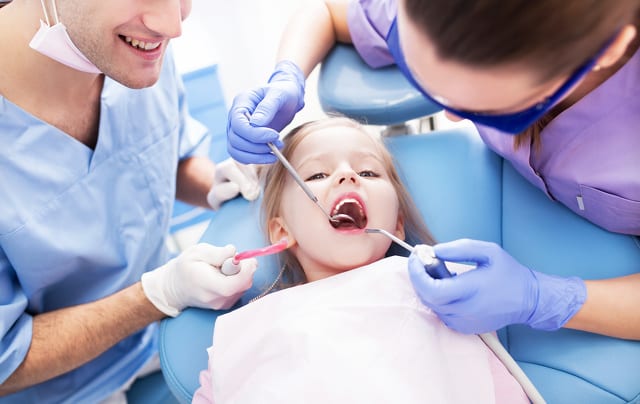
STATE COLLEGE — Anticipating a visit to the dentist’s office can cause stress and anxiety for people of all ages, from toddlers to adults.
However, children and teens can feel especially anxious, simply because they feel unprepared and are uncertain about what to expect.
Dr. Matt Kremser and Dr. Bob Kilareski are diplomates of the American Board of Pediatric Dentistry, and are pediatric dentists and partners at Pediatric Dental Care in Port Matilda/State College. Their goal is to make children’s experiences at the dentist as stress-free and positive as possible.
“Our goal (which is sometimes more important than fixing teeth) is to have all children leave the office with a good, friendly impression of their first trip to the dentist. We use the dental preparation conversation to build excitement about going to the dentist, or maybe as an opportunity to discuss the importance of oral health,” Kremser said.
Kilareski said that it is just as important for parents to use positive communication and language with their children in preparing them to go to the dentist as it is in preparing them to go to the doctor’s office.
“If mom or dad are afraid of the dentist, oftentimes that apprehension is absorbed by the children without any realization that it is occurring. This can make the pediatric dentist’s job quite challenging. Avoid using negative or scary words like ‘drill’ or ‘shot’,” he said.
“While we don’t lie to children, as they are very smart, we do use euphemisms for many words, such as replacing ‘shot/needle’ with the phrase ‘sleepy juice.’ Overall, the most important aspect of dental preparation discussions is trying to encourage your children that the dentist is someone that wants to help them be healthy.”
Kilareski and Kremser both said their dental practice follows guidelines provided by the American Academy of Pediatric Dentistry in terms of age recommendations for exams. Those guidelines recommend that parents take their child to visit a pediatric dentist around age 1, or within six months of erupting the first tooth. Regular dental check-ups and cleanings start between ages 3 and 4, but they welcome younger children to visit for well-baby checks, too.
Well-baby visits are for children between 1 and 3 years old, and they are essentially educational or “anticipatory guidance” appointments. During these visits, young children are evaluated, and parents’ questions are answered about eruption patterns, appropriate oral hygiene practices for infants, diet and non-nutritive oral habits.
“Most importantly, this appointment establishes a dental home for the child in case emergency care is needed or dental problems exist,” Kremser said.
He explained that their office is very child friendly and decorated with a 3-D jungle theme featuring hippos, gorillas, monkeys and lions. Children typically transition out of their office around age 12, when they are maturing and are ready to move on to an “adult” dentist.
As is the case with visiting the doctor’s office, kids’ main fear in visiting the dentist is the fear of being hurt, Kilareski said.
“Oftentimes, they have heard stories from their parents or older siblings that make them afraid of a ‘shot’ or ‘getting their teeth yanked out.’ We also often have children that visit our office after having a difficult experience at another dental office where they have seen the needle or gagged while radiographs were taken.
“Sometimes, fear can be related to age. It’s difficult for a 3-year-old to comprehend significant dental procedures such as the placement of multiple fillings or crowns due to poor oral hygiene,” he said.
Both find that, most of the time, children’s fears are often alleviated after one, or maybe two, visits to their office.
“Naturally, as children get older, there is less fear of the unknown and behavior does tend to improve with maturation,” Kilareski said. “That being said, we have a pretty good success rate in helping children of all ages become more comfortable with dental visits.”
More Health & Wellness
View all Health & Wellness
Q&A: How to Stay Safe From Cyclospora, the Parasite Causing Stomach Bug Outbreak
UNIVERSITY PARK, Pa. — Dubbed the “nightmare stomach bug,” with nearly 7,000 currently confirmed or suspected cases of cyclosporiasis in several U.S. states, including Pennsylvania, many consumers may be wondering how to […]

More Teens, Young Adults Are Balancing Caregiving and Growing Up. It Can Be a Struggle
A British study found young caregivers experienced a dip in life satisfaction around the time they began providing care. One of the researchers discusses the unique challenges these young people face.

Centre County Adds 2 COVID-19 Cases; Pennsylvania Reports 380 New Positives
Centre County reported two new COVID-19 cases on Friday to bring its total to 16,888, according to the Pennsylvania Department of Health. It is the county’s 17th consecutive day with […]


