
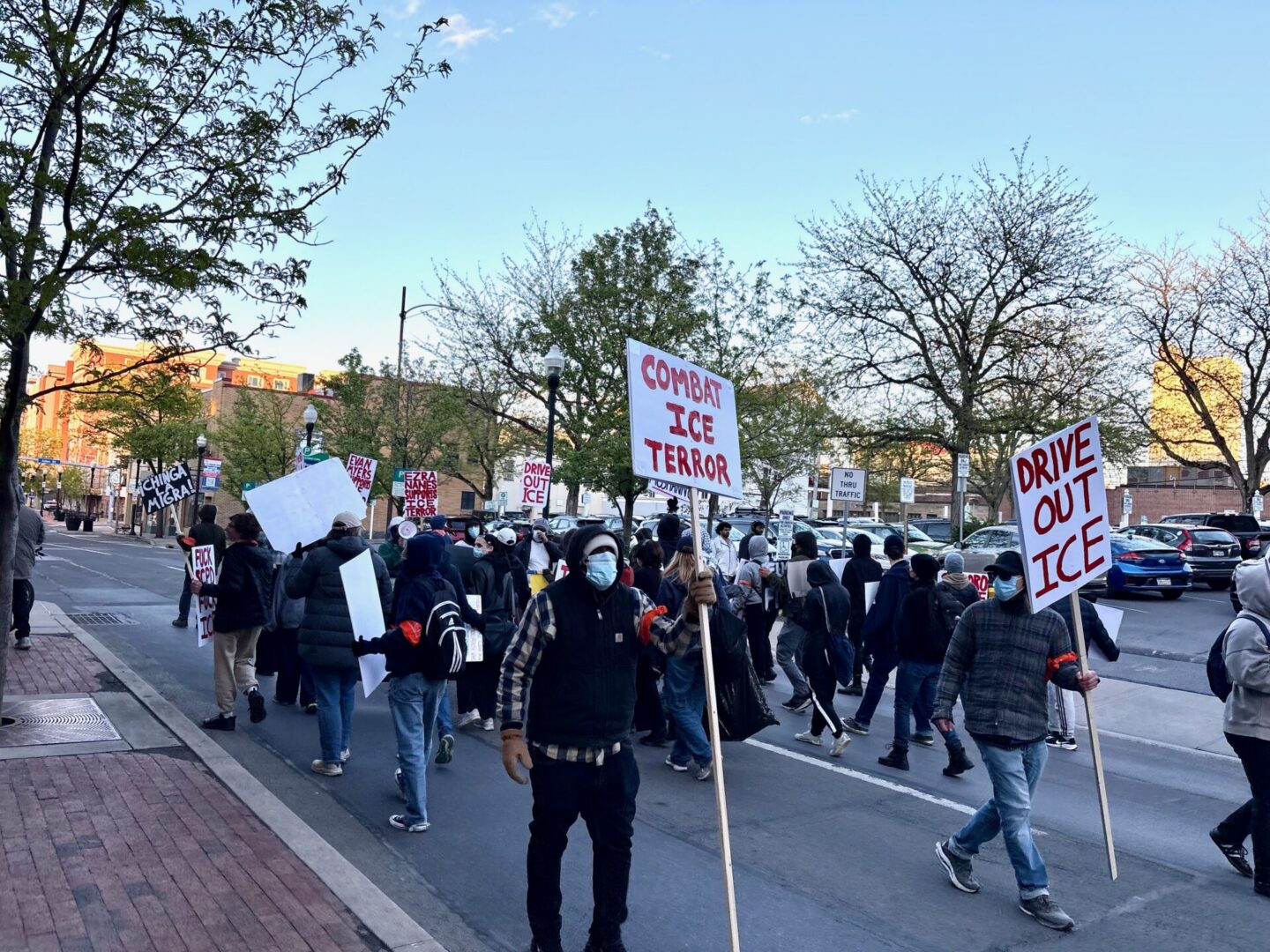
In July, the State College Borough Council is set to consider an ordinance (local law) that would prohibit the State College Police Department from signing a 287(g) agreement with Immigration and Customs Enforcement, and prevent borough employees from assisting ICE without a judicial warrant. In doing so, State College would join Philadelphia, Pittsburgh, Harrisburg, Allentown, Carlisle, Lancaster, and many other Pennsylvania cities and towns in passing similar laws prohibiting 287(g) agreements.
What is a 287(g) agreement? 287(g) agreements “deputize” local police departments, like SCPD, to work with, and on behalf of, ICE. Pressured by the federal government, some police departments in Pennsylvania have signed such agreements.
However, these agreements have backfired. They undermine community faith in local police, making community members less likely to report incidents, hindering their effectiveness. Additionally, such agreements divert scarce and badly needed resources that local police departments need away from keeping their communities safe and toward ICE operations.
Fortunately, SCPD has a policy, set back in 2017, of non-compliance with ICE. However, such a policy is not enough. We need an ordinance.
First, policies are valuable, but they can be changed at any time, so community members cannot rely on the police’s continued promise to maintain their best interest. An ordinance would codify this policy as law, showing the community that SCPD’s commitment to their safety will not change, and that in the absence of a judicial warrant, the local police will neither assist nor share information or resources.
Second, the ordinance being proposed will lay out penalties for those who violate the policy of non-cooperation with ICE, including providing ICE with information on individuals. Critically, this ordinance would go beyond just SCPD to apply to all Borough employees, including other employees who handle our sensitive information.
ICE’s ability to target its previous abductions — an individual on their way to a court hearing, and 24 workers on their way to work — relied on detailed knowledge of when and where the targets would be. This suggests that ICE targets its operations based on information provided by local informants (how else would ICE know when and where to abduct our community members?). Making it illegal for borough employees to provide ICE with the information it needs to target its attacks, and setting penalties doing so, would give borough employees clear policy to apply, making it easy for them to refuse to share our information. That would make our community much safer.
Simply put, the ordinance prohibiting 287(g) coordination between SCPD and ICE would go beyond prohibiting an agreement and requiring non-cooperation. It would increase trust in SCPD, improve its effectiveness and conserve SCPD and borough resources. Additionally, the ordinance would prohibit borough employees from sharing information with ICE to target its attacks. No information, no targeted attacks.
Please join me in signing a petition to show support for the State College Borough Council to pass the Welcoming Ordinance prohibiting cooperation with ICE to keep our community safe.
Nicholas Dudek,
State College
More Letters to the Editor
View all Letters to the Editor
Letters: Standing With Mount Nittany Workers This Labor Day; AI Needs a Constitution
I’m a proud union member who works just down the street from the Mount Nittany hospital workers still fighting for a fair contract. With Labor Day coming up, I wanted […]

Letters: ‘Convenience Gambling’ at Pa. Mini-Casinos Becoming Obsolete; GT’s Empty Agricultural Promises, Failure to Support Healthcare
Despite significant increases in July tourist traffic to the State College area due to Arts Festival and the People’s Choice Festival, as well as further additional tourist traffic to the area due to hosting the State Games […]

Letters: Mount Nittany Medical Staff Committed to Community Care; Casino’s Underwhelming Revenue
The Medical Executive Committee is saddened to hear that SEIU Healthcare Pennsylvania has reportedly voted to issue a strike notice in response to Mount Nittany Medical Center’s latest proposal. As […]


