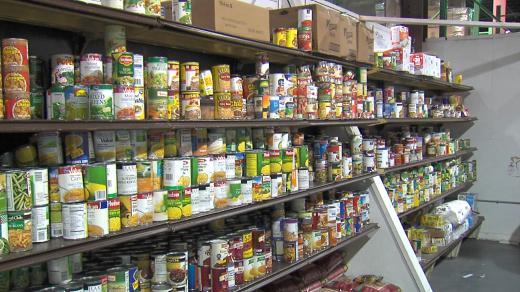
You may be surprised to learn that hungry children are frequently overweight. Food insecurity and its impact on childhood hunger and obesity was discussed on campus last week as part of a presentation by a Penn State nutrition graduate student committed to public awareness.
Jacinda Li, host of “Fighting Hunger in the Community,” is a Kids Eat Right Campaign member for the Academy of Nutrition and Dietetics, the world’s largest organization of food and nutrition professionals. Part of her work involves volunteering in the community to address issues such as these.
The presentation, supported by a mini grant from the Academy of Nutrition and Dietetics, focused on how children can be both hungry and overweight at the same time, and identified ways people in the community can help address the problem.
Li, who hosted the presentation at the Bennett Pierce Living Center, said people across the world and millions of Americans suffer from starvation or fear of starvation.
Food security, she said, is defined as access by all people at all times to enough nutritious food for an active, healthy life.
Those who are food insecure, Li explained, may skip meals or ration their food.
A few factors contribute to food insecurity, such as food cost, which isn’t only associated with money or prices. There are a variety of “hidden costs,” such as time required to prepare the food, Li said.
“For a lot of low income families, time is money,” she said.
Other hidden costs come from equipment for heating or refrigerating food, or from transportation to get food.
Food availability and access to sufficient resources, additionally, are other factors that play a role in food insecurity, Li said.
As of January 2013, more than 50 million Americans, or 1 in 6, are food insecure in the United States. And nearly 17 million children are food insecure, she said.
Those who are food insecure or suffer from poverty oftentimes are likely to be overweight or obese, Li said.
More than one-third of adults in the United States are obese, and 17 percent of children in the United States are obese, as of February 2013, Li said.
Just because someone is overweight does not mean he or she is food secure; food insecurity is linked to overweight, she said. People who are food insecure may exhibit behaviors such as hoarding and binging to overcompensate.
Certain factors can add to this problem, such as lack of access to or limited availability of healthy foods, or high exposure to unhealthy foods, Li said.
Healthy foods tend to be more expensive, and nutrient-dense foods, like fresh produce, require refrigeration. Low income families opt for more convenient and cheaper foods, or food that doesn’t require refrigeration or preparation.
“All of these factors can contribute to children’s risk of (being) overweight or obese even though they’re hungry,” Li said.
Another factor, she explained, is disrupted meal patterns, or inconsistent meal times and eating. Irregular access to food, Li said, may result in overeating. And wide swings in consumption have been known to affect metabolism.
Insecurity and obesity affect children on a variety of levels, Li said, including in health and development. Children who suffer from food insecurity may face iron deficiency, asthma, delayed cognitive development, headaches, colds, depression and anxiety.
Additionally, children who are overweight or obese have higher chances of developing type 2 diabetes, high blood pressure and some cancers, she said.
Research has shown that children who are teased for being overweight tend to develop eating disorders later in life, Li said. Overweight children are 50 to 80 percent more likely than their peers to be obese as adults.
Besides an array of health problems, children suffering from food insecurity may display problems at school and with learning, such as poor academic performance and difficulty getting along with others, Li said.
“All of these contribute to the achievement gap,” she explained about the “negative spiral” of someone being food insecure, getting a poor education, and, in turn, growing up and becoming food insecure, or raising a food insecure family later in life.
Li said there are a variety of programs and agencies in the local community that address this problem, such as school meals, summer food service programs, food banks and food pantries, farm-to-school programs, Supplemental Nutrition Assistance Program, and Women, Infants and Children, or WIC.
Li said it’s important to not only identify local organizations, but to find ways to expand them, or make sure they address local people and growing problems.
“How can we optimize on what already exists?” she said.
Click HERE to find local food assistance. For more information on the Academy of Nutrition and Dietetics, click HERE.