
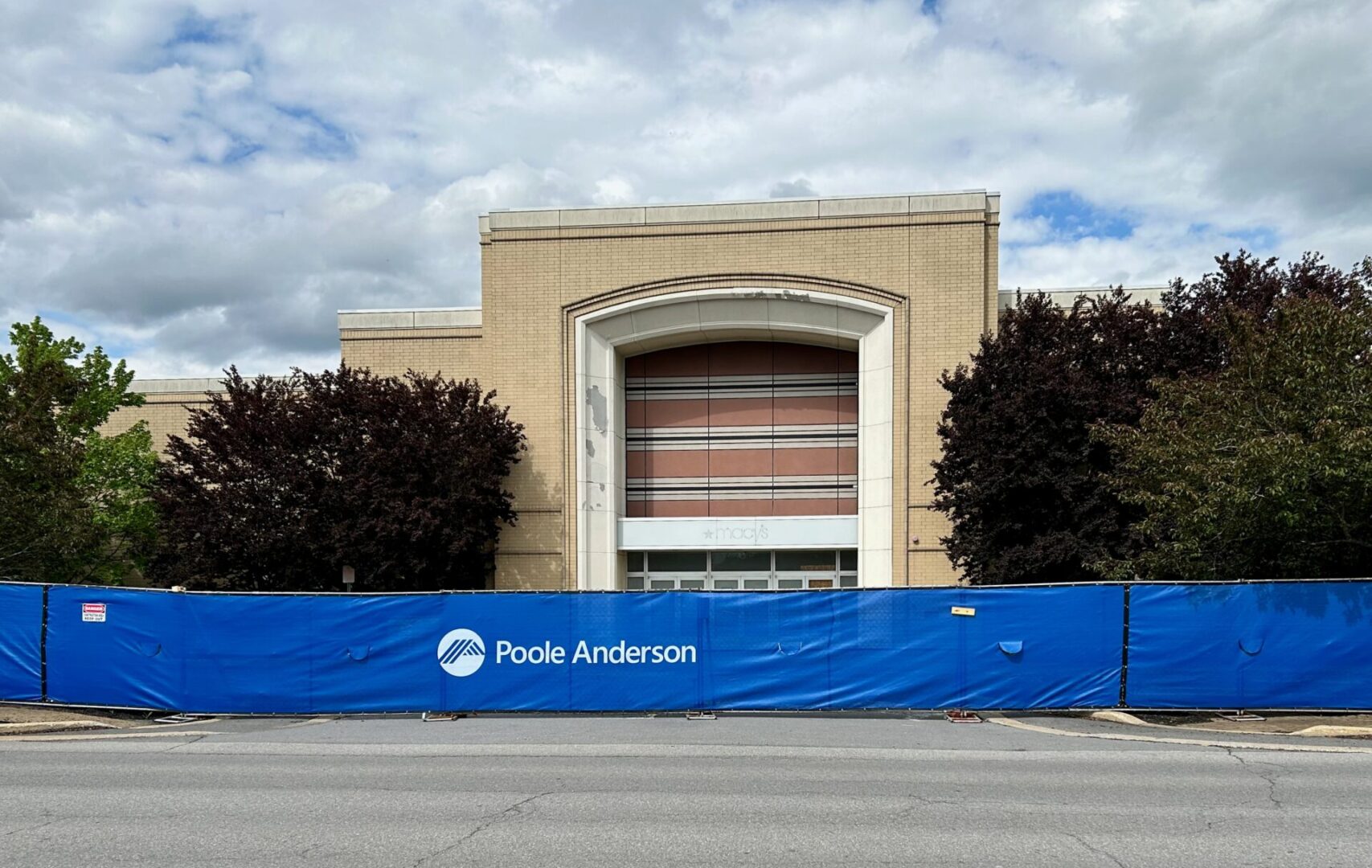
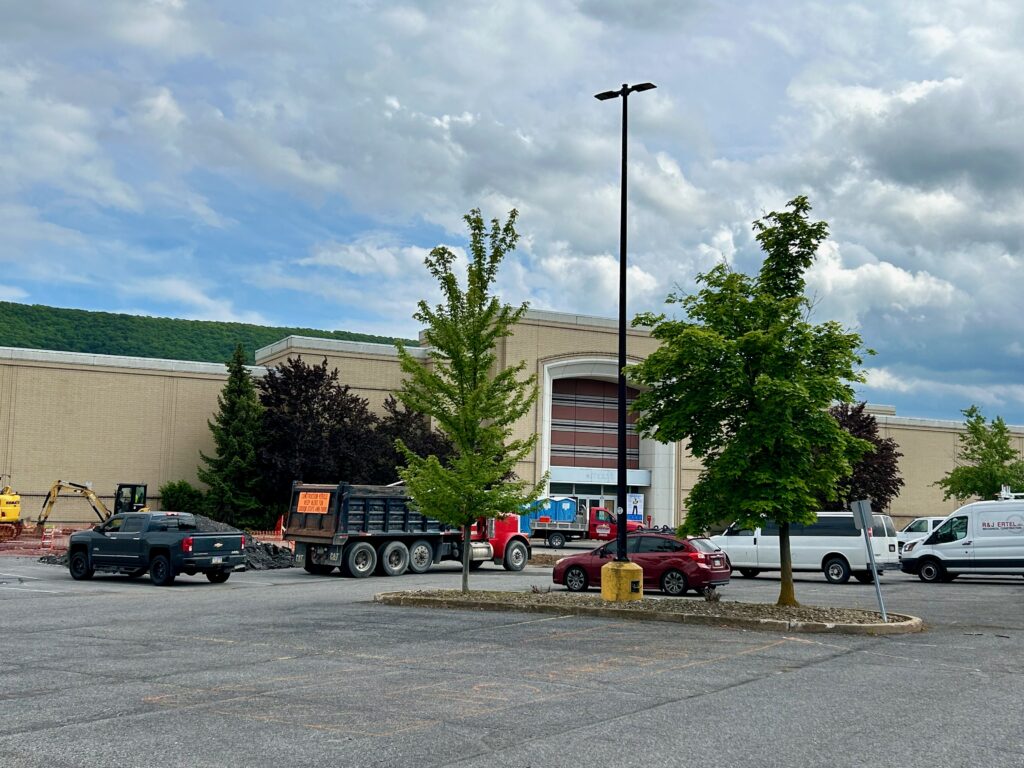
College Township Council on Thursday received and reviewed a local impact study for the Happy Valley Casino expected to open in the spring at the Nittany Mall.
SC Gaming Co., the casino’s developer led by investor and former Penn State trustee Ira Lubert, had previously submitted an impact report in 2021 as part of the licensure process. But both township officials and critics of the project said it had limited data to work with for category 4 casinos — or “mini casinos” — like the one planned for the former Macy’s anchor spot at the mall and did not address the social impacts of casino gambling on the surrounding community.
Council commissioned New Orleans-based Convergence Strategy Group in April to conduct the new local impact study, and the company’s principals, Suzanne Leckert and Scott Fisher, were on hand virtually for Thursday’s meeting to provide an overview of the recently completed report.
“The intent of that analysis is to provide you, council and staff, as well as future councils and staff, with data and better information to inform development of future policies, programs and projects that serve to mitigate any negative impacts associated with being the host community, as well as maximizing any benefits that come from being the host community,” Assistant Township Manager Mike Bloom said.
Overall, the study projected limited social and public safety effects and an economic benefit to the township and Centre County only slightly lower than that presented in the impact report submitted by Econsult Solutions Inc. for the casino developer in 2021. Casino opponents who spoke during public comment said they felt negative impacts were minimized because they failed to account for additional factors.
For the new study, CSG analyzed casino and gambling research and data from the communities around the 17 existing casinos in Pennsylvania, in particular the four current category 4 casinos. Leckert and Fisher also visited and spoke with officials in each of the category 4 host communities.
Mini casinos have tighter restrictions on the number of gaming offerings they can have compared to other categories of casinos, with up to 750 slot machines, 30 table games and a sportsbook permitted, if approved. The Happy Valley Casino, which will be a 24/7 operation and will include a sports bar and restaurant, plans to open with 600 slot machines, no sportsbook and 30 tables for games such as roulette, blackjack and Ultimate Texas Hold’em, according to filings and hearings with the Pennsylvania Gaming Control Board.
ECONOMIC IMPACT
CSG projects the casino will generate $66.1 million in revenue from approximately 605,000 gamer visits in its first full year of operations, and $71.8 million from approximately 625,500 visits by year five.
Based on numbers provided by the casino ownership, it will employ 350 people with an average annual compensation of $47,000. The project is also expected to generate four indirect jobs in the township and 52 countywide.
College Township is anticipated to receive $1.2 million for its share of gaming taxes in the first year, increasing to $1.5 million by year 10. The county is projected to receive the same. Those figures are less than the $1.6 million to $2 million estimated in the 2021 ESI study, which Fisher said was conducted when the first category 4 casinos were just opening and had little data available, anticipated a sportsbook and projected higher gaming revenues.
With additional revenues from real estate, income and local services taxes, College Township/s total expected financial windfall is approximately $1.4 million in the first full year, increasing to $1.66 million annually by year 10.
State College Area School District will also see $540,000 to $560,000 in additional real estate, earned income and local services tax revenues.
“It hasn’t been about the revenue for the township,” council member Rich Francke said, a sentiment township officials have shared since they initially declined to opt out of being a category 4 casino host site in 2017.
Instead, staff and council members have expressed hope that it would help revitalize the flagging Nittany Mall.
“We believe the casino has the potential to stimulate some vitality into the mall itself,” Fisher said.
He added that CSG has not been “able to talk to the mall operator regarding potential other new tenants,” but said that based on discussions with other owners of malls with casinos in Pennsylvania, they “have been at worst a neutral addition to the malls and at best beneficial…”
“So really the big issue is this is an opportunity for the mall to get back on its feet,” Fisher said. “But as we did the tour of the mall, it’s going to take some marketing and we need to understand the synergy of the mall with the casino. So hopefully there’s a good working relationship there, but that wasn’t part of our task.”
For residential real estate values, Centre County should not expect adverse effects from the casino, and could potentially see them grow at a faster rate, according to the study. All four category 4 host communities have experienced inflation in real estate values since 2020, with two rising at a faster rate than the statewide average and two at a slightly lower rate.
Commercial real estate activity in some communities with category 4 casinos has stabilized or increased, “while in others there has been no discernible impact,” according to the report.
SOCIAL IMPACTS
CSG “pored over the research nationally,” reviewed data from casino communities in Pennsylvania and interviewed municipal leaders and public safety officials in those towns to examine potential social impacts ranging from addiction to domestic violence to bankruptcies to suicide, Leckert said.
Depending on the study, problem gambling affects anywhere from 1% to 8% of gamblers, and “most adults who choose to gamble are able to do it responsibly,” she said.
About 7% of college students meet the criteria for gambling addiction, a concern frequently raised by critics of the Happy Valley Casino, given its proximity to Penn State. CSG predicts that university students will account for about 26,000 annual visits — or about 4% of total visits — to the local casino and contribute $2.6 million of the casino’s revenue.
“We don’t expect that Penn State students are going to be frequent casino patrons,” Fisher said. “There may be some, but you look at casinos around the U.S., there’s a very small percentage of people that are under 25. The sports bar there might bring some people in, but you’ve got plenty of sports bars downtown, which are walking distance. So, from that perspective, we see the student population being drawn proportionally to be a much smaller percentage of the gamers in the casino.”
Research shows about 81% of gambling addicts play online, and Leckert noted that Pennsylvanians already have access to nearly every form of gambling, so the casino will not be their introduction.
“The data show that the demography of typical casino gamers is less inclined to be addicted than those that play online games and bet on sports,” Leckert said. “Now, that is not at all to say that casino gamers don’t sometimes develop addiction. But just that the highest rates we’re seeing in the data are from the non-casino forms of gaming, primarily the online forms. But we also see data that shows that those that play both online and inside of casinos, they are more likely to become problem gamblers than those that limit themselves to one form or another.”
Rates of domestic violence, divorce, bankruptcy and suicide among casino host communities showed little variation from statewide figures, though the report stated that some data was limited because a casino had opened the same year as the most recently available figures.
CSG noted that Centre County’s rates in each of those social concerns are already much lower than those in neighboring counties and statewide.
“Now I point that out to say that for some of these metrics even a really small increase is going to look like a spike for you guys because you have such low rates,” Leckert said, adding that on a personal level, even one incident is a 100% increase for the person affected.
CSG recommended “collaboration between your local health care networks and the agency that deals with gaming hotline calls, and for the township to monitor the needs that come up,” Leckert said.
Because data on social impacts of gambling in Pennsylvania is limited, the commonwealth may be interested in providing funding from casino tax revenue devoted to addressing problem gambling to assist with the township’s monitoring efforts, Leckert and Fisher said. The township may also consider using a portion of its casino tax revenue to fund monitoring or resources to address social issues that arise.
They said that no other category 4 host community has monitored social effects of their casinos, and applauded College Township officials for taking a proactive approach.
PUBLIC SAFETY
CSG projects limited impact on public safety services. It anticipates the casino will generate one additional police call per week, one EMS calls per month and two fire department calls per month — numbers similar to those in the 2021 ESI impact report.
Those figures are also consistent with feedback from officials in other category 4 casino host communities.
“Officials in this in these casino host communities almost always tell us the same thing: The casino is just like another big box store, that they often get more calls to the Walmart than they do to the casino,” Lekcert said.
State police have jurisdiction over what happens inside the casino, and the township’s chief public safety concern “is to be is going to be when people leave the casino.” That may include drunk driving, disorderly conduct, car accidents or theft of or from vehicles.
“There’s going to need to be some sobriety monitoring,” Leckert said. “We’re not saying it will be a problem, but it certainly could become one without being monitored.”
The mall and casino also will “need to ensure good parking lot lighting,” she added.
“From the casino operator’s standpoint, they want to keep their facility and their parking lot as safe as possible,” Leckert said. “And a parking lot that’s viewed as unsafe keeps patrons away.”
OPPONENTS SKEPTICAL
Three people spoke during public comment, each saying they appreciated the thoroughness of CSG’s report but voicing concerns that it painted a rosier pictures than is warranted.
Andrew Shaffer, a State College resident and longtime critic of plans for casino, spoke on behalf of a group of opponents, reading from lengthy prepared remarks expressing doubt about the economic benefits and limited social impact.
“I am not convinced, and I do not believe that you should be either,” Shaffer said.
A significant amount of the money coming into the casino will leave the area through taxes to the state and revenue to Saratoga Casino Holdings, which is poised to take on majority ownership of the casino, and will not be reinvested back in the community, he said.
The study, he said, did not account for the diversion of spending from other local entertainment and dining, and problem gamblers will redirect money they would have spent on uses such as rent, food and education to the casino. Residents also will further lose money because new federal regulations reduced the deduction for gambling losses while keeping all winning taxable, he said.
The report, meanwhile, appears to be based on 750 slot machines instead of the planned 600 at opening, Shaffer said. He also noted that the continued rise of online gambling and in-person skill games, as well as the Pennsylvania Lottery’s expansion, all threaten the revenue of the casino, and in turn the economic benefits to the township.
“I believe that College Township should expect to receive less in tax benefits and induced economic benefits than what even the CSG impact report predicts, and the township should also prepare for the possibility that the overall long-term economic effects of hosting the casino will actually be negative,” he said.
He also doubted that the mall’s owners would make the investments needed to capitalize on the potential for revitalization, “despite the casino being touted as being the last best chance to save their dying shopping mall,” and that he expected the township would “need to work with the mall’s owners if there is to be any hope of” safety recommendations being put into place.
Shaffer called it a “logical fallacy” to believe the idea that because gambling is already widely available the casino will not increase social ills, and said that those who become gambling addicts through the casino should be expected “to experience the same outsized negative social impacts that are typically associated with the initial introduction of casino gambling to an area it was not previously available.”
Even a small percentage of patrons being Penn State students could mean dozens or hundreds becoming addicted to gambling, he added.
“It will become an embarrassment for both the university and the PGCB if the Happy Valley Casino generates a surge in college students derailing their education because of gambling addiction,” Shaffer said.
Even if the increase is small, Shaffer said, an uptick in domestic violence as a result of financial distress related to casino gambling is “troubling.”
“Since financial distress is a contributing factor to virtually all of the other negative social impacts that were considered by the study, it is reasonable to conclude that all of the negative social impacts considered by the report could worsen in our community as a result of the introduction of the casino, even if the specific studies cited in the report did not identify obvious increases in these harms in population-level data from other contexts,” he said.
Shaffer also pointed out that officials in other category 4 communities interviewed for the study did not have data on the social impacts the casinos have had.
“You have the opportunity to be better than those other host community officials who take the benefits of hosting a casino while leaving others to deal with the fallout,” he said. “The people who suffer gambling-related harms are among the most stigmatized and marginalized in our nation. Many of these people have appealed to you time and time again in this very council chamber. Please don’t let them down.”
Dan Materna, a Walker Township resident and another longstanding opponent of the casino, said he was impressed by the study, but seized on the report’s disclaimer that it contained projections, estimates and forward-looking statements that may prove to be incorrect, that results may vary and that CSG “accepts no liability in relation to the estimates provided herein.”
“In my opinion, the casino will not be successful,” Materna said. “It will struggle financially, and it will close by 2028.”
Brandon Daubenspeck, of Benner Township, urged council to use tax revenue to address the social issues that he expects will rise after the casino’s opening.
“People from the outside will look in and say, ‘Well, that was only a 5% increase in that or a 10% increase in that,’ but it’s an increase,” Daubenspeck said. “The people in this community are going to be impacted, and how best can we take that money and apply it to the community so that at the end of the day, we’re putting more good into the world than we’re taking out? …So this is less of a discussion of the overall impacts of the study… but this is more of a call to action to really consider what we want that money to go towards, because that money comes with a cost.”
MOVING FORWARD
Before voting unanimously to accept the report, council members said it marked a start, not the finish line.
“We are in appreciation for our start here,” Council Chair Eric Bernier said. “We did this for some of the reasons that have been identified tonight by the speakers. But we didn’t anticipate this would be the end-all. We anticipated this would be the start.”
Dustin Best said council was “recommitting right now… to not just stopping… and just doing what we can to gather more data.” Tracey Mariner said council “can be a part of the solution and not the problem by collaboration and community and finding ways to prevent these things.”
The township has a chance to be a leader among casino host communities, Vice-Chair Susan Trainor said.
“We’ll start being part of the answers, hopefully,” Trainor said. “I appreciate the comments and the concerns, and we take them seriously. I do think this gives us an opportunity to do something as a community that other communities haven’t yet even thought about. And so we will do those periodic checks, look at our community partners, and do what we can.”



