
As parents, most of us have been in the position where one of our kids did or said something that was either inappropriate or broke the rules.
Our response can either send the message that we don’t want it to continue or, inadvertently, that it’s either okay or even desirable for the behavior to repeat.
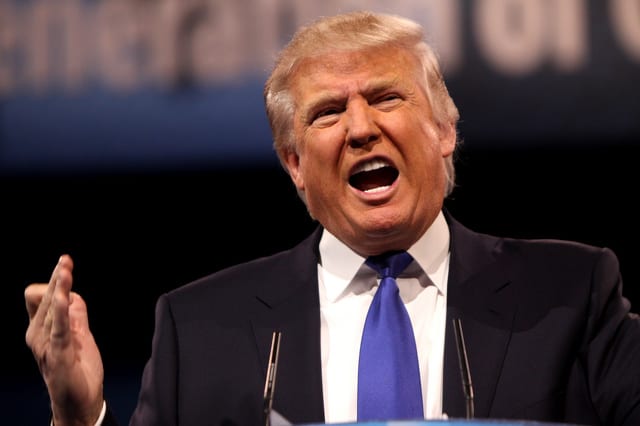
Let’s talk about Donald Trump.
Since throwing his name in the hat to be considered as the Republican candidate for President next year, Donald Trump has demonstrated what many people believe to be bad behavior.
He started out his campaign by addressing illegal immigration. His plans, if elected, allegedly include a massive wall at our southern border that Mexico will pay for after he, Donald Trump, persuades them to do so. He is alleging that he will somehow find the resources and the laws to support the deportation of approximately 11 million people.
He says the “good ones” will be able to come back if they apply through the proper channels. His latest position, following the terrorist act in San Bernardino, California is that all Muslims should be at least temporarily banned from entering the United State until our immigration policy can figure out how to better screen the bad guys who are entering this country with the intention of hurting Americans.
Every word and every sentence that he says is then replayed, re-analyzed, reviewed, and dissected in the news, on social media and in public opinion.
It reminds me of the time I was driving my three-year-old daughter to pre-school. In the car on the way, she said “Mommy! F*#% it.” It was simultaneously appalling and amusing to hear those words coming out of that precious little face. I burst out laughing.
Through my giggles I said, “That is inappropriate and we don’t say that word.” I should have just ignored it. As I turned the car around and headed home, she said it about 30 more times. My attention had reinforced the behavior rather than stopped it. We opted out of school that day so that I could put into place some strategies to extinguish those words from her brain.
In the case of Donald Trump, people don’t seem to be able to ignore his outrageous campaign platforms. If we can’t ignore it, perhaps we should look at how conflict and extreme positions can help us.
To clarify, I don’t believe that Mexico will pay for a wall and I don’t think it’s even possible to round up 11 million or so people and send them back (wherever “back” is). I also don’t think that it’s a good idea to have blanket policies that eliminate a specific group of people from visiting our country.
On the other hand, immigration and terrorism — issues that are related and which are putting our nation at serious risk — are a pressing concern for most American citizens. The leaders of our country need to develop a plan to address these issues.
Good problem solving comes from recognizing and defining the problem, brainstorming alternates, and then implementing.
Donald Trump, if anything, is helping us in the brainstorming process.
What is brainstorming?
Advertising executive Alex F. Osborn first developed the term brainstorming in 1953. Brainstorming is intended to facilitate creative thought and ideas so as to improve the group’s performance.
Osborn suggested that the best climate for developing creative solutions was one in which the members feel free to throw out as many wild and outrageous ideas as they can while withholding criticism and judgment of others and their ideas. From that list of ideas, group members combine, alter, select, and discard and then develop a plan to best meet the group goals.
Sometimes it is the wild idea or a variation of the most extreme position that becomes the successful solution.
We’ve all been in those meetings or situations where, for whatever reason, the group members don’t feel comfortable expressing different ideas or opinions. A group that is new and still focusing on relationships. An inexperienced or poorly skilled leader. An autocratic leader. Factions within the group. A climate that makes it not okay to disagree.
And so we sit on our hands. People put forth “safe” ideas that align with the leader or the group’s perspective. Those who have creative ideas or perhaps even the right solution to the problem, shift uncomfortably in their seats, and sit silently. Rather than seeking the right answer, we fall into the trap of groupthink.
Donald Trump’s outrageous statements and positions serve a purpose. He is pulling people out of their comfort zones and getting people to talk — including our political candidates and our elected officials.
For decades, our government has moved in the direction of financial irresponsibility, crippling debt and waste, and different standards for some Americans over others. Movement on issues like immigration, abuse of social support programs, affordability, and integrity in how to address healthcare, to name just a few, has been imperceptible — regardless of the political party in power. Campaign promises to change things in Washington (or in Harrisburg) eventually just flatten into versions of the same, just from different faces.
Conflict and disagreement, if managed appropriately, are not only healthy but expected. In Tuckman’s forming-storming-norming-performing model of group development, we learned that to be the most productive, we have to go through some discomfort, disagreement, and noise.
Donald Trump is providing some of that discomfort. It’s hard not to notice that, as his rhetoric intensifies, the responses and campaign platforms and presentations of candidates both Democrat and Republican are becoming more energized and their ideas and solutions are becoming more creative. The safe and “same old-same old” campaign promises have not and will not have an impact on many of the serious and potentially dangerous issues that our country is facing. Trump’s extremist views seem to be forcing other candidates to respond and they are responding with greater creativity.
As the media and the public continue to give Mr. Trump’s outrageous behavior and his ridiculous statements the reinforcement of attention and press coverage, we should remember that conflict and disagreement can help us come to great solutions.
More Columns
View all Columns
The 2 Kinds of Penn State Football Adversity: In-Game and Post-Game
Penn State coach Matt Campbell talks a lot about handling Adversity. A lot. It’s going to come, he says. It’s how you handle it. Adversity came to Beaver Stadium on […]
Penn State Lost to Wisconsin: How Bad Was it?
How bad was it? Ahead 17-0 just 18 minutes into the game and lost bad. Ahead 20-10 until Wisconsin scored with just 211 seconds left in the game and lost […]

Penn State Football: Tonight, the Haters Were Right
On Dec. 11, 2023, Twitter user @drewjanda put out a since-deleted post that now lives in sports meme infamy. It read as follows: “The haters said I couldn’t do it. […]


