
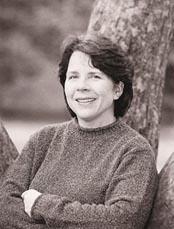
Name: Anne Corr
Department: Nutritional Sciences
Education: B.A. in English, Penn State University
Link: Department of Nutritional Sciences Faculty
Seasons of Central Pennsylvania, a cookbook by Anne Corr
What do you teach?
Currently I teach the lab component of Elementary Foods, Nutrition 119, and Food Preparation, Nutrition 120, for the Department of Nutritional Sciences. I also teach HRIM 415, a 3-credit course on International Cuisine, for the School of Hospitality Management, though that course is not offered this semester due to budget cuts.
Every summer I run a cooking camp for middle-school-aged children in the foods lab in Henderson Building that gives our nutrition undergraduates a chance to get hands on experience delivering nutrition education to a population that I think is especially vulnerable to making bad food choices. The camp teaches them about healthy foods and how to prepare them so they feel empowered in the kitchen and not intimidated.
How did you come to Penn State?
I was an English major as an undergraduate and did a little graduate work towards a master’s degree in English when I discovered that my real passion was cooking. Though I never attended culinary school, I did work in the foods industry from the age of 14 on and had a more European-style apprentice education in the kitchen.
I started writing about food for the Centre Daily Times in the early ’80s, about the time that I launched my home-based catering business. My children where young and I wanted to be home with them so my husband built me a commercial kitchen and helped me create Corr’s Custom Catering. A large percentage of the catering business was with Penn State, primarily Office of the President (then Bryce Jordan) and women deans like Anne Petersen of the College of HHD and Susan Welch, College of LA. Both in my writing and in my catering, I used food as a means of expression, and my clients appreciated that.
Face it, when you are a woman dean, you are well aware of the power of having development events in your home but your duties as dean don’t give you the time to do that. I respectfully filled the role, and tried to interpret the host’s own intent with each event, zeroing in on themes and holidays to create an intimacy and sense of belonging.
In June of 1995 I was delivering some healthy snacks to a lecture at the Nittany Mall that then-nutrition department head John Milner was presenting and he took me aside and asked if I would be interested in teaching in the foods lab at some point. I met with him the next day and started the fall of 1996.
How do your students teach you?
My students teach me patience and faith, with a cupful of love thrown in for good measure. Each successive year I see more and more the disconnect between young people and culinary efficacy. There is wide gulf in today’s society, which in some ways seems so food obsessed, yet in other ways seems horrifically impotent in the kitchen. My students tend to watch the food network but they are still eating Kraft macaroni and cheese or Domino’s pizza.
Personally, we all start somewhere and I see those blue boxes of mac and cheese as a gateway food. You can start with that while you are young and learn the pleasure of being capable of making something for yourself—then you move on. I enjoy teaching my students – and campers – how to move on.
What is one piece of advice you would give to the current generation?
My best advice to the current generation is to cook more at home, though my friends in the HRIM department would not agree with that statement. If you cook at home you invariably create something that is more nutritious and delicious, especially if you go to the store or farmers market without a preset list and just purchase what is available. Invite your friends to cook with you too. There is no better way to build yourself a little community.
What external experience do you have in the food industry?
External experience in the food industry includes working for Stouffers for about seven years, starting when I was 14, at the Jenkintown store where my mother worked. It was Mothers Day, 1964, and any able bodied person was enlisted because it was the busiest day of the year. I made melba toast for eight hours, and enjoyed being in the kitchen, back in the bake shop, on the perimeter of the action.
I continued after that, working throughout high school and college, on weekends and during the breaks once I got up to the main campus. Stouffers in that day was a fine dining establishment where the menu changed daily, with 10-week cycles that changed seasonally. I attribute my continued interest in seasonal foods with my early Stouffer indoctrination! After I graduated from PSU in 1972 with my BA I went to Atlanta to train waitresses for Stouffers at the new Peachtree Street store. I had also developed dining room skills along the way, which paid off greatly when I catered.
After a trip to Europe I came back to State College and started graduate school but my siren song of the 1970s was to travel the country and work in various natural foods restaurants until getting married in 1979. After our first son was born later that year we traveled to Alaska, then came back and settled down to some serious nest-building and cocooning as well as overseas travel until they were old enough to go to school. The first commercial kitchen was built in 1985, after I was tired of looking for places to cook from and had outgrown the small dinner party cooking in people’s homes.
Describe what you do as leader of the Slow Food Central PA convivium.
In 2001 Kim Tait and I started a Slow Food Central PA chapter because we both felt that the message of supporting local foods and the pleasures of the table needed to be broadcast. We served as co-leaders until 2004 and then I took over the leadership role as her PASA duties became increasingly demanding.
Currently we hold monthly-ish events that highlight some of the rich local food resources we have here in the Centre region. We may go to an Asian market for a “tour” of the lay out, to the mushroom research facility on campus, or to a cheesemakers’ dairy farm in Rebersburg. One of our most interesting tours was of Penn State’s compost facility. Tours of local wineries, breweries and even of the Penn State dining halls enable us to be active participants in the food culture of the area.
Why did you choose this career?
I chose to work with foods because there is nothing more elemental and rewarding than the act of eating. Choosing foods that are good for you and seasonal and even celebrating the seasons through the foods we eat is very important to me. Though I never expected to teach at Penn State, the faith of the department in my ability to infuse the next generation with not just the nuts and bolts facts about food preparation but also with the emotive issues that food conveys has been just the best career I could have ever imagined for myself. The halls of Henderson Building are hallowed to me and I aim to always keep the mission of inspiring the next generation to learn and to appreciate everything about health and human development in order to better prepare for future generations.
What is your proudest moment?
This is a hard question for me because I don’t consider pride in something that I have done to be positive. Everyone should choose to do something for the greater good and give that task their best possible effort. I can say that a happy moment for me was when my cookbook, “Seasons of Central Pennsylvania” came out in 2000. The book launch at the new HUB-Robeson Center, with all the people that are featured in the book coming to the celebration was fun—but a lot of work. Next time I have a book launch, I won’t cater it myself! I am happy when I hear from former students that they are using the skills that I taught them; I have one student’s comments from 2002 posted above my desk for daily affirmation.
And I was delighted to find out last week that one of my former campers is considering the PS Nutritional Sciences program as her college choice. I am proud of my children’s accomplishments—two were competitive divers in high school and I saw their hard work pay off—in a very different way. Maybe I’m just not proud of anything that I have done yet.



