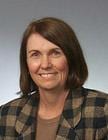
Name: Claudia Anderson
Department: Elementary Education
Education: B.A., Elementary Education, Hastings College, 1970; M.S., Elementary Education with Reading Endorsement, Kearney State College (now University of Nebraska at Kearney), 1973
Links: Penn State Page
What do you teach?
During this spring semester, I am teaching LLED 400: Reading Methods, LLED 401: Language Arts Methods, and LLED 497F: Spelling Development and Word Study. I routinely teach the two methods courses every semester. However, in the past, I have alternated teaching a variety of courses for my third class on the following topics: Formative Literacy Assessments, Shared Reading, Guided Reading, and Balanced Literacy Approach.
How did you come to Penn State?
I was a reading specialist and staff developer in Tempe School District No. 3 (Arizona) prior to coming to PSU. TD No. 3 was quite diverse in regard to students and faculty. I worked with students and faculty in the district three days a week, and traveled to an out-of-state site to teach CLIP (Collaborative Literacy Intervention Project) two days a week. CLIP was a reading intervention created by TD No. 3, which was based on the teachings of Marie Clay. For two years, I traveled to the Navajo Reservation in the Four Corners area of the of the United States – where Arizona, New Mexico, Colorado, and Utah converge – to train teachers in this intervention. For one year, I traveled to Colorado, teaching teachers in the Boulder and Aurora School Districts. By taking this training, teachers could earn seven to nine credits of graduate credit toward a reading endorsement as part of a master’s degree program from Arizona State University.
These three years provided amazing learning experiences for me, learning experiences that affected me as an individual as well as my teaching philosophy. I loved my job and my colleagues. Therefore, when my husband was invited to interview for dean of the College of Communications at Penn State, I was not overjoyed. He was offered the job and accepted it. Fortunately, the College of Education hired me to teach courses for elementary education students in the Department of Curriculum and Instruction. The rest is history.
I have to admit, I adjusted to living in State College and teaching at PSU quickly. I look forward to going to work every day because of the eager, energetic students I teach. They keep me challenged and stimulated to learn new things. In addition to the students, I appreciate the ever-present support from our Undergraduate Dean, Jacqueline Edmondson, and our Professor-in-Charge of Language and Literacy Education, Patrick Shannon.
How do your students teach you? Both elementary and college-level?
Elementary Students:
 Each child has unique strengths. During my early years of teaching some students’ strengths were not obvious to me. These students taught me that I needed to teach in different ways to provide opportunities for those strengths to be exhibited. As a result, their learning was enhanced by their successes, and they developed confidence in themselves as individuals.
Some struggling learners taught me to be persistent in my efforts to support them and their learning. I discovered that conveying my expectations for their success in learning any task was crucial. They taught me that teachers have to be advocates for their students, especially students who have little or no support on the home front.
Advanced students taught me that finding the cutting edge of a student’s learning is necessary to prevent students from becoming bored and tuning out a teacher. Discovering students’ interest areas and special talents or strengths can enable a teacher to provide appropriate instruction to meet the needs of all learners.
Undergraduate College Students:
All of the points I mentioned about elementary students also can apply to undergraduate college students. Students are students. Each student has different background experiences, which makes each person unique.
With the rapid advances in technology and the applications we require our students to use in our classes, they have taught me how important collaboration is in the learning process. Some students come to our classes with great technological savvy. Others have a minimal or basic amount of technological experiences. They teach each other, and they teach me about various options within an application or creative ways to use applications to accomplish particular goals. In that respect, they have become my teachers.
What is one piece of advice you would give to the current generation?
I have several simple pieces of advice for the current generation:
- Develop a healthy work ethic.
- Set high, yet realistic, goals for yourself .
- If you are a teacher, set high, yet realistic, goals for your students.
- Voice your opinions in a thoughtful, tactful way.
- Avoid burning bridges.
- Let compassion help you make wise, sensitive decisions.
How do you use your experience as an elementary school teacher in your professorship at Penn State?
My background experiences in education are diverse. I was a classroom teacher in contained classrooms as well as in a school that adopted modular scheduling for grades three through six. I was a classroom teacher in Kansas and Nebraska. I was a reading specialist and a staff developer in Tempe School District No. 3 in Arizona. I was a trainer for a reading intervention program in school districts in Arizona, New Mexico, and Colorado. I have worked with children of many socio-economic backgrounds, cultures, races, ethnicities, and languages. I have worked with dedicated and accomplished colleagues in the public school systems. I have attended workshops and conferences where well-known educators inspired my teaching. I believe all of these experiences are reflected in what I teach and the way I teach.
Describe your time teaching at the Navajo reservation in New Mexico.
During the two days I was in New Mexico each week, I traveled to the schools and observed each teacher teaching, providing feedback after each lesson. Depending on the number of teachers in the class, I could usually observe half of the teachers each week. They taught their students before and after school hours. However, we worked out a schedule for some on the day of my visit, so that they could teach their lessons during the school day while the other children were at a special class. The students they taught were identified as at-risk first grade students who ranked in the bottom 20 percent of the class. During the two years I traveled to the Four Corners area, I learned a great deal about the Navajo culture. These experiences have, indeed, influenced the development of my present teaching philosophy.
Why did you choose elementary education instead of other levels?
I have always enjoyed going to school and learning new things. I attended a small K-12 school in Nebraska and have special memories of experiences that took place in that two-story brick building. Then I attended a small liberal arts college in Nebraska for my undergraduate education. As a commuter, I earned a master’s degree in Elementary Curriculum with a Reading Endorsement from the University of Nebraska at Kearney while I was teaching in Nebraska. After we moved to Arizona, I earned numerous credits in education, math, and technology at Arizona State University. However, most of my special memories took place during my years in the elementary grades. I was fortunate to have some inspiring, dedicated teachers who provided learning opportunities that were authentic, creative, and engaging. They made me WANT to learn more. Several of these teachers were superb role models who made me want to follow in their footsteps because they made a difference in my life.
What is your proudest moment?
I can recall many “proud moments” during my lifetime as a teacher. However, several moments in particular come to mind. Observing students have AH-HA moments when learning something always gives me a feeling of satisfaction. When I meet a former undergraduate student in the hallway and she thanks me for making her work so hard, I enjoy a feeling of satisfaction. Receiving an e-mail from a former college student who is successfully using something he or she learned in one of my classes always gives me a feeling of satisfaction.