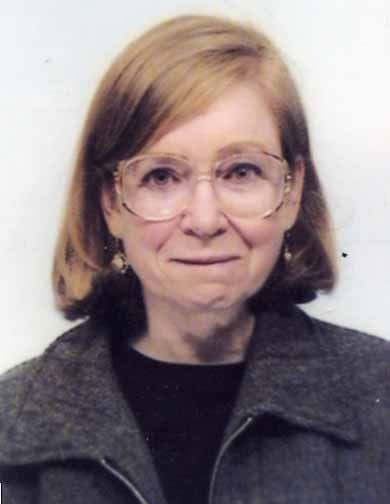
Name: Jo Dumas
Position: Senior Lecturer, College of Communications
Education: B.S. Electrical Engineering, Rensselaer Polytechnic Institute; M.A. Telecommunications, Penn State; Ph. D. Mass Communications, Penn State
Links: Personal Page, CV
What do you teach?
I teach in the Film/Video & Media Studies Department, College of Communications. COMM/WMNST 205 (Women, Minorities and Media), COMM 413W (Media and the Public) and COMM 452.2 (International Cinema-African Cinema)
How did you come to Penn State?
I came to PSU for graduate school in telecommunications from NYC where I had worked for 16 years as a broadcast engineer at WNYW- TV.
How did you come to care about the media and its influence?
As an electrical engineer at WNYW -TV, I worked daily with the technical creation and quality control of television content delivery systems and began exploring content creation through filmmaking. I took a soup-to-nuts filmmaking course at NYU in summer 1988 and began work on several independent films. One of my reasons was a growing interest in the influence and effects of media on people and concern for media’s underutilized potential to educate. In graduate studies, I learned about communications theories, policy and curriculum for building media literacy. I wanted to work in this area.
In what way do you teach your passion for other cultures?
I have traveled to many places and lived in many cultures during my life. I try to share with students the value of moving beyond fear of difference and toward knowledge and human understanding in our multicultural PSU, nation and world.
What is one profound lesson you learned while in South Africa?
The people of South Africa demonstrate how important cross-cultural communication and understanding is to building an environment of peace, justice and respect for human dignity. These elements are important to the health of any participatory democracy.
What one message do you hope to convey most to your students?
I hope to encourage students to think critically, pursue truth in their own lives, challenge their fears and discover their own creative gifts.
What has been your biggest accomplishment as a professor of communications?
Wow, I do not know, but I hope my love for the knowledge-building process has translated into some useful tools in the lives of my students.
How do your students teach you?
I learn from them every day. They tell me how the world appears to those who are still young in it and they always inspire me to be open to new ideas.
If you could live anywhere in the world, where would it be and why?
There are many places in the world I love to be including PSU and all the places I have lived. It would be great to continue to travel around the world, and I look forward to living in South Africa again.
What is one quote that is most significant to you? Why?
Ghandi’s words: ‘Be the change you want to see in the world around you.’
Also one from former South African President Nelson Mandela: ‘Our deepest fear is not that we are inadequate. Our deepest fear is that we are powerful beyond measure. It is our light, not our darkness that most frightens us. We ask ourselves, Who am I to be brilliant, gorgeous, talented, fabulous? Actually, who are you not to be? You are a child of God. Your playing small does not serve the world. There is nothing enlightened about shrinking so that other people won’t feel insecure around you. We are all meant to shine, as children do. We were born to make manifest the glory of God that is within us. It’s not just in some of us; it’s in everyone. And as we let our own light shine, we unconsciously give other people permission to do the same. As we are liberated from our own fear, our presence automatically liberates others.’