
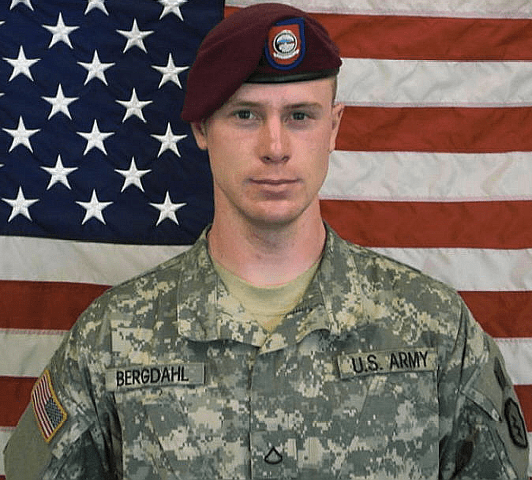
Through 10 episodes of “Serial,” Sarah Koenig sifted the fine grains of the story of Bowe Bergdahl, the American soldier who wandered away in Afghanistan, was captured and held there for five years by the Taliban, and was finally released in exchange for five Taliban prisoners at Guantanamo Bay.
In the 11th and final episode, released last week, Koenig zoomed out to the big picture: Why all this fuss about “a young guy in a really stressful place [who] made a terrible mistake” (as one of Bergdahl’s comrades put it)?
For Koenig, the key word there is “young.”
Could anything prepare a bunch of “20-something-year-olds” for Afghanistan or, for that matter, any war zone?
Bergdahl, we’re told, was not the only soldier to go AWOL in Afghanistan — he was the only one taken captive. And he certainly wasn’t the only soldier who considered walking away.
“Serial” reminds us how completely terrible it is to be in a combat zone. And like the best reporting from Vietnam, it forces us to ask the terrible question, what in the world were we doing there, anyway?
The key word there is “we.” Koenig agrees with the members of Bergdahl’s unit who decided that blaming Bergdahl for the deaths of comrades who might have been killed while looking for him is somewhat off the point. Blame war itself, because, Koenig says, these are the sorts of things that happen in war: “mistakes, accidents, people dying for avoidable or even ridiculous reasons.”
At that point it looks as if Koenig and her sources are about to blame the people in charge: first Bush-Cheney-Rumsfeld, et al., who embroiled us in Afghanistan in the first place, then Obama and his people, who have kept us there another seven years and counting. Instead, they cast a wider net.
“We signed up for Afghanistan,” Koenig says, “not every single citizen, obviously, but as a country reeling from the Sept. 11 attacks, nobody put up too much of a fuss about going after Osama bin Laden.”
Opinion polls from the weeks immediately following the attacks bear her out. A New York Times/CBS poll found that 92 percent of those surveyed supported a military response. An American Enterprise Institute poll from around the same time put support for military action at 88 percent.
But I remember the dissenting voices. Nearly drowned out by the calls for vengeance were those who pointed out that a military response wasn’t the only option. We could have treated the 9/11 attacks as a crime to be solved by police work rather than an act of war that called for retaliation. Instead of bombing and invading, we could have arrested, extradited and tried.
The lead editorial in the New York Times on Sept. 14 – three days after the attacks – noted that Afghanistan “has been a battleground and graveyard for the interests of great powers” for centuries. “To avoid a similar fate, Washington will have to act with exceeding care and skill.”
In The Times on Oct. 6, the day before the Afghan invasion, political scientist Chalmers Johnson warned that war in Afghanistan would only lead to “a further cycle of terrorist attacks, American casualties and escalation.”
Then there were the protests. At one of them, on Oct. 8, right after the fireworks had begun, Vietnam veteran David Klein said, “I don’t want to see more Americans die because of a militarist cowboy, or be dragged into a war, a long land conflict. That’s where I think Bush is taking us.”
He had that right. Here we are 15 years later and we still have about 10,000 troops in Afghanistan.
If there’s one thing I don’t understand about humanity it’s our unquenchable thirst for war. You would think the world had drunk its fill of blood in World War II, but in “Year Zero: A History of 1945,” author Ian Buruma tells us of all the conflicts that broke out as soon as the Germans and the Japanese were defeated, from Greece to Korea.
And you would think, after the catastrophic messes we’ve made in Afghanistan and Iraq, that the people running for president now would steer well clear of calling for yet another commitment of U.S. forces to the maelstrom of the Middle East.
But, as ever, power seekers want to project toughness and are willing to sacrifice young bodies to their own ambitions.
Koenig never says this in so many words, but Bowe Bergdahl is a fitting symbol for the Afghanistan fiasco: the guy who never should have been sent over there, who made a mess of things when he got there, and who then got stuck there.
The Obama administration treated him as a returning hero. The Army is going to court-martial him as a deserter. A mess, from first to last.
More Columns
View all Columns
If We’re Doing Corporate Names for Berkey Creamery Ice Cream Flavors Now, Here’s Some Other Suggestions
On a recent trip to the Berkey Creamery, I noticed what I thought was a new flavor on the board called Three Stripe Delight. I have a usual go-to list […]

Q: Who Blocks for 534 Pass Plays and Doesn’t Give Up a Sack? A: Penn State’s Trevor Buhr
Former Iowa State offensive lineman Trevor Buhr — now a Nittany Lion for the 2026 season — was a definite burr in the butts of opposing defenses on passing downs over […]

Battista: Our Summer Adventures Continue
“Life is either a daring adventure or nothing.” —Helen Keller Our 27-day summer adventure is finally coming to an end. Just one more day in our nation’s capital, then we […]


