
Update: University spokeswoman Lisa Powers responded to a request for comment with the following:
‘The various issues have been addressed previously, including our decision to ban Beta Theta Pi forever at Penn State. You can find the University’s position and responses on all of your questions at Penn State Update.’
Original story:
The now-defunct Penn State fraternity chapter where pledge Timothy Piazza sustained fatal injuries in 2017 alleges in a new lawsuit that the university’s actions to ban the chapter were an attempt to deflect blame for its own negligence and to take control of the fraternity house.
Alpha Upsilon Chapter of Beta Theta Pi — the alumni-run house corporation for the chapter — filed the seven count lawsuit in U.S. Middle District Court on Friday. Penn State, President Eric Barron, Vice President for Student Affairs Damon Sims and Senior Director of the Office of Student Conduct Danny Shaha are named as defendants in the complaint.
Piazza died of brain injuries, head trauma and internal bleeding from a shattered spleen after falling down the basement stairs at Beta Theta Pi during ‘bid acceptance night’ on Feb. 2, 2017. Investigators said he was given 18 drinks in 82 minutes before the fall and fell again multiple times on the first floor throughout the night. Paramedics weren’t called until the following morning.
The lawsuit claims Piazza ‘tripped over at least one student not associated with the chapter who was sitting on the stairs leading to the basement.’ It also alleges that internal bleeding from a previous injury and medication Piazza was taking resulted in the later falls. Both theories have been put forth by several defense attorneys in related criminal cases, but are disputed by prosecutors who say the volume of alcohol Piazza was forced to drink caused him to lose balance and fall.
Six weeks after Piazza’s death, the Beta Theta Pi chapter was permanently banned from Penn State and attorneys for the chapter argue that was done without regard for due process or following university procedures.
Sims announced the ban in March 2017, and the complaint alleges the vice president for student affairs ‘had been repeatedly warned by the Penn State community and others that the social culture among students at Penn State… was unsafe.’
Banning the chapter, the lawsuit contends, ‘was an effort by Sims, Shaha, Barron and Penn State to cover up their prior negligence in failing to adequately address the Penn State drinking culture.’
Administrators, the chapter’s attorneys say, ignored requests to reform policies related to drinking and the recommendations of a Greek life task force. Penn State has instituted sweeping changes to Greek life conduct and alcohol policies since Piazza’s death and supported legislation overhauling the state’s hazing laws.
They also allege that administrators ignored the coroner’s determination that Piazza’s death was accidental and instead blamed the chapter for his death.
‘… Penn State sought to cover up the failure of its policies to provide a safe environment by deflecting blame to the Chapter and the House Corp., when the blame for these tragic events actually rests at the feet of Sims, Shaha, Barron and Penn State itself,’ the filing says.
The complaint describes at length the accomplishments of the chapter’s alumni, the chapter’s high GPA, its philanthropy and recent awards for excellence from the national Beta Theta Pi and Penn State. It also cites a comment made by Sims after Piazza’s death in which he said he previously would have called the chapter ‘the gold standard’ and among ‘the top three’ fraternities at Penn State.
Penn State, the chapter claims, also sought to target Greek life in general, even though ‘numerous deaths, serious injuries and sexual assaults,’ related to alcohol that have occurred on and off campus,’ those incident involved students affiliated and unaffiliated with fraternities and sororities and Greek life comprises 20 percent of the student body .
The defendants chose to ‘selectively punish’ the Beta chapter after ‘they failed to heed repeated warnings that the existing policies regarding the Penn State drinking culture were woefully inadequate, and failed to implement any type of corrective action…’
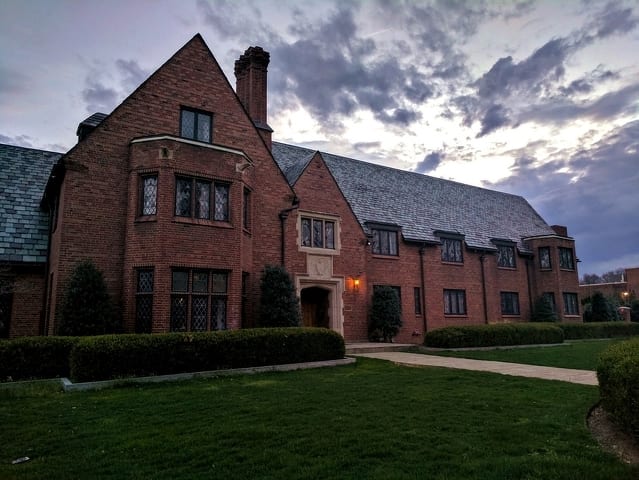
By banning the chapter, Penn State ‘is attempting to surreptitiously trigger a deed provision,’ that gives the university the option to purchase the house if it is no longer in use as a fraternity, according to the lawsuit. Both parties have been involved in a separate lawsuit related to the use of the house and whether the buy-option should be triggered since last year. The house,which is still being used for alumni visits, is one of three fraternity houses remaining within the perimeter of the University Park campus.
The lawsuit calls Penn State’s conduct ‘arbitrary and capricious and constitutes a wrongful taking of property rights.’
The chapter is suing Penn State and the administrators for violations of 14th amendment rights to due process and equal protection, negligence, fraud and deceit, civil conspiracy and bad faith and tortious interference. They are seeking in excess of $75,000 for each count.
The lawsuit is the latest in long list of legal cases since Piazza’s death. More than two dozen defendants have faced criminal charges, with most pleading guilty to misdemeanors or entering Accelerated Rehabilitative Disposition programs for first-time offenders.
Jim and Evelyn Piazza, Timothy Piazza’s parents, reached out-of-court settlements with the national Beta Theta Pi and with Penn State, but earlier this year filed a separate lawsuit against 28 former fraternity members and the security firm hired to check on fraternity parties.



