
I have to admit that I am concerned.
I have always enjoyed a good book and when I was at an impressionable age, I read a series of books for my high school English class that stuck with me. Aldous Huxley’s “Brave New World” and George Orwell’s “1984” were two of the classics that shaped my ideas. For those not familiar with “1984,” it featured a figurehead called ‘Big Brother’ that was always watching and all-knowing. In the book, every citizen is under constant surveillance with no hopes of privacy. The slogan, “Big Brother Is Watching You” is used as a reminder to the citizens that the leaders are always watching.
With the onslaught of Facebook (FB), Twitter (TWTR), Instagram and many other social networks and apps, the notion of privacy seems to be held much less dear in this day and age. After 9/11, we may hold our need for protection in higher regard than our need for privacy.
Warren Buffett says, “Privacy has its limits.” I still say it is a slippery slope.
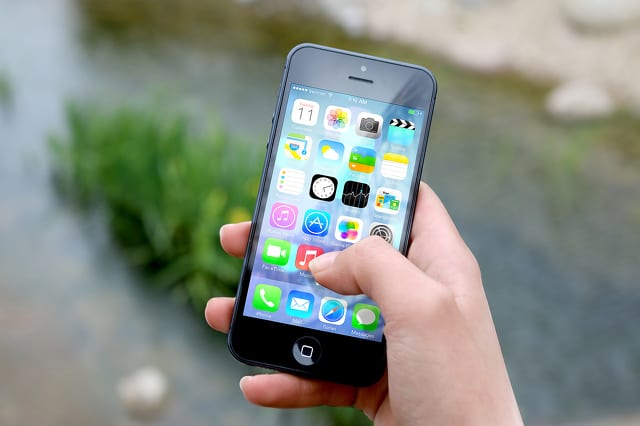
With that, I come to the latest attack on privacy and security: Apple (AAPL) versus the FBI. In a poll in Investor’s Business Daily, run by IBD and TIPP, 49 percent of Americans said Apple should help the FBI.
The question is, what do we give up in making this choice?
Let us first address what the FBI is asking Apple to do. The FBI was unable to unlock an encrypted iPhone of a terrorist involved in the San Bernardino, California 2015 attack. Apple’s iPhone has built-in security features that erase data after several unsuccessful login attempts so the FBI asked for Apple’s help to unlock the phone under the All Writs Act (AWA). The AWA authorizes the United States Federal Courts to “issue all writs necessary or appropriate in aid of their respective jurisdictions and agreeable to the usages and principles of law.”
In Apple CEO Tim Cook’s rejection, he states, “We have done everything that is both within our power and within the law to help. But now the U.S. Government has asked for something we simply do not have, and something we consider too dangerous to create.”
For most Americans, they may have the same reaction that I did when I first heard the news. What could be dangerous about unlocking a phone of a terrorist? Of course we want to get the bad guys, but it comes down to more than that.
What the FBI is asking Apple to do is write new code to unlock its phones. The security of the iPhone was created to protect its users’ personal information from hackers. The downside of Apple creating this new code or ‘key’ is that it can be used in other legal cases with impunity.
We also should be concerned that if the good guys can get the key, nefarious types could also gain access. Apple built its business model on allowing people to use their phone for contacts, calendars, internet and, most recently, to pay for purchases. People trust that the information on their phone is secure. The government is asking Apple to go against this business model and create code that will ensure that their product, the iPhone, is no longer secure. Encryption is necessary to protect civil liberties for everyone.
Apple is defending its denial by claiming the government is violating its First Amendment right. I find it intriguing that the 1984 Macintosh ad by Apple featured an Orwellian figure that Apple was meant to counteract. Apple seems to be putting its money where its mouth is. In our free, democratic society, should government be permitted to demand a public company write code that lessens the security of its product? In a less democratic society, of which there are still quite a few, couldn’t this very code be used against public dissidents and freedom fighters?
So far, the legal community sides with Apple. In a New York case, a magistrate judge denied the government’s request for information on an iPhone.
I will leave you with a quote that summarizes my thoughts on the Apple vs. government debate: “There is nothing new in the realization that the Constitution insulates the criminality of a few to protect the privacy of us all.” – U.S. Supreme Court Justice Antonin Scalia.
More Columns
View all Columns
8 More Reasons to Be a Fan of Penn State’s Terry Smith
Penn State safeties coach Deon Broomfield was born in 1991, the same year his fellow defensive backfield coach Terry Smith was a Nittany Lion football team captain. That season, Smith […]

If We’re Doing Corporate Names for Berkey Creamery Ice Cream Flavors Now, Here’s Some Other Suggestions
On a recent trip to the Berkey Creamery, I noticed what I thought was a new flavor on the board called Three Stripe Delight. I have a usual go-to list […]
Q: Who Blocks for 534 Pass Plays and Doesn’t Give Up a Sack? A: Penn State’s Trevor Buhr
Former Iowa State offensive lineman Trevor Buhr — now a Nittany Lion for the 2026 season — was a definite burr in the butts of opposing defenses on passing downs over […]


