
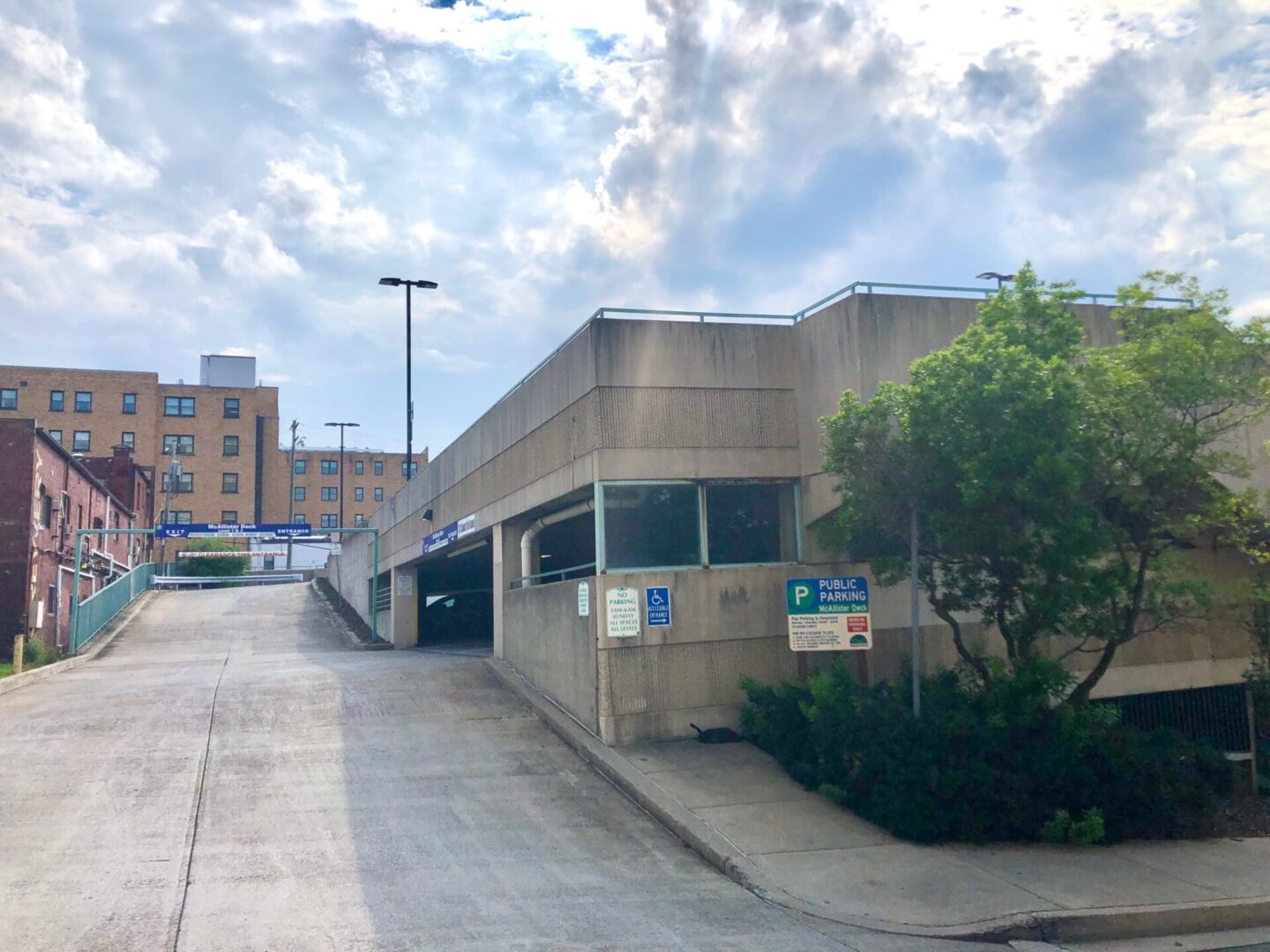
Repair work is scheduled to begin on Wednesday at the McAllister Parking Deck in downtown State College after borough staff discovered cracking on a structural beam.
The deck will remain open, but the affected area will be closed off until repairs are completed.
Parking department staff noticed the cracking during a routine walk-through of the 33-year-old parking structure on Tuesday, according to the borough. In consultation with a structural engineer, the beam was secured with a temporary structure to support the weight until a contractor arrives on site.
“The affected area has been blocked off and the community is advised to avoid these sections of the parking facility until further notice,” the borough wrote in an update on Tuesday.
Staff from the parking and public works departments were locating owners of vehicles in the impacted area to relocate them to other parts of the deck throughout Tuesday afternoon.
A structural engineer and a repair company are expected to be on site Wednesday morning to conduct a full assessment and begin permanent repairs.
Approximately 40 of the deck’s 230 parking spaces will be closed, and permit holders will be relocated to other areas of the facility.
The borough plans to send a community notice when repairs are completed.
More Local News
View all Local News
State College Borough Council OKs Free Holiday Season Parking Downtown
State College Borough Council on Monday approved a program that will once again offer free downtown parking options for the holiday season, starting before Thanksgiving and continuing until after New […]

Harlem Globetrotters Bringing New Rivalry Tour, Free Pregame Party to Bryce Jordan Center
The Harlem Globetrotters are bringing a new lineup of rivals and interactive basketball challenges to Penn State in March as part of the team’s 2027 world tour. The exhibition basketball […]

State High Band Celebrates 100th Anniversary
More than 230 State College Area High School marching band alumni returned to the field on Friday night to join 240 current band members for a celebration 100 years in […]


