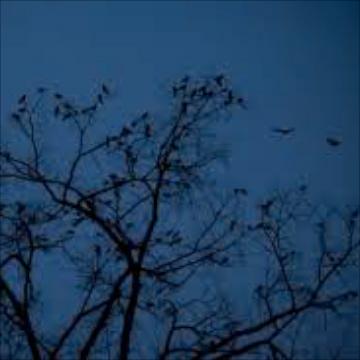
Those who live among the fraternity houses and student apartments in the Highlands are all stirred up this week over noisy and messy gatherings.
The neighborhood listserv is crackling with complaints about “havoc in our ‘hood”: “disgusting messes” in our yards and on our sidewalks, “devastated” homes and vehicles.
The Highlanders are also frustrated by the response of both town and gown. The borough says, “There is generally not much the Borough can do to remedy the situation.” The university stands accused of shifting the problem off campus and into the neighborhoods.
Residents have therefore taken matters into their own hands. One homeowner is getting the throngs to leave by marching outside at sunset and banging pot lids together. “Don’t be shy,” she writes. “Think New Year’s Eve and go out and make some noise.” Others propose clapping wood blocks together, sounding air horns, exploding fireworks or firing cap guns.
But another neighbor says such harassment efforts provide only temporary relief: “I’ve tried noise, throwing things. They scatter, but are back in a few days. Last Friday when I went out to shovel it was like a Hitchcock film. Six a.m. and I could hear and see hundreds. ”
You’re thinking, same old story, right? The students flock to the fraternity parties, make lots of noise, leave messes and everyone complains. But hold on. Who said anything about students? The subject line of these e-mails isn’t “Students.” It’s “Crows.”
In fact, during these first weeks of the spring semester, the crows have largely supplanted the students as neighborhood nuisances. According to one school of thought, it has simply been too cold for raucous human gatherings. Given a choice between staying in or braving the elements in cocktail dresses that are not much bigger than cocktail napkins, the female of the species seems to be staying in.
Cultural anthropology offers a more intriguing explanation: Families send the Woo people to this remote region of Pennsylvania to receive shamanic training. As part of that training, initiates learn how to transform themselves into other creatures. The crows’ behavior – gathering in large numbers, making noise, eliminating bodily waste in public – mirrors the students’ behavior because the crows are the students.
Think about it. Do you ever see Clark Kent and Superman at the same time? Likewise with crows and students. Caws replace woos. Street trees replace street corners.
Skeptical? Metamorphosis is too universal a theme in storytelling traditions from around the world to be pure fantasy. Consider “The Frog Prince” or Circe’s transformation of Odysseus’ crew into swine or the plight of Beast in the popular fairy tale. A story from the Mataco people of northern Argentina (I just happen to have a collection of Mataco tales kicking around my office from my days as a folklore student) begins thus:
“The birds, who had changed into men, gathered to make a feast. Many women had come to join them and also to become their wives [that is, have sex with them]. They drank and they sang…”
Sounds like a typical weekend in the Highlands to me.
The editor of the Mataco collection, Johannes Wilbert, was a student of South American shamanism. When we, his students at UCLA, saw two crows take off from the library tower late in the afternoon we would swear it was Professor Wilbert and Professor Gerardo Reichel-Dolmatoff, another shamanism scholar, beating the L.A. traffic at the end of the work day.
A visitor to our fair neighborhood noted that the sidewalk in front of several fraternity houses wasn’t shoveled after a recent snowfall – further evidence, perhaps, that the students had mysteriously disappeared. (Except, of course, that longtime residents can tell you that the sidewalk in front of a frat house often goes unshoveled even when all 20 or so able-bodied young men are on the premises.)
If startling noises won’t convince the crows to skedaddle, the Highlanders would do well to ponder which is the bigger nuisance, crows or college kids. Noise-wise, it’s probably a wash. Caws or woos?
As for messes and property damage: On the one hand, the crows are less likely to knock down a fence or throw a hammer through a window. On the other hand, they are more likely to poop on our heads.
One possible deciding factor: Crows supposedly have such good memories for people’s faces that they might hold a grudge against you for months after you’ve made them feel unwelcome – something I doubt many drunken Woo people would be able to do.
Personally, since I don’t have a fence I’m inclined to take my chances with the hammer heavers. So come on, crows. You’ve had your nice little spirit journeys. Time to resume human form. I promise not to call the police the next time you make noise. Unless it’s State Patty’s Day, which I refuse to tolerate.