
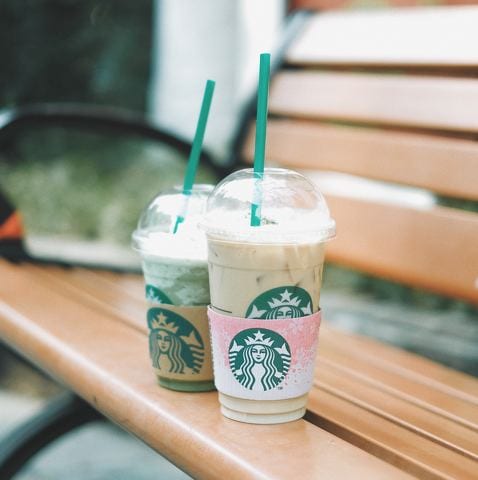
On a recent trip to the southern beaches, I stopped at a fast food restaurant for a break and a snack. They were offering a special on peach tea-lemonade. I decided that the caffeine and a taste of the “sweet tea” for which the South is famous would be the way to go.
As I stood there waiting for my order, I was faced with a values decision. To straw or not?
This has been the year of the plastic straw. Restaurants, airlines and even the big chains like Starbucks are jumping on the no straw bandwagon. We’ve been told that straws are among the top items of garbage found across the world on beaches and in the ocean. Many of us have been horrified by the pictures and videos of sea animals and wildlife showing injuries from ingesting plastic, including straws. Catchy Twitter slogans like #stopsucking have encouraged us to refuse straws when we are offered them at restaurants or coffee shops and to find alternative ways to ingest our beverages.
I ultimately decided not to take the straw and to do my part. I would sip my sweet tea as I continued my drive by removing the plastic lid from the top of the plastic cup. The irony is painfully obvious.
#itsbiggerthanstraws
The plastic straw debate is so typical of what we as Americans do. We find something that outrages us, usually fed by a fact or picture or news story, often taken out of context. We start a cause. We promote it on social media. We make a big to-do about it. It makes us feel better. We feel like we are doing something and therefore have control over our lives. But what does it really do?
The fact that the garbage and the plastic in our oceans is damaging our environment is indisputable. However, how did the straw become the demon? Why not the plastic cup lids, like that which came with my sweet tea or which even the almighty Starbucks puts on every cup of $6 coffee we purchase? What about those stupid green plastic sticks that Starbucks puts in their hot coffees – presumably to prevent spills in your car from their cups with plastic lids?
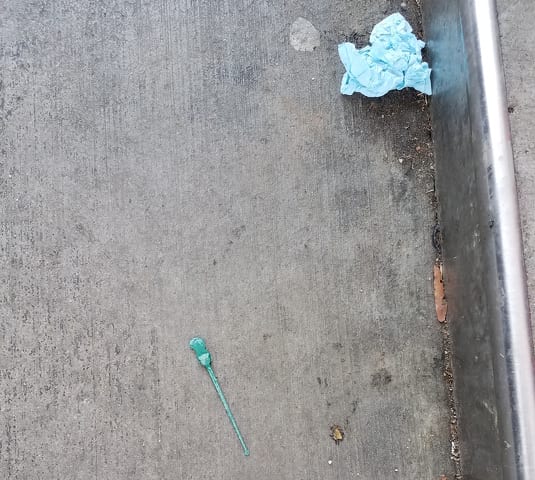
A plastic stick from a Starbucks drink discarded on the ground. Photo: Patty Kleban
What about bottled water?
In many of the stores and restaurants that are banning plastic straws, I can still purchase water or other beverages in plastic bottles and get my leftovers packaged in a styrofoam container for me to take home. That also says nothing about the food wrappers and other plastic materials in the delivery and distribution of most of the foods or products that we consume.
According to BantheBottle.net, straws are in sixth place on the list of trash in those big garbage islands found in the ocean. They come in behind plastic bottles, plastic bags, cigarettes, food wrappers and plastic utensils.
The list of cities and restaurants banning plastic bottles is quite a bit shorter than those banning plastic straws. Why not start with the number No. 1 culprit? We know smoking is also really bad for people so why not ban it all together since cigarette butts are worse than straws? And then there is the question about what to do with people outside of the United States? The U.S. is certainly one of the biggest offenders, but unless we collaborate with our global neighbors, how much impact can we have?
We also could start a ban on eating seafood since those fishing nets seem to be a big problem, too.
The problems with a total ban on plastic straws are the unintended consequences. People with a variety of disabilities count on plastic straws – metal straws, paper straws and other alternatives often don’t work for people with disabilities. The biodegradable “plastic straws” are only of benefit if they are sent to special processing facilities and directed away from the landfills.
The ban on straws has become, for me, a symbol of fluff activism that doesn’t give us much bang for our bucks.
Sure, let’s ban straws. But straws are only part of the problem. We can’t fix any big problem by limiting our focus one area.



