

When Penn State Vice President Damon Sims voiced concern about a new apartment building proposed for ‘Beaver Canyon,’ he said he was not offering an official university position.
Instead, he indicated at the time, he was speaking to represent himself.
Sims made the statements at a State College Planning Commission meeting on Oct. 6, when commissioners were weighing how to handle the eight-story downtown building proposal. (They ended up not endorsing it.)
But university President Graham Spanier said Tuesday that Sims ‘wasn’t speaking just as a private citizen.’
Answering a student question at a Faculty Senate meeting, Spanier said Sims went before the borough Planning Commission to ‘sensitize’ the group to university concerns about student safety, alcohol abuse and other worries surrounding high-density student housing off campus.
‘If anything, I think you can expect more such interventions, if you want to call them that,’ Spanier said at the Faculty Senate meeting. He and Sims had discussed Sims’ appearance at the borough commission, though Sims did not offer an ‘official university opinion’ to the group, Spanier said.
‘We feel that it is our responsibility to weigh in on these issues,’ but without telling the borough what to do, Spanier went on. He said the university is urging the borough to consider elements such as density and balconies as State College sees the development of more off-campus student housing.
The area unofficially known as ‘Beaver Canyon’ spans the 200 and 300 blocks of East Beaver Avenue, where tall, dense student housing began materializing several decades ago. In the past 15-or-so years, it has seen a number of street disturbances — at times called riots — as drunken students and visitors have turned rowdy and violent.
HFL Corporation, a State College-based development group, has proposed adding an eight-story apartment building on the 200 block of East Beaver, at the Locust Lane intersection. A former fraternity house sits there now.
A majority of borough planning commissioners have declined to endorse the HFL concept, citing worries about residential density, behavioral concerns and the reservations of some permanent residents in the adjacent Highlands neighborhood. The Planning Commission serves as an advisory body to the Borough Council, which has yet to vote on the matter.
Advocates for the HFL proposal have said the property at East Beaver and Locust Lane is especially well suited for student housing. The HFL proposal also would add to the borough tax base and help ease pressure on traditionally single-family neighborhoods, which have seen an influx of student residents, proposal supporters have said.
On top of that, they have noted, borough crime data show no conclusive trends suggesting that high-rise buildings are more likely than other off-campus student residences to house misbehavior.
Also at the Faculty Senate meeting Tuesday, Spanier delved into another off-campus matter: the stabbings reported in town two weekends ago. A faculty member brought up the subject.
Spanier called the incidents ‘very unfortunate.’ He said he has ‘reason to believe that one of the reasons that happened off campus is because of the stepped-up efforts on campus’ to secure events against weaponry.
In addition, Spanier said he gives Penn State student leaders ‘a lot of credit because (they) were as unhappy about this as we were.’ He said the student leaders are stepping up to communicate with their peers and head off such problems in the future.
‘We don’t want to see an escalation in people coming to student events armed,’ whether on campus or off campus, Spanier said.
Earlier coverage
More Latest Penn State News
View all Latest Penn State News
Penn State Introduces New Public Health Major
Students interested in preventing illness, improving health care access and addressing health problems affecting entire communities now have a new degree option at Penn State. The university’s College of Health […]
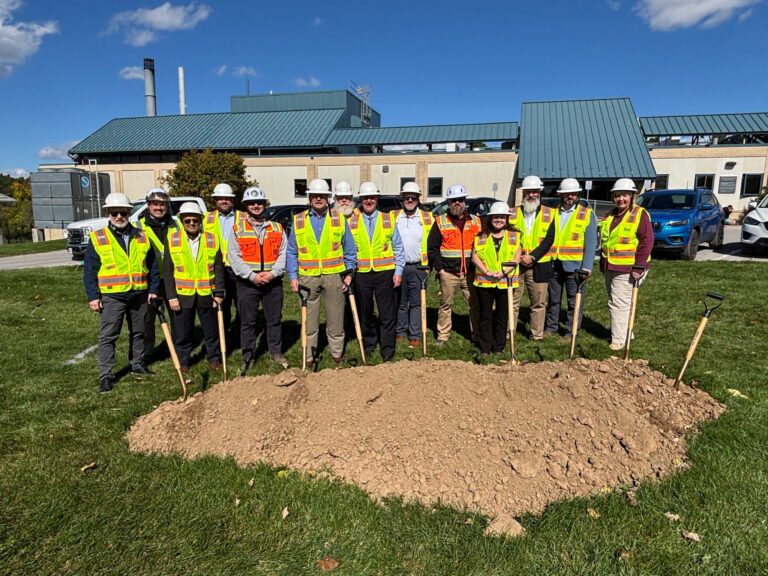
Penn State Breaks Ground for Major Expansion of Animal Diagnostic Lab
Penn State and Pennsylvania Department of Agriculture on Monday celebrated the groundbreaking for a $65 million expansion to the university’s Animal Diagnostic Laboratory. The 47,000-square-foot, two-story addition to the lab […]

Penn State Student Groups Hosting Events for Oct. 7 Anniversary
Penn State Hillel and Penn State Students for Justice in Palestine are holding separate events this week in observance of the third anniversary of the Oct. 7, 2023, Hamas-led attacks […]


