
A divided State College school board advanced Monday a tentative 2011-2012 budget that would raise taxes 2.65 percent, trim several million dollars in expected costs, and reduce or eliminate more than two dozen jobs in the process.
But board members said they expect that financial blueprint to change before final budget adoption on June 27, as more than $1 million in state support could be restored during the state’s budgeting process.
And after extended remarks from students, parents and employees, four of the nine board members said they want to revisit the planned elimination of in-car driver education in the next school year. The board agreed to take up that question anew later this month.
Cutting in-car driver education — pioneered in State College — would save the district just more than $200,000 a year, according to the administration. But more than a dozen residents voiced concern Monday with elements of that plan, including how it would shift staffing resources.
Because in-car teachers hold some seniority at State College Area High School, they could remain in the district and ‘bump’ less-senior faculty members from employment, according to district labor rules. One effect, students and parents said, is expected to be the firing of well-respected history teacher Matthew Patton.
Some said they worried about the effect of replacing him in the history classroom — including the Advanced Placement classroom — with someone apparently less experienced in social studies.
‘We cannot afford to discard our star teacher,’ said district parent Cecilia Dunoyer. ‘There has to be a better way.’
Interviewed after the meeting, acting Superintendent Michael Hardy said the administration is working closely with the social-studies coordinator to put the most competent people in key faculty positions — that is, if the in-car education program is indeed cut.
‘We’re going to staff every department with the most qualified people to teach in their element as much as possible,’ Hardy said.
Earlier, in-car teachers Brad Fisher and Chris Weakland presented the board with an original concept for retaining the in-car program. Their plan would increase the student fee for in-car — to $311, from the current $50 — and reduce some equipment.
But it would continue to allow students to take in-car as part of the traditional school day, Fisher and Weakland said.
The board has accepted copies of their pitch.
As for the proposed budget, board members split 6-3 over the tentative $111.6 million spending plan, with board President Ann McGlaughlin, Vice President Jim Pawelczyk and member Richard Bartnik dissenting.
‘I believe we can do better,’ McGlaughlin said. She called on the administration to ‘reconsider all line items’ in the budget before the final budget vote June 27, to try to drop the proposed tax increase below 2.65 percent.
McGlaughlin said the district’s long history of budget growth, robust economic growth and formerly unrestricted taxing authority has left the school system ‘ill equipped to face current economic circumstances.’
Sluggish property-value growth, falling state and federal support and fast-rising fixed costs — including for health care — are primary contributors to a district budget gap that’s been projected at several million dollars for 2011-2012. The proposed budget fills that gap, though it would elevate the tax increase beyond the 1.4 percent goal set earlier by a majority of the board.
Pawelczyk and Bartnik reiterated support Monday for a tight cap on the tax increase. If the district doesn’t take substantial cost-control and restructuring measures now, Bartnik said, ‘we’re on a path to re-live this budget year again and again and again,’ and to suffer ‘death of a 1,000 cuts.’
He advocated a sharp focus on health insurance, for which he suggested employees should shoulder a bigger share of expenses. The average family covered under district-provided health insurance fronts just $660 annually for that coverage — well less than the $4,000 national average, Bartnik said.
He said district pays the rest of the roughly $12,000 annual cost for each family covered under a district health plan.
Board member David Hutchinson had a different take, saying the board has been relatively unresponsive to the public’s willingness to pay more to safeguard the school district. He sees a tax increase of 2.6 percent to 2.7 as ‘a shared sacrifice’ that affects both the schools and local residents, he said.
State-imposed limits on district tax increases are expected to tighten in the coming years. And if the district doesn’t try to solidify revenue streams right now, Hutchinson said, ‘we’re also tying the hands of future boards. I’m not sure that’s good public policy.’
A public hearing on the budget is scheduled for 7 p.m. June 6 at Mount Nittany Middle School.
In other matters Monday night, the board authorized the administration to project the likely cost of a bid-ready design plan for replacing Memorial Field’s west-side bleachers. That cost estimate is due to go before the board at its next meeting, scheduled for June 13.
The board also acted — without dissent — to endorse a proposal for a revamped elementary math program. Details of the proposal are available through the district website.
Earlier coverage
More Local News
View all Local News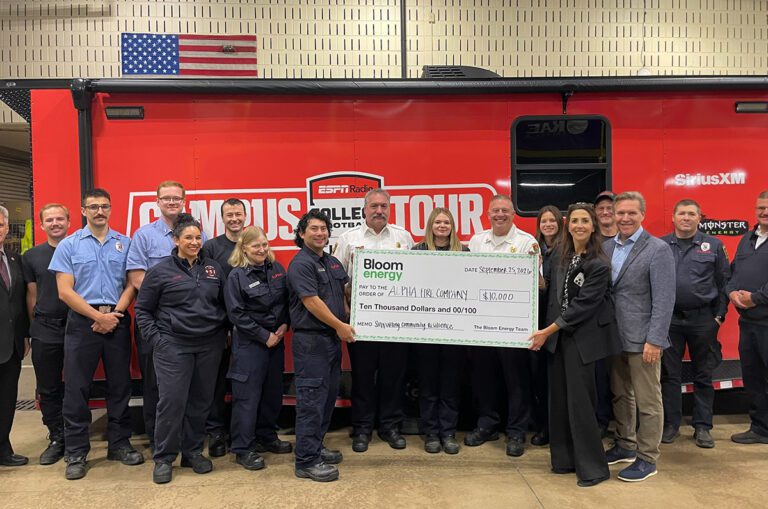
Alpha Fire Company Receives $10K Donation From Bloom Energy During ESPN Radio Tour Stop
ESPN Radio’s College Football Campus Tour made its first stop at Penn State, bringing a $10,000 donation from Bloom Energy to Alpha Fire Company ahead of Saturday’s Homecoming matchup between […]
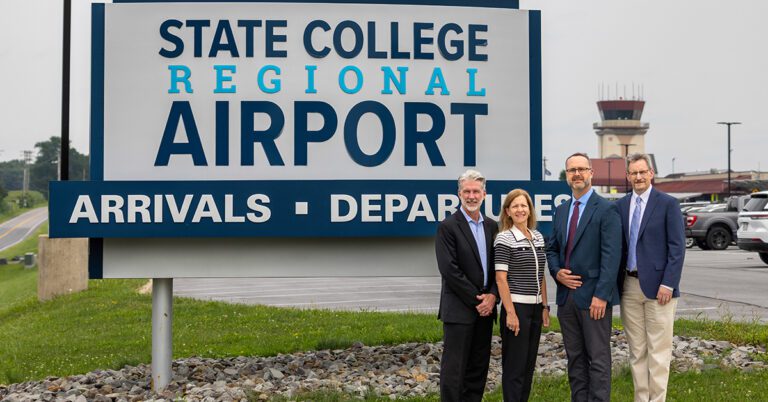
Charlotte Flights Bring a New Route to Growth at State College Regional Airport
Direct flights to Charlotte beginning in October promise easier travel and broader economic opportunities for Centre County.

Wiz Khalifa to Perform at Champs Downtown
Rapper Wiz Khalifa is set to perform at Champs Downtown in State College, the sports bar and club announced on Instagram. The show at 7 p.m. on Oct. 1 is […]


