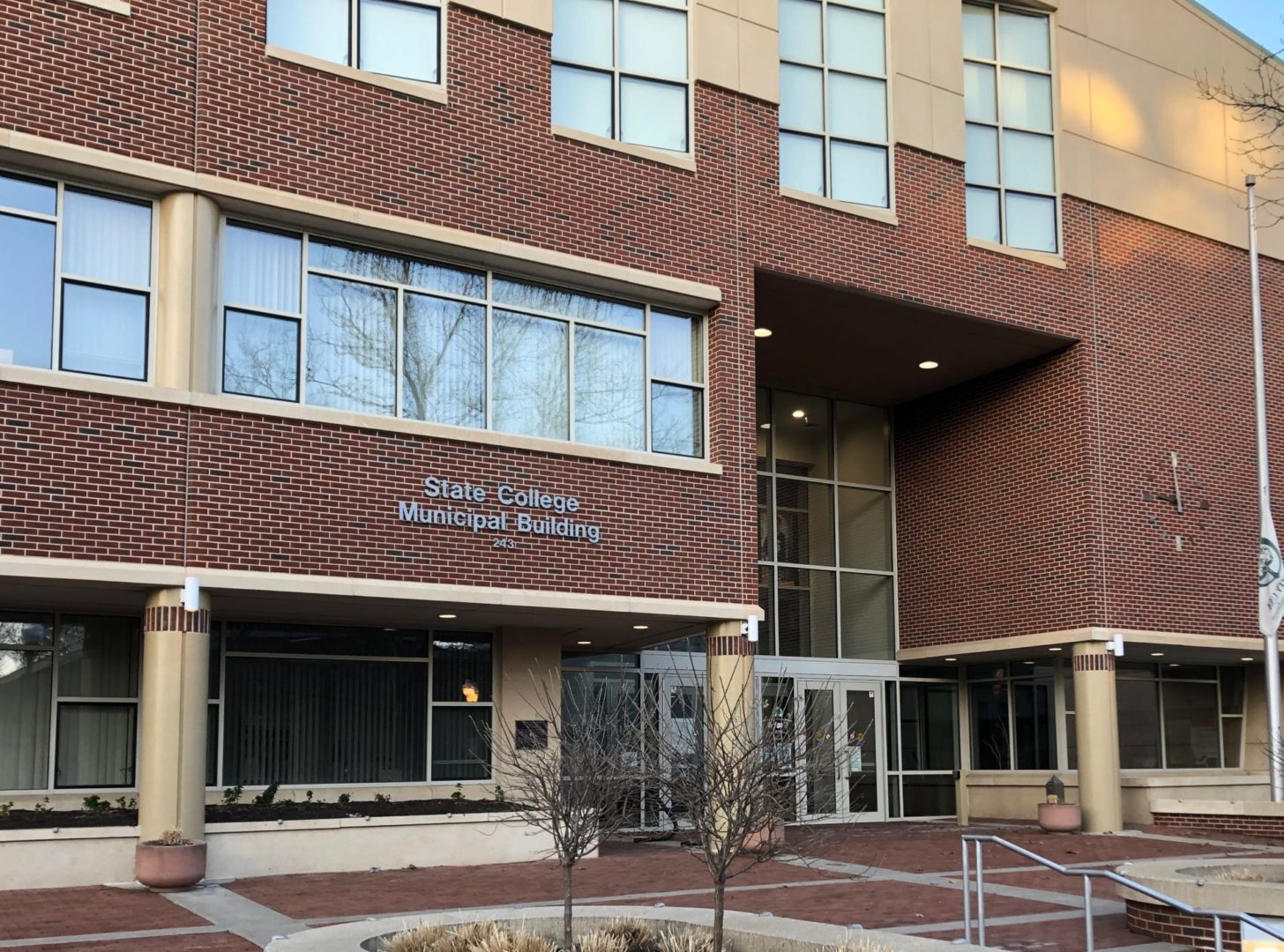
State College Borough Council on Monday approved awarding contracts totaling more than $800,000 for street resurfacing, replacement of a cooling tower at the municipal building and consulting services for downtown master planning and reauthorization of the Downtown Improvement District.
Street Resurfacing
Kinsey Construction, of York, was awarded the borough’s 2025 street resurfacing contract as the lowest among three bidders at $270,142. The bid was well below the borough’s engineer cost estimate of $524,397
The contract includes roadway milling and overlay, pavement base repairs and select curb, gutter and driveway apron replacements on Glenn Road, B Alley, and East Irvin Avenue. Work is expected to begin in late October and be completed by Dec. 5, according to a summary provided with the agenda for Monday’s meeting.
Council member Matt Herndon said the bid was a good price for a necessary project, but questions “complete streets” elements, per a borough policy adopted in 2017, were not incorporated. Complete streets aims for a road network that is safe, efficient and convenient for all people regardless of ability or mode of transportation. The policy states that the borough “shall approach every transportation improvement as an opportunity to create safer, more accessible streets for all users.”
“I’ve been asking for these to be included, these complete streets ideas, to be included in our bids for almost two years now on council and I have yet to see projects that I would truly call complete streets be bid out,” Herndon said. “…When we’re digging up a street, shouldn’t we be making it a safer street? I believe that’s what the [policy] says.”
Borough Manager Tom Fountaine said projects like the one at hand “do not involve the complete streets analysis” because “they’re just simply surface overlays.” He added that the streets being resurfaced have low traffic volumes and speed, and typically do not have safety concerns.
“The borough does follow the complete streets policy and currently a project is underway on Foster Avenue that includes complete street components,” Fountaine said. “We’ve conducted other complete streets since that policy was put in place.”
He noted that there have been some conflicts between policies for complete streets and traffic calming, and he anticipates those will be resolved with the implementation of a Vision Zero plan aimed at eliminating traffic deaths and injuries. A consultant will be hired to assist with that and it will be on the borough’s 2026 work plan.
Council President Evan Myers suggested council receive a presentation on complete streets in early 2026, because most current members were not serving when the policy was adopted.
“I think we need to have a big discussion on this and really solidify if there are conflicts what council’s intent is if it’s not clear for staff,” Herndon added.
Cooling Tower
Council awarded two contracts for the replacement of the municipal building’s cooling tower and associated controls. G.R. Sponaugle, of Harrisburg, was the low bidder for the tower and installation at $344,950, while Automated Logic was the sole bidder for replacement of controls at $36,290.
The current cooling tower and controls are original to the 24-year-old building and have reached the end of their useful life, building and grounds manager Lance King wrote in a summary included with the agenda.
“Repairs have become more frequent and more difficult in recent years,” King wrote.
The project is funded in the borough’s 2025 capital budget. Fountaine was not certain of the timeline for installation.
Downtown Master Plan and DID Reauthorization Consultant
Council also approved a $200,000 agreement with Moore Iacofano Goltsman to provide services for the borough’s downtown master plan and the Downtown State College Improvement District’s reauthorization plan. Funding will include $150,000 already allocated in the borough’s capital fund and $50,000 from the State College Redevelopment Authority.
State College’s current downtown master plan was adopted in 2013, providing a framework for guiding growth and change in the district
Herndon said he would like to see the plan focus not only on economic activity in the downtown, but also sustainability and transportation safety.
“There are many examples of downtowns that do all three of these things,” Herndon said. “When I read through this, I saw it very much focused on economics. I want to make sure those two very critical issues do not get left behind.”
Fountaine noted that both of those issues are being addressed throughout the borough, including downtown, through the Next Generation Safety and Mobility Plan and the redevelopment of the State College Sustainability Plan.
“That information will be provided to the consultants as well. Some of it already has been,” Fountaine said.
MIG will also work on the five-year reauthorization plan for the Downtown State College Improvement District. The DID — which promotes and supports downtown business through a variety of initiatives, contributes to beautification efforts and organizes a multitude of public events — was last reauthorized in 2021.
At least 60% of property owners in the district — who pay a levy similar to a real estate tax that funds the DID’s operations — must not object to the renewal before borough council can approve its reauthorization.
For both plans, council member Nalini Krishnankutty said she “would really like to have a larger scope of engagement” than what was included in MIG’s proposal.
Fountaine said he anticipates a “robust engagement process” that will include two committees and regular updates to council the DID board and the Redevelopment Authority.
“One [committee] will be focused on the [master] plan and last time it was a fairly large committee of citizens, representatives from various ABCs, council members, elected officials, downtown improvement district,” he said. “We would anticipate something similar to that, although we don’t have the final layout of what we’re recommending yet.
This project will then move to the DID reauthorization phase, and that will be a committee primarily comprised in all likelihood of property owners and those individuals affected by the Downtown Improvement District which would be consistent with what we did with the last downtown master plan.
In total the project is expected to take 15 months and be completed by December 2026.