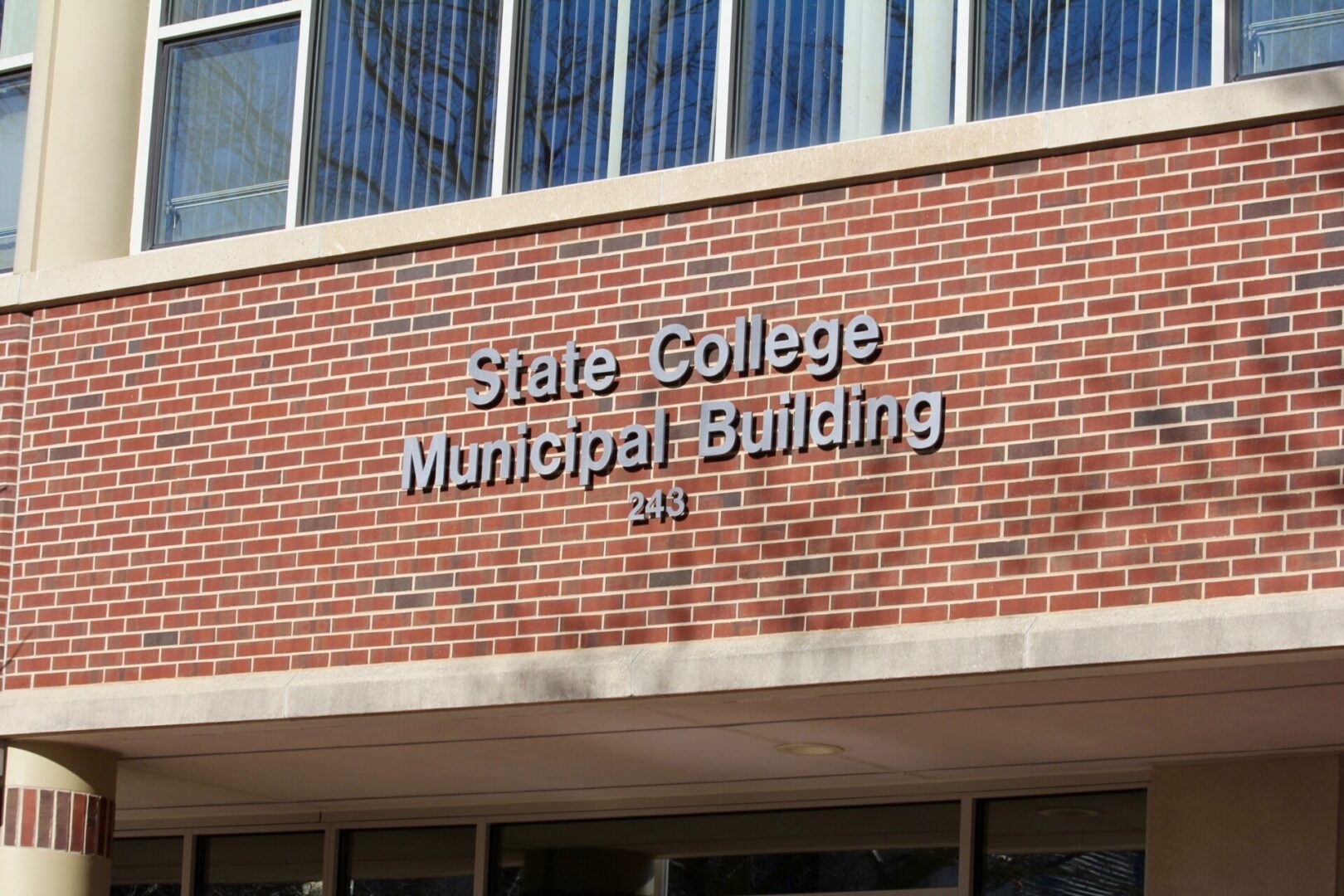
State College’s Borough Council president said this week that he cannot support a proposed 35% real estate tax increase in the 2026 budget, while several residents said the potential hike would be a significant detriment to addressing housing affordability.
The eight-mill tax increase is part of a proposed $73.4 million fiscal plan that would deliver the borough’s first structurally balanced budget in five years. It was first presented to council in early November and has been the subject of review and discussion across multiple meetings since then.
During a public hearing and work session on Monday, Council President Evan Myers said the borough is getting closer “to the time when we’re going to have to make some hard choices in this budget.”
“Realistically, as it stands now, I certainly personally can’t support what’s being proposed from a taxation standpoint, and I know that others on this council feel the same,” Myers said, noting that housing is a significant focus for council and a major component of the borough’s zoning rewrite.
He suggested deferring some projects to 2027, by when the state legislature may have expanded local taxing power.
“We believe we’re getting close to the point where we maybe have the ability to enact some more fair taxation, to spread some of the burden to some of those folks who come to State College. that visit us come for football games and other events,” Myers said. “We love having visitors come to State College, but State College has to pay for all the different things, all the services that those folks take advantage of, and that burden falls on the residents because we’re limited by the state legislature enacting some of those taxes on those folks. We might be able to do that in the near future so we can defer some things to that day, which may be a year or so away.”
Borough Manager Tom Fountaine called the proposed budget “very much status quo” with no new employee positions and some projects pushed to future years.
State College’s home-rule charter and financial policies require a structurally balanced budget using current revenues to fund current expenditures, but that has not been the case since before the COVID-19 pandemic. Over the past few years, the borough has used some of the $13.2 million in American Rescue Plan Act money it received to cover recurring expenses.
“The problem that we’re incurring now, is not necessarily an increase in spending,” Dwight Miller, borough finance director, said on Monday. “It’s been that since 2021 we’ve been using one-time money to cover annual recurring expenses and the 2025 budget used $2.5 million of one-time money to balance it. That equals four mills, so before we even started putting a dollar to the 2026 budget, you were four mills in the hole,
“So really, the problem is a either a spending problem that has occurred over a long period of time or a revenue problem. And I’ve been explaining this for years now that we’ve been using one time money. We’ve been using [real estate] transfer tax money and we’ve been using ARPA funds to balance recurring expenditures. And that one time source of money now has run out.”
Three residents who spoke during the public hearing, however, said the proposed tax hike would be onerous to homeowners and renters, who would experience increased rent, in an already high-cost borough and as prices for necessities such as health insurance and electricity continue to rise.
“During a time when housing affordability has been a focus of council members and the community, the proposed tax increase moves affordability in the opposite direction,” said Mark Huncik, president of the Highlands Civic Association
Jeff Martin, another Highlands resident, suggested the borough should renegotiate its payment in lieu of taxes agreement with Penn State, which owns a substantial amount of real estate but as a nonprofit does not pay direct taxes.
“I feel like you’re saying us, the people who live here, need to subsidize a billion-dollar company across the street because they don’t pay real estate tax, which is ridiculous,” Martin said.
He added that he wants residents to “pay our fair share,” but that the proposed tax increase, along with a planned 12.5% increase in the refuse rate, goes too far.
“What do you what do you want us to do, move out? I feel like you’re pushing us out,” Martin said.
“You’re smart. Figure this out. It’s too much.”
Council member John Hayes said that because the county has not reassessed properties since 1995, “there’s an optics problem here that our mill rate looks eye wateringly high.”
“When we talk about that mill rate, we’re doing it because we’re pretending your house is worth what it was worth in 1995,” Hayes said. “And so if we were to have a countywide reassessment, then our mill rate would be much, much lower, even at a revenue neutral standpoint. So I think it’s really important for our constituents to be aware of the fact that yes, our mill rate looks incredibly high, but that’s as a function of assessment policy at the county level.”
Fountaine, meanwhile, said that staff are continuing to look at ways to reduce the proposed increase.
“[An eight-mill increase is] certainly not anybody’s desire, but in order to be able to continue this, the borough’s costs don’t go down from year to year. It’s largely personnel and service delivery cost. And so it’s very difficult to reduce that cost without reducing service levels,” he said.
What’s Next?
Council will continue discussions of the budget at a work session at noon on Friday and 7 p.m. Monday. Budget adoption is scheduled for council’s meeting at 7 p.m. on Dec. 15.