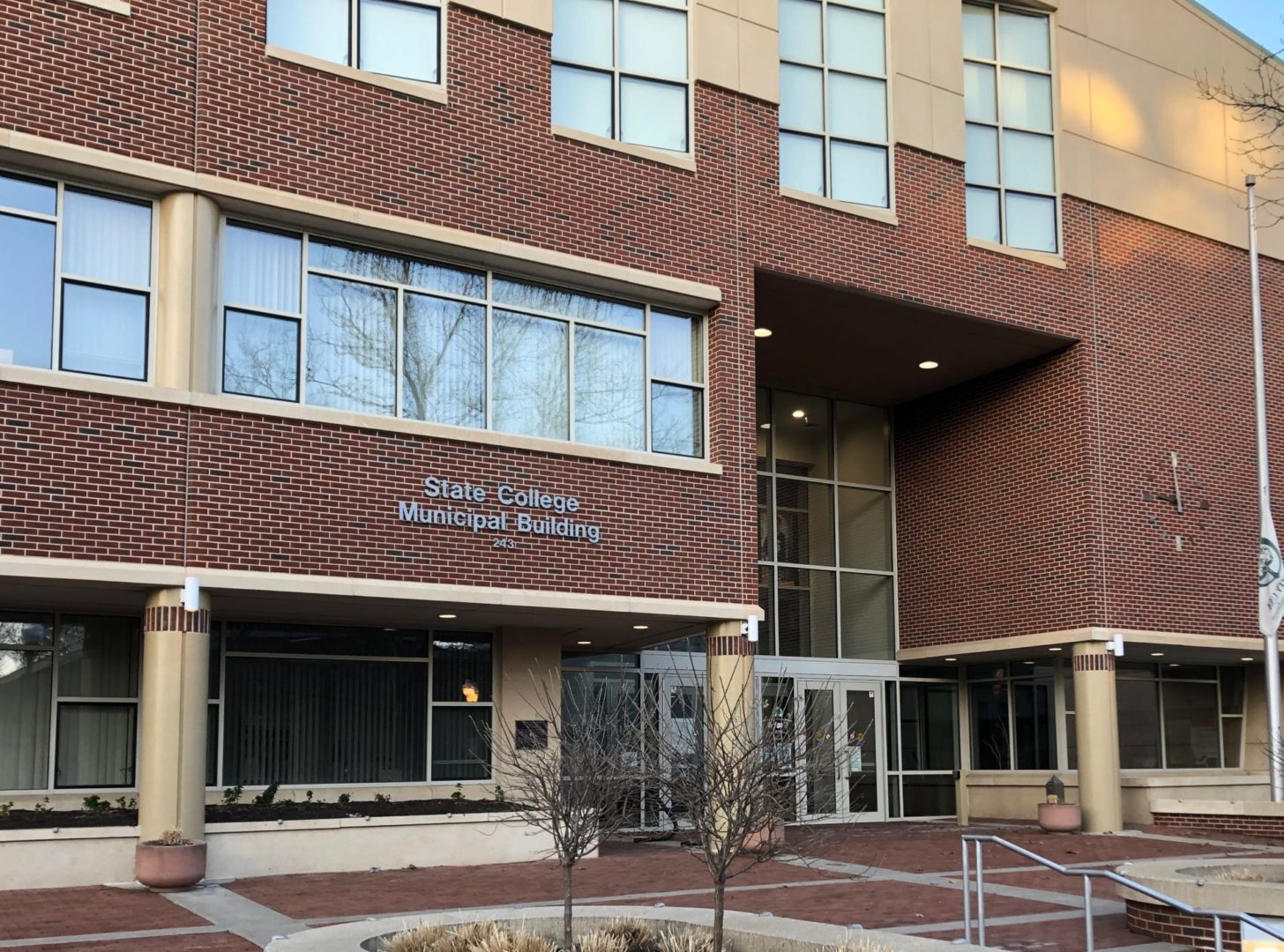
State College council members on Friday signaled support for a substantial reduction in the proposed real estate tax increase for 2026, though the borough’s top administrator cautioned the move would only put off addressing budget deficit issues another year.
During a work session on Friday, council informally agreed a plan that would reduce the tax increase from the proposed eight mills down to two mills by delaying some capital projects until 2027 and using an unexpected influx of real estate transfer tax money to balance the budget.
State College’s financial policies require a structurally balanced budget using current revenues to fund current expenditures, but that has not been the case since before the COVID-19 pandemic. Over the past few years, the borough has used reserves bolstered by some of the $13.2 million in American Rescue Plan Act money it received to cover recurring expenses.
In November, council received a proposed 2026 fiscal plan that would use an eight-mill tax increase to deliver the borough’s first structurally balanced budget in five years.
“For four or five years, the borough has been relying on fund balance — or its savings account — to balance the budget,” Borough Manager Tom Fountaine said on Friday. “And we started the 2025 fiscal year with a budget that was unbalanced and was again relying on reserves, which is what’s driving the tax increase to begin with. We can’t continue to rely on those savings accounts. Once that money is gone, it’s not replenished, and short of reducing service it’s very difficult to balance the budget.”
But council members made clear they wouldn’t vote for such a significant tax increase, and on Friday indicated they wanted to move forward with a combination of two plans to reduce it proposed by Fountaine.
The first proposal was to lower the increase to four mills by using $2.8 million the borough will receive from unexpected transfer taxes on two major property transactions in November to balance the budget. That money, Fountaine noted, is a windfall that the borough cannot expect to happen again next year and is thus not recurring revenue. (While Fountaine did not specify the properties involved, on Nov. 3 a joint venture of Morgan Stanley Real Estate Investing and Global Student Accommodation acquired The Standard and The Metropolitan high-rises in downtown State College from a subsidiary of the Abu Dhabi Investment Authority and Landmark Properties.)
As an alternative option, Fountaine proposed deferring $2.5 million in street repaving projects in the capital budget and using that money to achieve the four-mill decrease.
“The staff does not recommend you cut further because you’re already deficit funding, which just means that the 2027 budget will have to have that much higher,” Fountaine said.
Council instead ultimately conducted a straw poll and directed staff to prepare a revised budget the utilizes the new transfer tax money as well as deferring $1.25 million in street projects to get the tax increase down to two mills. Council President Evan Myers said the eight-mill increase would not “serve our residents” and “makes things less affordable.”
Before that, council members inquired about a variety of ways to further whittle down or eliminate the tax increase for 2026. Fountaine, however, said what was proposed was “very much a status quo budget… and truly to reduce the budget further will result in reduced service levels.”
Acknowledging that it would be impossible to analyze full $73 million budget for further cuts and their potential impacts before it must be passed this month, council also discussed possibilities for cost reductions to help balance the 2027 budget.
Noting that public safety makes up about a quarter of the budget, council member Gopal Balachandran suggested evaluating the impact of not filling three open police officer positions and reducing the department’s budget from 60 to 57 officers.
“The relationship between public safety, policing and crime rates is a very, very complex metric, and… I don’t believe that we would sacrifice public safety at all by reducing the number of officers to 57,” Balachandran said. He cited a reduction in crime in Los Angeles in the late 1990s after a number of police officers were dismissed, though later clarified that reflected nationwide trends.
Balachandran said he thinks the State College Police Department “does a great job” but that “we still have to deal with some significant core [budget] issues that are not going to be dealt with unless we think about cutting.”
Police Chief John Gardner responded that he understands the borough’s challenge, but that “we’re not Los Angeles and we don’t aspire to be Los Angeles.”
Borough police officers do many things aside from arrests, Gardner said, such as co-responding to EMS and fire calls, administering emergency medical care and addressing quality-of-life issues in neighborhoods.
“Certain things like that are going to have to go by the wayside. We’re going to have to pick and choose, and I don’t want to see us do that,” Gardner said. “We’ve always done more here rather than the bare minimum. … The increased use of overtime, it’s a fact. There isn’t a day goes by or a night shift goes by that we aren’t scheduling overtime, just to fill the minimum staffing levels on a shift. Officer burnout is a critical thing right now… We have to be concerned about the mental health, not only just of our officers, but the families impacted by this.”
Balachandran agreed, but said council must also consider the mental health impacts on families who will have to pay hundreds of dollars more in property taxes.
“We have to really encounter the fact that we’re getting inundated with emails … where people are saying, ‘If you expect me to pay $400 or $500 more per year in taxes, that’s really going to impact my life. It’s going to cause deep stress and deep harm to me,” he said.
Throughout borough government, Fountaine said, it would be difficult to cut back staffing.
“I think we have challenges if we don’t fill the current staffing levels. That create a number of problems,” he said. “Number one, particularly in the police department, without getting back to full staff, we’re spending an awful lot of overtime to cover those shifts because we don’t have enough personnel to manage those shifts. And secondly, we have some concerns with employee burnout in those situations where we ask employees to do that additional work. And I know we’ve had concern around that as well. So I think at the current expectation in terms of service levels, …there is really no quick, easy way to cut the budget.”
Fountaine also said that not having the police department fully staffed slows some revenue and eliminating positions isn’t a straightforward cost analysis, but that “dollar-for-dollar” removing budgeted funds for three officers would be equivalent to less than 1 mill.
State College may get help on the revenue side with state legislation that could pass in the next year and which would allow municipalities greater local taxing power, particularly for an excise tax on alcoholic beverages, Fountaine said.
“We don’t know exactly how much that [revenue] increase would be, but we think it would be a significant increase,” he said. “As I’ve said a number of times, we’ve been working with the other Centre Region municipalities on a proposal to attempt to gain legislative authority to levy a tax on alcohol in State College, since it does drive a lot of the costs that we incur for police services, emergency medical, a lot of other factors go into that. And there may be other revenue options as well.”
The borough, he said, will be conducting an analysis on extending special event rates to street parking, which are currently used in garages during times such as Penn State football weekends and Arts Fest, “to see if that is a revenue source and an option.”
Council member Matt Herndon, meanwhile, said he hopes to have the borough’s zoning rewrite finished soon because it contains measures that will increase the tax base and result in greater recurring revenues. He also wants to study staffing reductions.
“I think we definitely need to balance this long-term,” Herndon said. “There is a great fear in the community about this increase. And we can’t just pretend that if we defer things into the future that won’t happen next year. It will. We need to work on long term structural fixes, but we also need to do something right now in terms of cuts.”
Myers said council would work on finding ways to balance the 2027 budget starting early next year.
Mayor Ezra Nanes said council and staff face some difficult decisions, and agreed that a tax increase is needed for 2026, but that it could not be as high as the originally proposed eight mills.
“I do I support the idea of starting a year looking hard at the budget and and really digging into it, because unless the state legislature gives this borough more ways to raise revenue, the only way to raise it is to raise taxes on the people who live here and, as Mr. Herndon said very eloquently many times, if we can increase our tax base that may help, and that’s going to take a lot of things going right for that to happen,” Nanes said.
Council will continue discussion of the budget during its meeting at 7 p.m. Monday. Final budget adoption is scheduled for council’s meeting at 7 p.m. on Dec. 15.