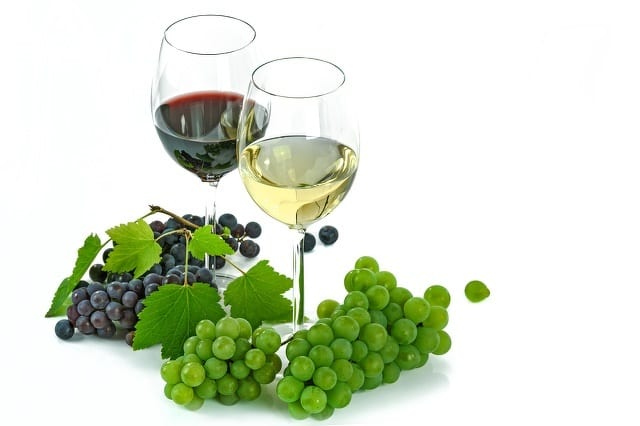
“Every great drink starts with a plant.” – Amy Stewart
It seems particularly appropriate at this festive time of year to pay homage to the central role plants play in the libations we enjoy. And, what better way than through the entertaining bestseller “The Drunken Botanist” by gardening maven Amy Stewart.
Her central premise is that, to her, any liquor store is a magical botanical garden. This is because plants are the basis for everything on the shelves, either through the processes of fermentation or distillation or by providing flavorings.
To put it simply, plants naturally make sugar, and when that sugar is combined with yeast, a microscopic simple-celled organism present all around us, alcohol is a by-product. Fermentation is the name of this metabolic process; distillation is making a harder alcohol from a lower alcohol base.
The number of plants that are most often transformed into alcohol (often through trial and error) is amazing — agave, apples, barley, corn, grapes, potatoes, rice, rye, sorghum, sugarcane and wheat — and Stewart discussed the history of each in detail.
For instance, the grain barley (Hordeum vulgare) is a base for beer, whisky, vodka and gin. It is a tough grass and widely adaptable to different parts of the world due to its hardiness against cold, drought or poor soil. It is believed that barley seeds literally went around the world from their origin in Iran about 3400 B.C. to finally be brought to North America by Spanish explorers.
Beer is thought to have originated by accident. A bucket of barley was left to soak overnight to soften the tough outer husks and was contaminated by wild yeast. This resulted in a yeasty, bubbly, mildly intoxicating brew which the villagers no doubt enjoyed immensely. Cave paintings show people sitting around a large pot of beer, drinking through long straws.
As early as 600 A.D. those in the barley-growing regions realized that beer could be distilled into a much more potent spirit — whiskey. By the 1400s, aqua vitae, a generic term for distilled spirits, was being made in places like Ireland and Scotland. To this day there is still debate as to which of those countries invented it.
Once this straight alcohol leaves the still, it is diffused with a dizzying array of herbs, spices, fruits, nuts, bark roots and flowers in endless combinations:
■ Angelica (Angelica archangelica) is an herb from the carrot family whose seeds and dried roots flavor such wines and liquors as Strega, Galliano, Benedictine and Drambuie.
■ Coriander (coriandrum sativum), also known to us as cilantro, provides an oil from its dried fruit that is found in almost all gins, absinthe and vermouths.
■ Juniper (juniperus communis) contributes hand-picked berries from places such as Tuscany, Morocco and eastern Europe to add to other spices for gin.
■ Hops (humulus japonicus) flowers provide the bitter flavoring and help preserve beer, a discovery made way back in 800 A.D.
■ Birch tree (betula papyrifera) sap and bark was mixed with honey, water and spices such as sassafras to get a mildly alcoholic beer enjoyed by early Americans. During Prohibition, brewers created non-alcoholic versions such as birch beer. Today, that distinctive flavor is present in the Pennsylvania-made liqueur Root.
■ Sloe berry (prunus spinosa) is a small sour fruit that comes from the blackthorn shrub, mainly found in England and Europe and is used in sloe gin.
Many other drink-related topics are also presented throughout “The Drunken Botanist,” including the use of cork from the native Portuguese oak vs. screw tops on wine bottles. Natural cork is supposed to be better for the wine and kinder to the environment.
Also, does a splash of water in scotch heighten its taste? Scotch connoisseurs do recommend it because it makes the scotch cloudy and the “clumps of molecules in suspension bring the richest flavors forward.”
There is an extensive section on botanical mixers; everything from fruit to herbs, nuts and berries, complete with garden notes on growing your own. There are also more than 50 drink recipes interspersed throughout.
As Stewart wrote, “Vintners, brewers, distillers, and bartenders are an endlessly inventive lot” and the 21st century has brought a renewed interest in using fresh local ingredients to add to their changing inventions of cocktails. There’s no question that plants will continue to contribute their essence to every perfect drink.