
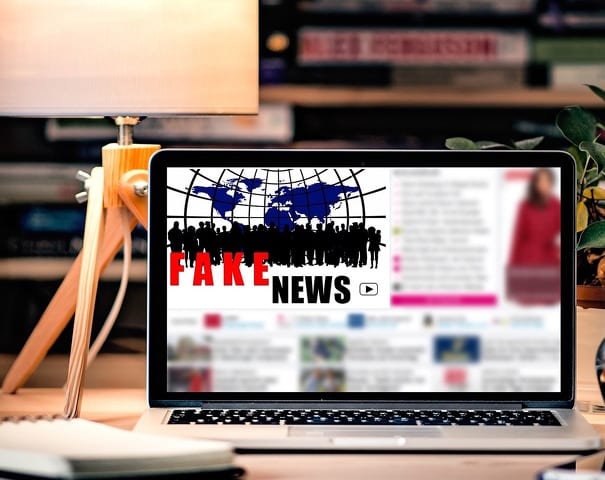
I think we can all agree that calling something fake is not usually a good thing.
In academia, faking credentials can get you in dutch pretty quickly. Faking a source in a research paper or pretending to be the author of something that someone else wrote can get you some attention real fast.
In other business or in medicine, being a “fake” can mean actual legal charges.
Being fake in relationships doesn’t generally lead to long-term satisfaction or connection. Being fake in your interactions and pretending to be someone you are not gets exposed pretty quickly.
Fake jewelry. Fake designer bags. Fake resumes. Fake eyelashes. Fake people.
Most of us can see through the façade and know what is real and what isn’t real. We value the real diamond but know that the cubic zirconia is manufactured and not as expensive.
We don’t like being tricked by the fake.
The big news of late in the popular media is called fake news. People on both sides of our divided country are screaming and pointing their fingers about fake news. Fake news stories are those that are made to appear as if they are from trusted sources, investigative, “real” reporting of an incident or event, or response by a real person or persons.
Fake news, by the way, differs from news that we just don’t like. Fake news is just that – made up stuff to intentionally mislead, make a buck or to hurt someone else.
Fake news used to be reserved for the grocery store tabloids and for the occasional real journalist who slipped up or took a shortcut to get ahead in his or her career.
Most of us look at those sources, roll our eyes and, sometimes get a giggle from what they are trying to see as news. One of my all-time favorites came from the Weekly World News. The headline read “Man marries cow. Beefy bride says ‘I moo.’” Who could make this stuff up?
Apparently, making this stuff up and putting it out as real news is not as difficult as one would hope.
The advent of the internet and social media have made the ability to widely distribute a fake news story surprisingly easy.
Fake news is now bubbling up and erupting into the mainstream media like a bad case of acne. One fake news story pops to the surface and another one appears right next to it.
And, the sad part is that readers aren’t bothering to check for facts.
For example, during President Barack Obama’s last term, I remember reading a story that looked very official. It claimed that documents had been uncovered proving that President Obama had a history of being a prostitute. The person who shared the story on Facebook was not doing so as a joke or as further proof that the divide in our country has people losing their minds with stupidity. He believed it.
God help us all.
The frightening thing about the fake news industry is that the news sources that many of us have trusted in the past are being caught with fake stories. Not unlike the people who buy the tabloid newspapers as they are checking out at the grocery store, real reporters and news outlets are falling into the trap. You can almost watch it happen. The story gets posted on social media and soon, and without verifying sources, regular citizens and our formerly trusted news reporters are sharing it – or worse. The story somehow makes it to the mainstream media.
Sadly, in this day and age, it’s hard to get facts. Many of the fact checking organizations now have a political slant. Whether you choose Fox News or CNN, we know that very few are bias free. NPR used to be a pretty good source of facts but watching their collective coming apart at the election of President Trump has really weakened their validity of late. As we know, the candidates, the political party or even the elected officials themselves often repackage real news in a way to make themselves look good.
My solution? Follow the advice of that famous quote. “Don’t believe everything you hear and only half of what you see.” Don’t trust everything you read. Salt, as they say, looks a lot like sugar.
For the record, this is an opinion column. I am not a news reporter. The little box at the bottom of every column indicates that the opinions I am expressing don’t necessarily reflect the publishing entity or my employer. The purpose of the op-ed piece is to offer perspective that may help the public dialog on an issue. Even so, I have an editor who checks my facts although never edits my opinion.
In other news, don’t confuse opinion with fact. Don’t confuse fake with real news. Check your sources and look for bias. Just because you read it in a newspaper or on a website, doesn’t make it true.
More Columns
View all Columns
Paterno: Keep the Faith and Stand Your Ground, Penn State Fans
One of the great leadership lessons from Lincoln was the lesson of the letter. When he was angry, he would write a letter to the person who’d angered him. He’d […]

For Starters, the Nittany Lions’ Identity? 42% Penn State, 40% Iowa State
Matt Campbell uttered the same three words again and again and again on Tuesday in his press conference in Beaver Stadium — where he and his Nittany Lions return on […]
100 Years for State High’s Band: Time Flies When You’re Having Fun
Since its inauguration in October of 1937 as the State College High School football field, Memorial Field has produced some remarkable memories. It has showcased the shining talents of six […]


