

In a past column, I touched on the top question I get as a freelance writer <96> how do I get published. This time, I<92>m going attack the second most popular question I get.
How do you find the people you interview for your articles?
Ah yes, finding sources. The Holy Grail for writers. This might be even tougher than getting published, especially when you need anecdotal sources (the people who have experienced the situation you are writing about). Expert sources are a little easier to get because someone is always willing to plug a new book or get some free publicity for their business/university.
Sometimes I get very lucky and I<92>ll get assigned an article with the sources already provided, like the profiles I do for Rural Builder magazine. Or I get a list of possible interview subjects, and I have to contact them all until I find enough people who say yes.
But those situations are rare.
Most of the time, when I need a source, I go to a website like www.profnet.com. I provide a description of the article I<92>m writing and the type of sources I<92>m looking for, and it gets sent out to hundreds of potential interview subjects. I usually get a lot of responses that aren<92>t helpful to that particular article, but I save the information because there is always a good chance that I<92>ll need that source in the future. (I also get a lot of article ideas this way, but that<92>s a subject for another day.) While this is where I get most of my expert sources, every so often I get an email from someone who says, <93>I<92>m not an expert but I have a personal experience that fits your article.<94>
Another way to find experts is to search the on-line book stores. Like I said, authors love the chance to plug their book, and most of them will take the time to do an interview with you. I find that searching through bookstores first is easier than a random web search. The majority of authors have websites now, and that makes it easy to get their contact information.
Universities are always a good place to search, as well. I<92>ll admit, though, that while I love having Penn State in my backyard, I try to use contacts there sparingly. Editors want variety when it comes to sources.
Internet listservs and communities are good places to find sources (as well as ideas). It<92>s best to be an active member of the community before begging people for interviews, but if you are willing to take the time to get marginally involved, you<92>ll find it pays off in source interviews.
Remember the song on Sesame Street, who are the people in your neighborhood? Don<92>t hesitate to look around the neighborhood to see who might be a good source for an article interview or information. If the article is for a national publication, you don<92>t want to fill it with all neighborhood sources, but if you are doing an article that requires, say, three government officials, why not use one nearby?
Last on this list but perhaps first on my personal search list, don<92>t hesitate to ask friends and family for help. Most of my friends have at some time been called on to do an interview. I ask them for help, too. When I was working on an article on autism, I remembered one of my friends talking about a couple who raised two children with autism. My friend arranged an interview with the couple, two people I never would have known about otherwise, but who were invaluable to my article.
Of course, once you find the source, you have to do the interview, and I<92>ll tackle that issue next month.
More Local News
View all Local News
How Continuing Education at Penn State Equips Today’s Workers With Skills They Need Now
The needs may be different, and the format may have shifted since its launch in 1967, but at its core, Penn State Continuing Education continues to do what it has always done: equip Pennsylvanians to work in the industries that…
Alleged Penn State Frat Drug Ring Leader’s Brother Charged After Being Found With Cocaine on Boat in Centre County, Authorities Say
The brother of the alleged leader of a cocaine trafficking ring operating out of two Penn State fraternities is facing misdemeanor drug charges of his own after an incident at […]
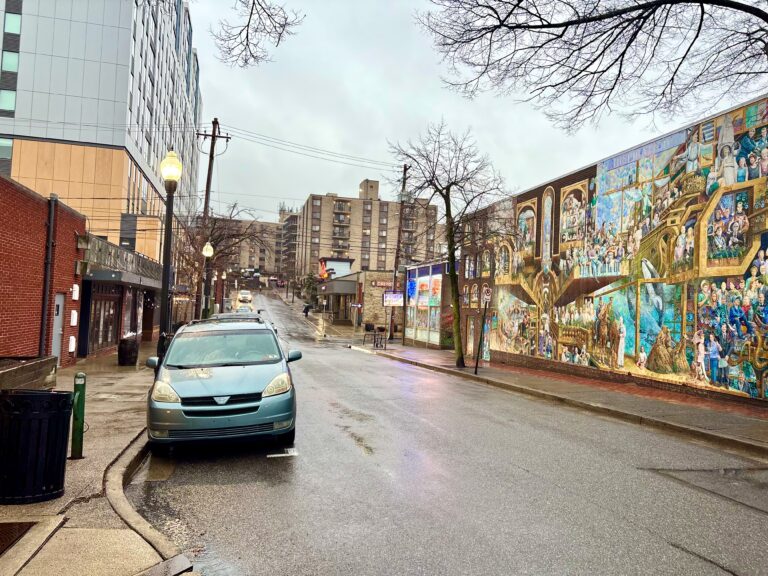
3 Downtown State College Streets Set to Become One-Way for Pilot Program
Three downtown State College streets will be converted to one-way starting next week in a pilot program aimed at increasing parking spaces and loading zones. Beginning Aug. 31, Hiester Street […]


