
Artificial intelligence has come to occupy large parts of our lives in a very short time. This rapid change has required massive investment in data centers. Because of data centers’ impacts on electricity, we thought it would be prudent to place solid information in the public eye.
Right now university administrations in Pennsylvania have called for large investments in AI through faculty, special administrators, literacy campaigns and new research and educational initiatives. Both of Pennsylvania’s party gubernatorial candidates have stated their support for data center development.
AI refers to computer systems that perform human tasks that previously required human intelligence. They can recognize speech, be used to make visual art, diagnose medical conditions and mimic human emotions when prompted to. AI systems use algorithms, data and statistical models instead of the human brains’ biological processes. These tasks’ complexity requires massive computing power located in data centers.
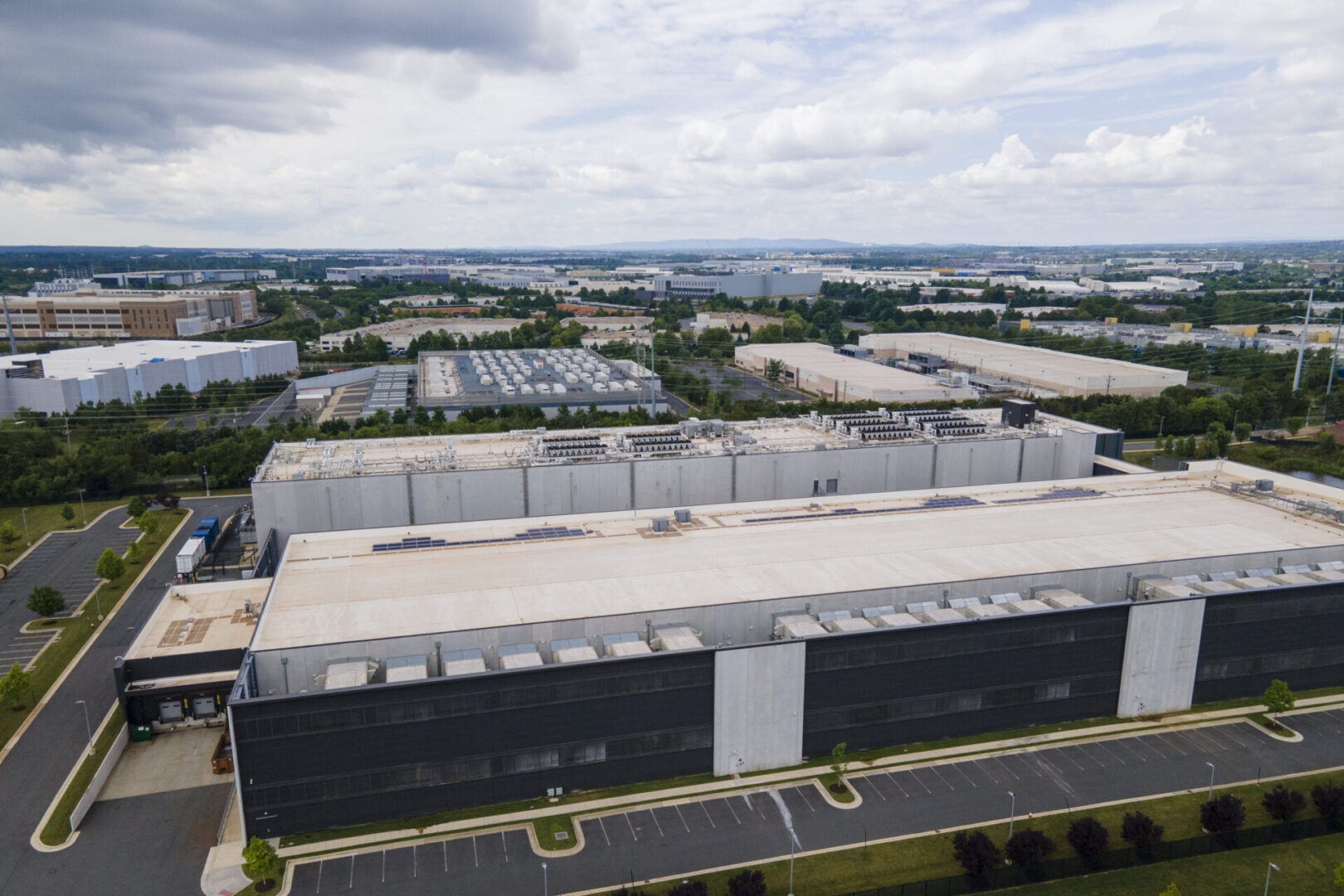
Pennsylvania law defines a data center as “a facility or group of facilities that is used to house and operate equipment that receives, stores, aggregates, manages, processes, transforms, retrieves, researches, or transmits data.” According to the Pennsylvania Data Center Proposal Tracker, Pennsylvania has 90 total centers somewhere on the development pathway with at least three dozen completed and three dozen more on the way.
Data centers are increasing energy demand. The International Energy Agency reports that using a virtual assistant like ChatGPT uses 10 times the electricity of a standard Google search. But AI is being used to try and solve massive problems in defense, finance, medicine, engineering and environment. In the United States, data centers consumed 183 terawatt-hours of electricity in 2024, more than 4% of our total, a tripling from 2012. The Electric Power Research Institute (EPRI) projects usage could increase to between 4.6% and 9.1% of all electricity consumed in the U.S. by 2030. The World Resources Institute points out that “the difference between those figures, around 200 terawatt-hours (TWh), is equivalent to the energy consumption of almost 11 million homes.” But a Berkeley Lab report predicts a potential tripling of data center electricity demand to 12% by 2028, making that difference appear faster and somewhere near 18 million homes.
Increased demand will threaten supply, increase prices and drive-up greenhouse gas emissions. The 2025 Parallax Report by Telesto Strategies shows the United States moving from an energy surplus to an energy deficit by 2030. It is important to recognize that regulatory changes, transmission bottlenecks, slowing renewable energy development, new manufacturing and tariffs are impacting electricity. However, data centers are the largest impact.
Across the United States, prices are projected to rise an average 5% annually. The steepest increases will likely fall where data center growth is the largest: Virginia, California, Texas, Illinois and New York. Virginia’s 665 data centers are notable for Pennsylvania because we export electricity to Virginia through grid operator PJM. Whatever the increases will be, it will not affect all people or organizations equally. Low-income families, small or cash-strapped townships, boroughs, cities, counties and school districts will face the most hardship.
Finally, increased demand is falling on an emissions-heavy grid. A study from Cleanview released this month found that 1,750 power projects with at least 219 GW of power were cancelled in 2025. Dozens were in Pennsylvania. Smaller hyperscale facilities that use 100 million kilowatt hours of power annually will be responsible for about 40,000 metric tons of carbon dioxide equivalent, akin to emissions for a borough of 5,000 people. But truly massive hyperscale campuses will cover 1,000 acres and have emissions like those from Pennsylvania’s mid-size cities.
We note the Pennsylvania Public Utility Commission issued a Tentative Order for a statewide tariff to guide hyperscale data center connections. We will see how they protect reliability, prevent cost shifts and address emissions, all of which were addressed during public comment. It seems very unlikely for a requirement or allowances for onsite renewable energy generation. Public comment closed on the proposal on Dec. 22, 2025.
At a time when people across Pennsylvania, family and business rate payers, and state and local governments are concerned about reliability, about their personal and government budgets and our environmental legacy, we thought high-quality information would be useful. Ultimately, the rise of artificial intelligence and the deployment of data centers is up to many different actors. We strongly encourage the public and decision makers to use high-value information that promotes our common health and well-being, including the health and well-being of the natural world.
Dr. Peter Buck is the co-director of Penn State’s Local Climate Action Program. Markieann Muncie recently graduated from Penn State with a degree in Energy and Sustainability Policy (’25). Their opinions are their own and do not represent the opinions of Penn State or any other organization.



