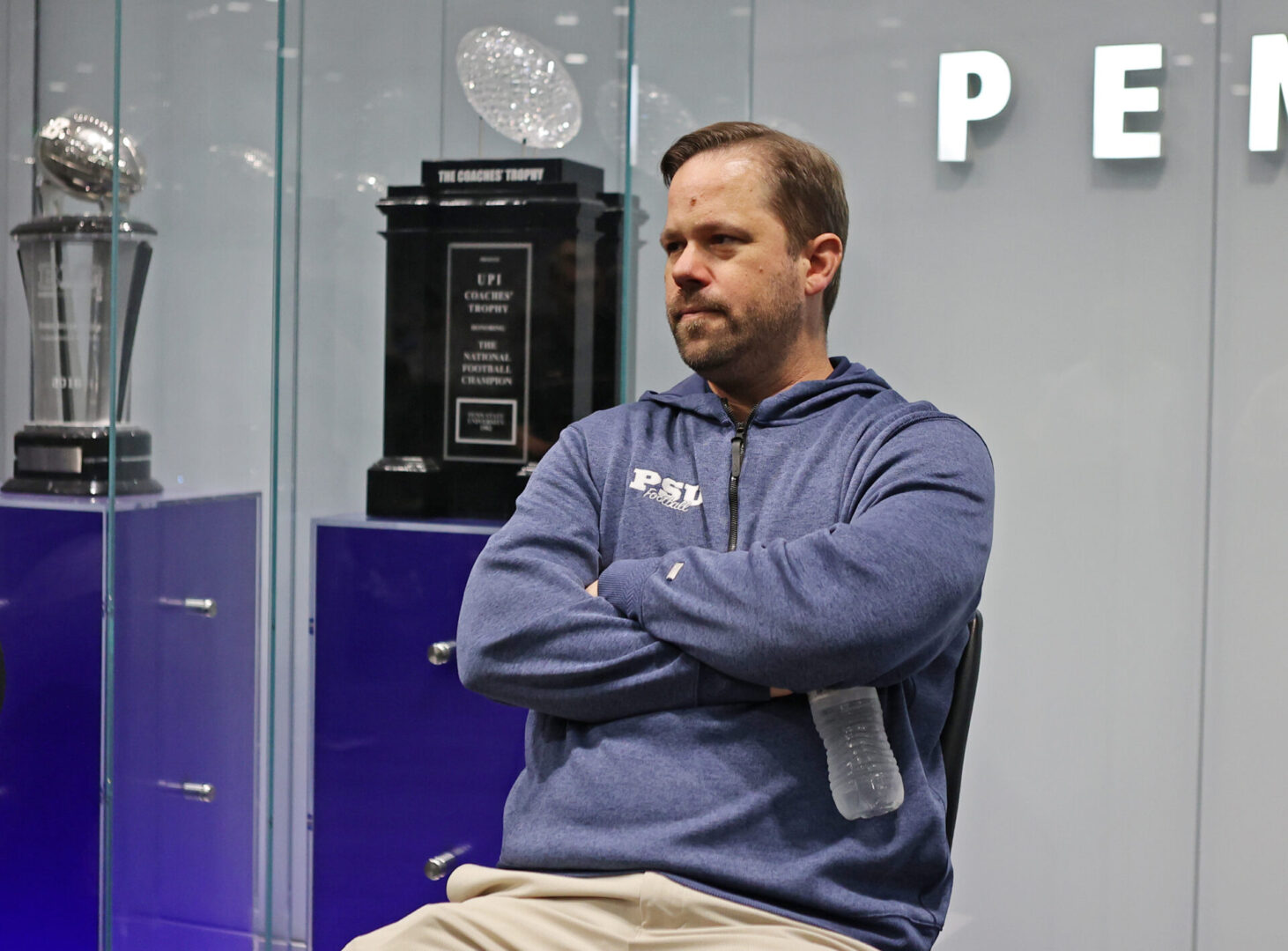
The expectations for what Penn State could accomplish next season were set with a high bar after nearly clinching a spot in the national championship game in January. Then came the announcements that a handful of key starters would return, preceding a significant haul in the transfer portal, further boosting the anticipation surrounding the Nittany Lions.
James Franklin may now have his best roster to date. But it didn’t take a snap of the fingers to put it together, especially in an aggressive college football landscape that has demanded a novel approach toward recruiting and allocating resources.
Trebor Pena and Amare Campbell, two of the top available transfers in the spring window, are now on board. So is defensive coordinator Jim Knowles, who became the nation’s highest-paid assistant this offseason. For those who have been by Franklin’s side since the start, like general manager Andy Frank, Penn State has broken through as a competitive presence.
“We’re in a much better place than we were a few years ago, from a standpoint of being able to go in the portal and convince kids,” Frank said last week. “Not necessarily having to be the highest bidder, but you have to be in the market. And I think there was a time we probably wouldn’t have been in the market to be able to get some of the guys that we did get this year.”
Pena and Campbell were just two of the eight transfers the Nittany Lions obtained this offseason. A healthy portion of that group, including wide receivers Devonte Ross and Kyron Hudson, as well as safety King Mack, are also expected to compete for starting roles immediately into training camp. They helped make a talented roster even more so.
But it’s possible that under the former administration, led by athletic director Sandy Barbour, not all these additions would’ve been made. So, what changed? It’s easy to point to Pat Kraft, who is set to enter his fourth year as the university’s athletic director. But, according to Frank, it extends even further.
“A lot of support from a lot of people. Obviously, the administration has been great, donors,” Frank said. “The rev share obviously kicks in here pretty soon. That helps a bunch, as well, because it’s not really a jolt of capital; we have to have that money to be able to spend it. But we’re at a place where we’re fortunate that we do have the ability to max out the rev share numbers, so I think that helps.”
It’s a subtle mix of excitement due to recent successes, creating a feeling that Penn State is oh, so close to national title, and a commitment from Kraft and his administrative peers to do everything they can to compete in the modern landscape. The Nittany Lions have blossomed into a team that has clutched the novelties of the era as much, if not more, than its competitors.
And with Friday’s approval of the House v. NCAA settlement, set to allow athletic departments to share up to $20.5 million annually with their student athletes, that sentiment is only likely to grow. That’s more money for a team that has revamped its third-party funding efforts, through its Happy Valley United collective, and has positioned itself for success at the start of this new era.
“We had a terrific 2024-25 academic and athletic year, and next year looks to be one of the best in our history, and because of those successes, Penn State enters this new era of college sports in a position of strength and ready to attack this new collegiate landscape,” Kraft said in a statement on Friday. “While change can be difficult, it also can provide new opportunities, and I assure you we will embrace every opportunity this new model creates.”
Penn State will use the maximum allowable funds to share revenue with its athletes, Kraft said. And there’s no telling how valuable it is for an athletic department to be able to do so in Year 1 of revenue sharing. But that’s not stopping Frank, Franklin and Kraft from striving further. Now it’s all about separating themselves from the top of the pack.
“It feels great to be in the spot, but you can’t rest on that,” Frank said. “You got to keep going. You got to keep pushing forward, because it’ll take more money the next year.”