Most American adults try hard to keep their toilet habits private. We are horrified if we pass gas in public. We buy perfumed bathroom sprays so others are less likely to smell the aftereffects of a bowel movement. We use euphemisms like “upset stomach” instead of admitting to a case of diarrhea.
All this is fine until people die of colon cancer because they didn’t want to undergo the “embarrassment” of a simple screening colonoscopy. March is National Colorectal Cancer Awareness Month, the perfect time to make this private subject a little more public – and save thousands of lives.
Colorectal cancer is cancer of the colon or rectum (the passageway that connects the colon to the anus), which together are known as the large intestine. Colorectal cancer is the second-leading cause of cancer death in the United States, surpassed only by lung cancer, according to the American Cancer Society. Anyone can have this type of cancer, but the risk increases with age and family history of the disease. African Americans are 20 percent more likely than Caucasians to have colorectal cancer.
In its early stages, colorectal cancer displays no symptoms. However, that’s also when the disease is most treatable. The five-year survival rate for colorectal cancer found at the local stage, before it has spread elsewhere in the body, is 90 percent. That’s why it’s so important to have a screening colonoscopy at the recommended age – to find and treat cancer before it causes symptoms.
In fact, a colonoscopy does more than detect cancer; it also can reduce a person’s risk of developing colorectal cancer later in life. That’s because precancerous polyps (bumps on the lining of the colon) discovered during a colonoscopy can be removed at the same time, meaning those polyps will never have the chance to become cancerous.
Screening guidelines
The majority of Americans should have their first screening colonoscopy at age 50, with follow-up screenings done every 10 years. African Americans should be screened starting at age 45. Anyone with a family history of colorectal cancer or polyps should have a first colonoscopy at age 40, or 10 years before the earliest age that a parent or sibling was diagnosed. People with inflammatory bowel disease, such as Crohn’s or ulcerative colitis, or a personal history of other cancers, should discuss with their physician when to start screening for colorectal cancer.
Under the Affordable Care Act, all health insurance companies must cover the cost of screening colonoscopies (a co-pay or deductible may apply) and the removal of any polyps found during the procedure, since polyp removal is also a preventive service. No one should avoid a colonoscopy due to worries about financial cost.
The colonoscopy is a painless outpatient procedure performed after a light sedative is administered by a qualified anesthesia provider. Preparation for the procedure consists of emptying all solids from the bowels by following a clear-liquid diet a day in advance and drinking a laxative solution the evening before and the morning of the procedure.
Other methods of screening for colorectal cancer exist, including stool tests for blood, sigmoidoscopy, double contrast barium enema, CT colonography, and stool DNA test. However, colonoscopy remains the gold standard because it is the only test that evaluates the entire colon and allows for the removal of polyps at the same time, without exposure to radiation.
Warning signs
Although early colorectal cancer gives no clues to its existence, anyone experiencing any of the following symptoms should discuss them immediately with a physician to determine if later-stage colorectal cancer or another illness is at work:
- Any persistent change in bowel habits, such as diarrhea, constipation, or different stool consistency or shape
- Ongoing abdominal discomfort, from cramps to gas to feeling bloated
- Finding bright red or dark blood in the stool
- Other more general symptoms, including chronic weakness, fatigue, nausea, vomiting or unexplained weight loss.
Don’t wait for symptoms such as these to appear. During National Colorectal Cancer Awareness Month, schedule a screening colonoscopy or encourage relatives and friends who are the appropriate age to talk with their own doctors about the procedure. It’s simple, and it saves lives.
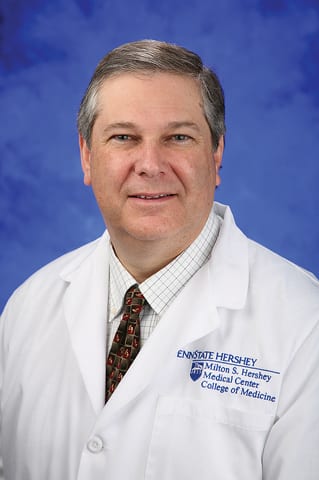
Joel Haight, MD, is a gastroenterologist with Penn State Health Medical Group Colonnade and Endoscopy Center, located at 32 Colonnade Way in State College.