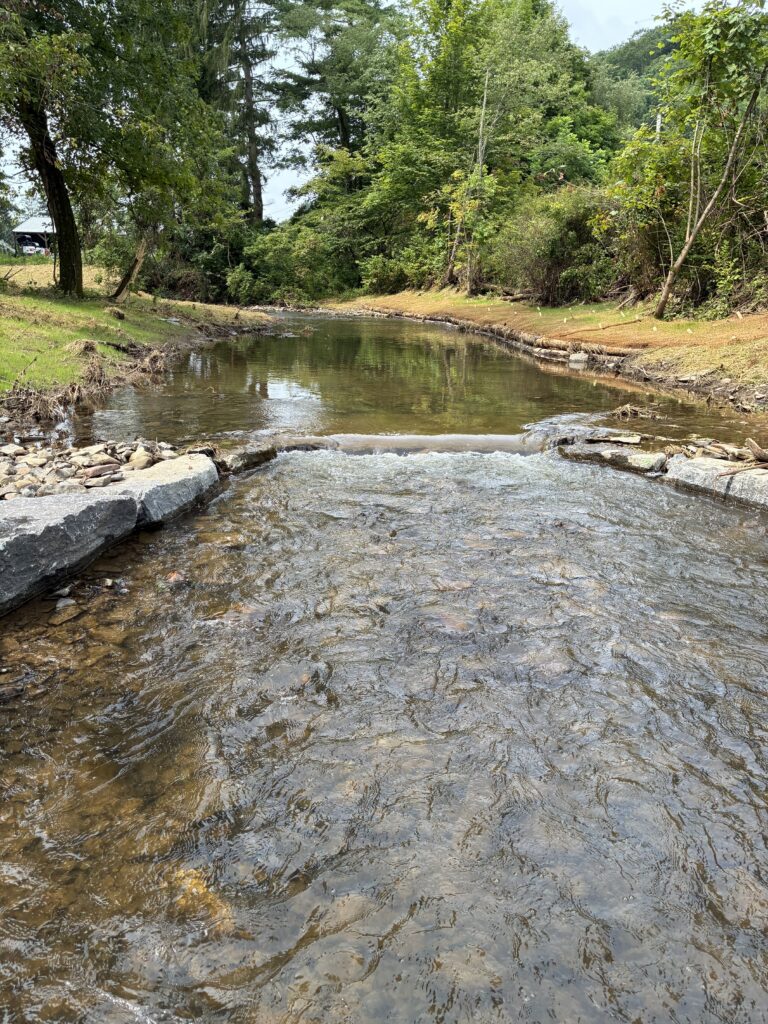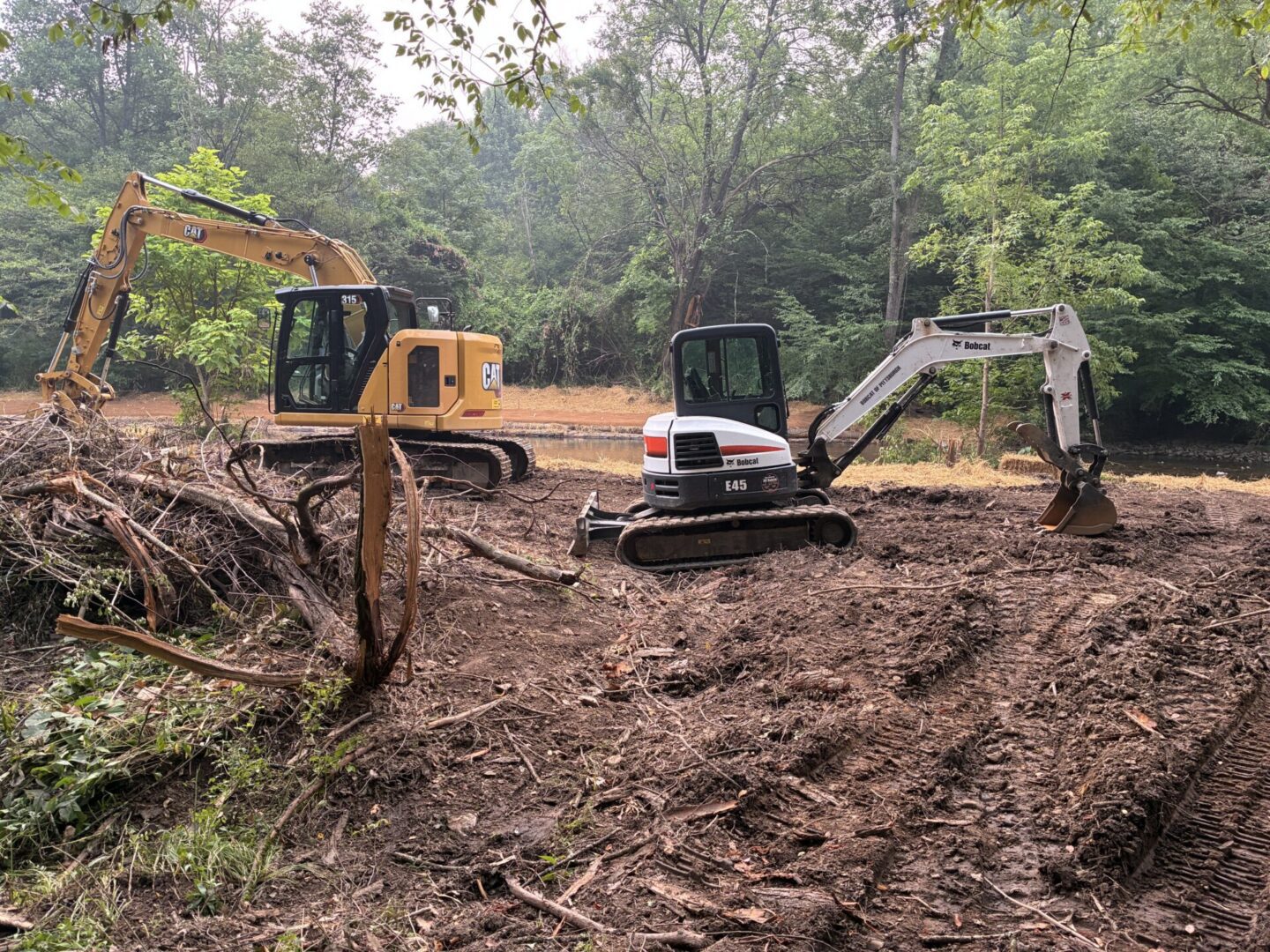
PORT MATILDA — A stream restoration project completed this summer on Bald Eagle Creek just downstream of Port Matilda has stabilized approximately 1,600 feet of eroding streambank while improving water quality and aquatic habitat.
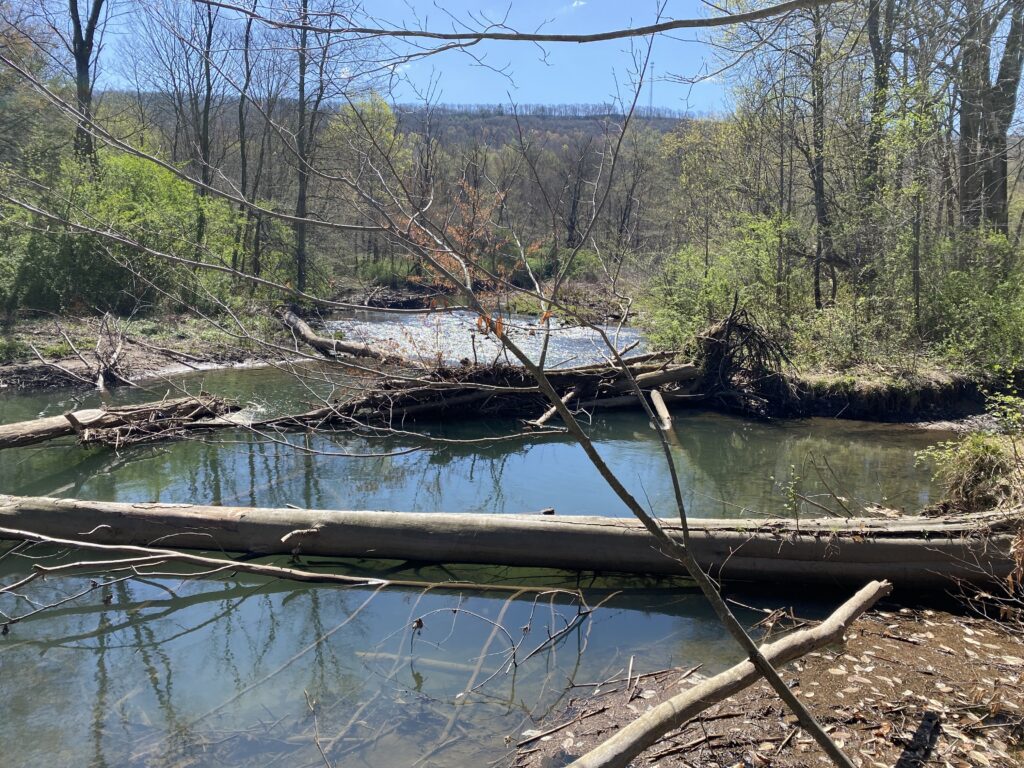
Decades of intensive agriculture and subsequent development in the watershed, compounded by the construction of I-99, increased runoff and channel instability and, over time, portions of Bald Eagle Creek became braided and deeply incised, with unstable banks and multiple channels creating a severely degraded stream corridor.
The project was sponsored by the Spring Creek Chapter of Trout Unlimited and funded primarily through the state Dept. of Environmental Protection Growing Greener Program and Centre County’s Countywide Action Program. The U.S. Fish and Wildlife Service Partners for Fish and Wildlife Program provided the technical design and carried out the restoration work.
The restored reach had been affected by unstable banks, recurring erosion and high stormwater flows. Natural Channel Design principles and a combination of rock and log structures were used to stabilize the channel while retaining natural stream function. Work also included removal of debris dams and invasive plant species and construction of habitat features that create pools, riffles, varied water depths and overhead cover for fish.
“This project stabilized about 1,600 feet of streambank, reduced sediment pollution and improved fish habitat by creating pools, riffles and overhead cover,” said Ford Stryker, Conservation Chair, Spring Creek Chapter of Trout Unlimited. “The U.S. Fish and Wildlife Service Partners for Fish and Wildlife Program completed the restoration work and made a major improvement to Bald Eagle Creek.”
Updated best management practice calculations estimate that the completed project will prevent approximately 322,807 pounds — about 161 tons — of sediment from entering Bald Eagle Creek each year. Estimated annual nutrient reductions are approximately 275 pounds of nitrogen and 51 pounds of phosphorus. These reductions result primarily from preventing continued erosion of the restored streambanks.
Reducing sediment benefits the stream by limiting the amount of fine material that can cover gravel and other streambed habitat. The restoration structures are intended to direct flow away from vulnerable banks, maintain stable channel dimensions and provide a greater variety of habitat conditions for trout, other fish and aquatic insects.
“This project is part of our continuing effort to improve water quality in the Bald Eagle Creek watershed and is the third project of its kind,” said Bob Vierck, President Emeritus, Spring Creek Chapter of Trout Unlimited. “It reflects the strong partnership between the Spring Creek Chapter of Trout Unlimited and the U.S. Fish and Wildlife Service Partners for Fish and Wildlife Program.”
The Bald Eagle Creek work is part of a broader watershed approach that has included restoration projects in the upper watershed and near the confluence of Sparrow Run. Together, these projects are intended to address erosion at its source, improve aquatic habitat and reduce sediment and nutrient loads moving downstream through the Susquehanna River system.
The completed reach will continue to be observed as vegetation becomes established and the channel responds to normal and high-flow events. The goal is a stable, functioning stream system that protects water quality while providing improved habitat over the long term.
The Spring Creek Chapter of Trout Unlimited works with public agencies, conservation organizations, landowners and community partners to protect and restore cold-water resources in the Spring Creek and Bald Eagle Watersheds.