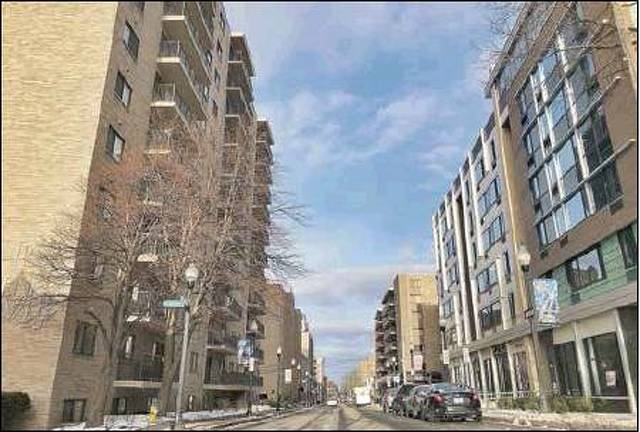
STATE COLLEGE — With red Solo cups and empty beer cans littering the streets and loud music blaring all night, apartments seem to be the most popular party spot for Penn State students.
While fraternities used to be a party hotspot, new restrictions in the aftermath of the hazing death of Timothy Piazza in 2017 have changed the party culture of Penn State.
After Beta Theta Pi pledge Piazza died after an alcohol-filled night, Penn State instituted several restrictions on fraternities, such as deferring recruitment to the spring semester, capping party attendance and banning hard liquor or kegs from parties.
These restrictions have prevented underage students from drinking at fraternities, but little is regulated at the apartment party scene, according to students who live there and local officials who cannot impose their own restrictions.
Students say they opt for parties at private residences as the place to continue unsafe drinking habits, including drinking games, hard liquor, shots and more.
“Apartment parties are the only thing I can really do on the weekends,” said Lauren Kane, a 20-year-old senior. “I can’t get into bars, and frats are filled with freshmen and sophomores now, so I don’t really know anyone at the frat parties.”
Molly Gradey, a sophomore from Norristown, lives in Nicholas Towers on South Pugh Street, which is managed by The Apartment Store.
She said she has attended many overcrowded parties in the building — a testament to the popularity of this kind of spot.
“One time it took me 15 minutes to get from the deck to the front door to leave,” Gradey said. “That’s how crowded it was.”
Frankie Richman, a senior from West Chester, agrees. He lives in the Beaver Hill complex on East Beaver Avenue.
“I’ve lived at Beaver Hill for three years,” he said. “Each year’s the same — it’s a hot spot downtown and it is loud on the weekends.”
He said he knows people who have been fined, and he has seen police on site.
“But that doesn’t scare anyone from doing it again next weekend,” Richman said.
“Pre-gaming,” or drinking before going to a party, is common because of the strict regulations placed on fraternities that make it difficult to serve alcohol at parties. In addition to accessible alcohol, fraternities often have strict lists of people who can get in to keep the parties under control, making apartments a more appealing option, especially for freshmen, students say.
“Frat parties are often hard to find drinks at, if there are any at all,” said Caroline Spengler, a freshman studying meteorology. “Most people go to apartments first to drink before going to a frat.”
Many upperclassmen who were interviewed said they would rather spend time at bars than their apartments. This prevents the liability risk and the fees that come from hosting a party in their apartments.
“My fraternity actually ended up getting kicked off campus, so we tend to spend more time at our apartments and bars rather than the fraternities,” said Alex Freud, a 21-year-old senior who was a member of Sigma Alpha Epsilon. “We learned a ton from our fraternity getting kicked off, so we actually tend to go to bars more than our apartment to avoid that liability.”
Upperclassmen say they tend to pre-game in their apartments but leave for bars afterward.
“I think it’s less of a change in ‘campus culture’ and more of my friends not wanting to buy and supply alcohol to everyone,” said Jordan Hurwitz, a 21-year-old student. “That’s why we go to bars now. It’s cheaper and easier.”
RULES AND REGS
The rules and regulations for each apartment in downtown State College differ, and each leasing office has its own way of enforcing these rules.
“The one thing that surprised most new residents is that we allow kegs on the property,” said Diette Riley, a leasing manager from one of the State College’s largest property management companies, A.W. & Sons. “However, that doesn’t mean we don’t have real rules. We have multiple security cameras at all of our properties to make sure that our residents are staying safe and following the rules.”
Riley said they review surveillance footage.
“When we are checking back on the weekend footage and we see 100 kids leaving one apartment, we are going to give that room a notice,” Riley said. “If someone were to break something on their way out, then whosever’s apartment they were in are liable.
“Even if it’s a stranger, you need to know who you’re inviting over to your house and know that you are responsible for them.”
Mikey Rodden, a sophomore from Philadelphia, is a first-year resident of A.W. & Sons building Cedarbrook, located on East Beaver Avenue.
“At Cedarbrook, we are allowed to have parties,” said Rodden. “They don’t specify in our lease how many people, but we have to register it, and it has to be at least 72 hours ahead of time. Not everyone follows that rule, though.”
Some upperclassmen choose to only pre-game in their apartments, rather than host a party, to avoid violating any of the landlord’s regulations.
“Sometimes we pre-game in our apartments. We only drink for a little though and then go to bars,” said 21-yearold student Shannon Perez. “I’m not going to pay for a noise complaint for having an apartment party, and I don’t think anyone else wants to either.”
Perez said she would face a $250 fine from her apartment complex, the Rise, on East College Avenue, if students were reported being loud while partying.
Brittany Sklarr, a 21-year-old resident of Centre Court, on South Garner Street, said she wouldn’t expect her landlord, Associated Realty Property Management, to fine her.
“There’s no fines that I know of from noise complaints,” she said. “If we got in trouble for having something in our apartment, I think it would be from the police.”
However, an officer from the State College Police Department said that’s not necessarily the case.
“We do not have control over party restrictions within privately owned properties,” said State College police Lt. Gregory Brauser. “From an education standpoint, we continue to offer alcohol and party safety type programs to any group that is interested in having us come talk.”
Taylor Byrne, a sophomore from New York, lives in an apartment at Alexander Court, on East Beaver Avenue. She said she’s escaped being noticed except for a visitor’s indiscretion.
“I’ve had big parties here, never felt the need to register them, and so far I’ve gotten in no trouble,” said Byrne. “One time my roommate’s boyfriend (urinated) in the laundry room, and we got a $500 fine that he paid for.”
Representatives from A.W. & Sons, The Apartment Store and Associated Realty Property Management did not respond to requests for comments about their rules for tenants.
‘WAIT AND SEE’
Many local residents have voiced concerns over off-campus parties, especially closer to more residential areas, said Donald Hahn, in an email in October when he was the mayor of State College. However, the borough does not hold much power to change this, said Hahn, who won election as a district judge and resigned as mayor on Dec. 16.
“The borough primarily relies upon the reactive approach of law enforcement and permit revocation in extreme circumstances,” said Hahn. “While it has also considered private party registration legislation, such proposals have been met with opposition from many quarters, and popular support for it has been lukewarm.”
Hahn added that since Piazza’s death and the university’s introduction of regulations within Greek life, the council is taking a “wait-and-see approach” before moving forward with this type of legislation.
Hahn said “well-managed bars” provide a good example of addressing the kinds of safety concerns for apartment parties.
He listed “occupancy limits, adequate bathroom facilities per guest, professional bouncers who are responsible for the safety of the bar’s patrons, professional tenders who card in order to prevent underage drinking, and liability if they do not meet a reasonable standard of care.”
He said these practices would be similar to those proposed in a private party registration requirement.
Hahn indicated the answer to curbing drinking doesn’t rest with local officials or the university.
“Personal responsibility is ultimately the best solution to the drinking culture at Penn State,” he said.
Jessica Eden, Olivia Lhopitault and Christy McDermott are Comm460 journalism students at Penn State.
“Apartment parties are the only thing I can really do on the weekends. I can’t get into bars, and frats are filled with freshmen and sophomores now, so I don’t really know anyone at the frat parties.”
20-year-old PSU senior.
“I know my closer friends like to go to apartment parties because they’re more chill, and you can go there to just drink and hang out.”
Penn State freshman
(Editor’s note: This is the third part of a student-written, six-part series that explores the fallout of the Timothy Piazza hazing death in 2017. This week, the series examines party life at the university. Restrictions have changed the way students have fun at fraternities, but apartment parties continue to rage on. By JESSICA EDEN, OLIVIA LHOPITAULT and CHRISTY MCDERMOTT)