

CENTRE HALL — For John Foster, country music didn’t begin under bright stage lights or in front of television cameras.
It began in the dark.
Long before millions of viewers watched him finish as runner-up on Season 23 of “American Idol,” before standing ovations at the Grand Ole Opry and before a career that now has him traveling the country, Foster was a teenager in Louisiana who almost didn’t sing at all.
“I actually was what I call a late bloomer when it comes to music,” Foster said. “For all of my life, from the very beginning, I can remember that I was always surrounded by country music.”
His father filled the house with the sounds of 1980s country, and artists like George Strait, Johnny Cash and Willie Nelson became more than musical influences. They became examples of the kind of man he hoped to become.
“I think there’s a lot of great values that a lot of these country legends have,” Foster said. “I still looked up to those great guys like George Strait, Johnny Cash and Willie Nelson.”
Ironically, the moment that changed his life happened because no one could see him.
While spending a weekend with family at their bayou camp, the power went out. With the lights gone, Foster found the courage to sing karaoke for the first time.
“It probably wasn’t too great,” he said with a laugh. “But my family saw potential.”
Soon his uncle, a lifelong musician who now plays bass in Foster’s touring band, began encouraging him to sing anywhere he could. Sometimes that encouragement came with a gentle shove.
“He would push me onto stages when we’d go visit bars and restaurants,” Foster said. “He’d ask the band if they’d let his 15-year-old nephew sing.”
The crowds responded.

“So I started sitting in with bands, and the crowd liked it,” he said. “I saw something then and there — how great it felt to make people feel good with music.”
That feeling has never left.
“Giving people enjoyment through music is what I live for,” Foster said. “I’ll be a musician to the day I die.”
Music wasn’t always the plan.
An outstanding student, Foster graduated as co-valedictorian of his high school class while balancing schoolwork with acoustic performances around his hometown. He planned to study biology and eventually pursue oncology before his success on “American Idol” changed everything.
Rather than closing the door on college, Foster said he simply pressed pause.
“School will wait for me,” he said. “Unfortunately, music on a national scale will not.”
Today, Foster splits his time between Nashville and his hometown in Louisiana, something he credits with keeping him grounded.
“I always intentionally try to be home for as much as possible,” he said. “My family’s here. The food’s here. There’s something very, very special about the way we do things down here.”
His Catholic faith has also remained a constant.
“That has always been an anchor in my life,” Foster said. “It’s always provided something completely steadfast.”
When Foster arrives at the Grange Fair on Aug. 22, he’ll find something familiar.
Like many Pennsylvanians, he grew up attending community fairs where music, food and family came together.
“We have festivals all around Louisiana,” he said. “When you combine really good food, really good music and a good bit of family love, you really can’t get much better.”
Some of his favorite childhood memories came from his local church fair.
“I love the community aspect of it,” Foster said. “I love going and listening to the music. But if I can be the person that’s making it, that’s even better in my mind because then I can connect with people.”
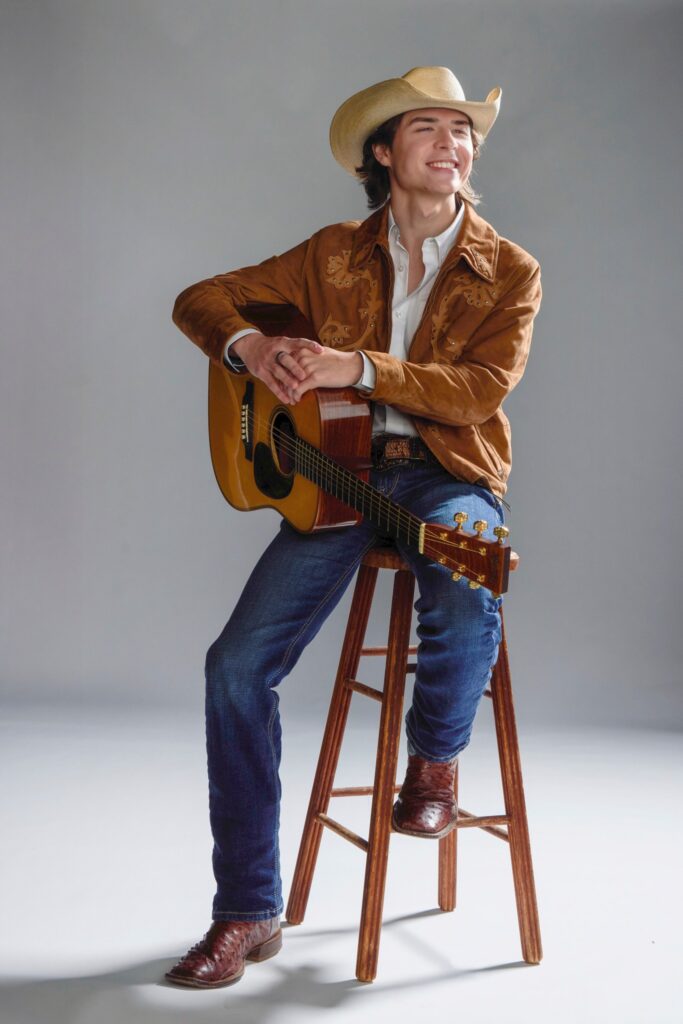
One song in particular continues to connect him with audiences on a deeply personal level.
“Tell That Angel I Love Her” was written after Foster lost two close friends as a teenager.
“I was able to channel all of my emotions into a song,” he said. “Every single time I sing it, it still has that same meaning to me.”
What has surprised him most is hearing from strangers who have found comfort through the song during their own seasons of grief.
“What’s really beautiful for me to see is how many people that song has comforted,” Foster said. “That’s really what music is all about.”
For young musicians hoping to follow in his footsteps, Foster offers one piece of advice.
Don’t compare yourself to anyone else.
During “American Idol,” he found himself surrounded by extraordinary singers and questioned whether he belonged.
It was a conversation with Lionel Richie that changed his perspective.
“He told us, ‘Do not compare yourself to others because there’s no one in this world like you,’” Foster recalled. “You need to shine your own light.”
It’s advice Foster now carries with him everywhere he goes.
When he steps off the Grange Fair stage, awards and television appearances won’t define whether the night was a success.
Instead, he’ll judge it by something much simpler.
“My job on this earth is when people come to my show, they feel just a little bit better when they leave it,” Foster said. “Whether they celebrated with me, whether they grieved with me, whether they worshipped with me, I just hope their hearts, their minds and their souls are lifted.”
If that’s the measure, Foster has already figured out what country music has always done best.
It’s never just been about the songs.
It’s about making people feel a little less alone.



