
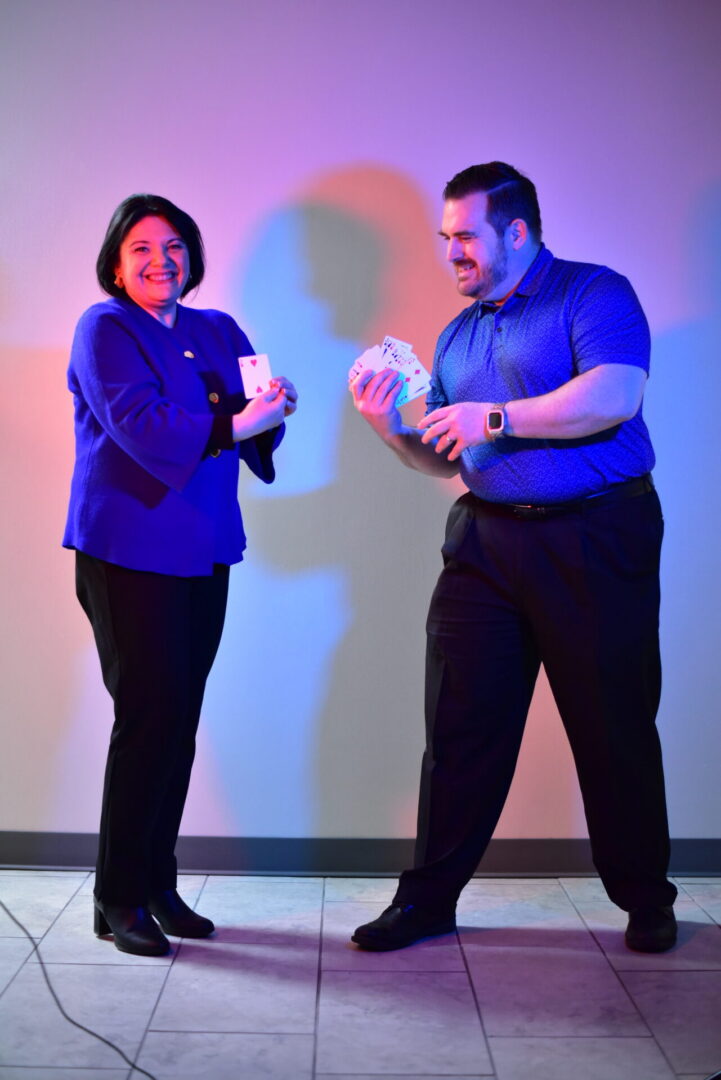
Program brings inclusive performances to Centre County
STATE COLLEGE — What began as a mother searching for a way to connect with her daughter has grown into a community-driven effort blending therapy, creativity and a little bit of magic.
Carmen Miller, a State College resident originally from Arad, Romania, said her journey started at home with her daughter, Angela, now 13, who was diagnosed with autism after early developmental concerns. Raising a child with special needs while her husband Phil pursued a demanding career as a physician brought challenges that reshaped her life.
“Raising a family especially with a child with special needs was challenging for me,” Carmen said. “These struggles made me more focused on trying to heal my daughter, to make her better, to understand her.”
Over time, Carmen said her perspective shifted from trying to change Angela to accepting her as she is. That shift, she said, opened the door to meaningful connection.
“Once I started to accept her, that I can’t make her not autistic, my life changed,” Carmen said. “I focused on her talents instead of her lack of speech and communication.”
That change in mindset led to an unexpected breakthrough: cooking.
During the COVID-19 pandemic, Carmen spent more time in the kitchen, and Angela began to show interest. What started as a shared activity quickly became something more. It became a form of therapy that combined speech development, sensory engagement and life skills.
“She started opening up more. She started communicating more,” Carmen said. “She started making shopping lists, writing. I started to find a bond between my daughter and it was amazing.”
Carmen began intentionally incorporating techniques she observed in speech and occupational therapy into their cooking routines. The process was structured, repetitive and hands-on, all elements that helped Angela better understand language through action.
“They understand that once they narrate, ‘I’m stirring, I’m cutting,’ they understand the action and then they start speaking while they perform,” Carmen said. “That’s the best way of understanding the language.”
Today, Angela is cooking complex recipes, from pasta dishes to desserts, while continuing to build communication skills. Carmen is now writing a book to share what she calls a “hands-on, life-skill-based” approach to therapy that other families can replicate at home.
At the same time, another idea was taking shape inside the family. One that would bring Carmen’s advocacy together with Phil’s lifelong passion.
Phil, who rediscovered his love of magic after years in medicine, began performing again in schools and community settings. His experiences, paired with Angela’s sensitivities to traditional shows, sparked a new concept: adaptive magic.
“We wanted to create something for special needs children, to create a different version of magic.” Carmen said. “One Sunday, I talked to my husband, I said, ‘Can you do something that children can touch, can smell, like a trick they can actually see happening in front of them, but it’s not complicated, easy to follow, easy to understand?’”
The result is Adaptive Magic in Motion, a developing program designed specifically for children with autism and other sensory or developmental differences. Shows are intentionally toned down with softer lighting, reduced noise and slower, deliberate movements to create an inclusive environment.
“Being in an environment like this means you never have to say you’re sorry,” Phil said. “If they need to get up and leave, they can. If they want to be part of the stage, they can. This environment is for them.”
The program also emphasizes participation, allowing children to engage directly with the performance through tactile tricks and simple illusions. Phil said the goal is not just entertainment, but connection.
“These children want to participate in something,” he said. “They want to be included… hopefully this will be the answer to that.”
Early feedback has been overwhelmingly positive with parents noting their children remain engaged in ways they often are not in traditional environments.
“’Normally my child can’t handle any such stimulation like this, but they’ve really enjoyed your show,’” Phil said parents have told him. “It really brought a smile to their face.”
The program is still in its early stages with plans for regional shows and long-term goals of national expansion. A growing network of magicians — including performers with disabilities — has already joined the effort.
For Carmen, the mission goes beyond a single program. Her broader vision includes creating opportunities for children with autism to develop skills and independence, potentially through specialized training programs or schools.
“They can be definitely working and learn how to sustain themselves,” she said. “Some of these children are very surprisingly talented.”
That belief is evident in Angela herself who has also developed a love for art. Carmen said her daughter’s creativity has already inspired a local exhibition opportunity, opening the door for other children to share their work.
“Now Angela is inspiring others,” Carmen said.
Through cooking, magic and art, the family is building something rooted in a simple but powerful idea: That connection doesn’t always come from changing someone but from meeting them where they are.
“Life is better when everybody’s different,” Carmen said. “We see life in different colors.”



