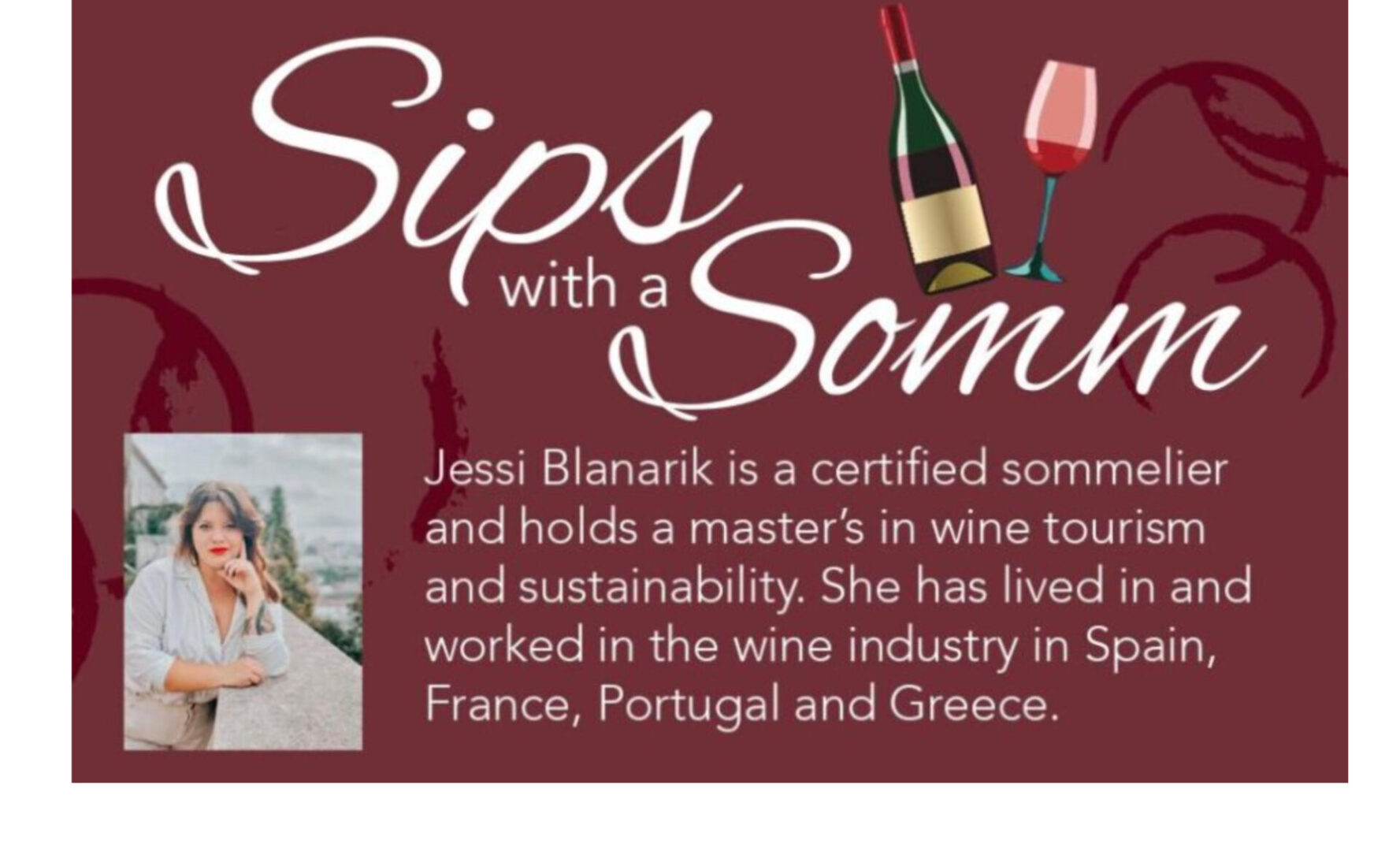
CENTRE COUNTY — Sauvignon blanc is known for its vibrant acidic flavors and herbaceous notes. With notes of lime, green apple, grapefruit and passionfruit, it is an excellent option for those new to exploring the wine world and a favorite among seasoned wine enthusiasts.
Sauvignon blanc is considered one of the noble grapes which are comprised of four white grape varieties — pinot grigio, sauvignon blanc, riesling and chardonnay — and four red grape varieties — pinot noir, syrah, merlot and cabernet sauvignon.
“Sauvignon [blanc] is a French white grape variety that has been cultivated in the Loire Valley and Bordeaux region for centuries,” a report by the International Organization of Vine and Wine recorded. “Very much an international variety — 123,000 hectares in 2015, it is grown in all major wine-producing countries of the world. It is New Zealand’s most cultivated vine variety, with almost 20,500 hectares of vineyards.”
While sauvignon blanc can be found around the world, some popular places it can be found are in New Zealand, particularly in Marlborough, the Loire Valley in France, from the appellation d’origine contrôlée Sancerre or the AOC Pouilly-Fumé as well as Bordeaux. However, it is also commonly grown in Chile, South Africa, Australia and California.
Sauvignon blanc needs a climate cool enough to retain acidity and develop its characteristic aromatic profile, but not so cold that it struggles to ripen. This acidity lends to a flavor profile that pairs well with a wide variety of foods like sushi, fish and shellfish, goat cheese, grilled vegetables like zucchini, asparagus and artichokes, white meat and more.
The vibrant acidity of sauvignon blanc cuts through rich or creamy textures and balances high-fat dishes, while its aromatic and herbaceous qualities enhance the freshness of lighter meals.
MOROKI (MARLBOROUGH, NEW ZEALAND)
Marlborough, located on the northern tip of New Zealand’s South Island, is internationally renowned for its world-class sauvignon blanc.
“Sauvignon blanc is New Zealand’s most commonly planted grape, accounting for more than two-thirds of all New Zealand wine,” New Zealand Wine noted.
Marlborough sauvignon blanc is typically best enjoyed young, within a year or two of bottling, to preserve its vibrant, fresh fruit flavors and zesty acidity. Unlike Loire Valley sauvignon blanc, which sometimes incorporates subtle oak for added complexity and ageability, Marlborough’s style is more commonly unoaked and fermented in stainless steel to highlight its pure, aromatic intensity. This approach emphasizes tropical fruit, citrus and herbaceous notes.
A bottle of Moroki, which retails for $18 at the Fine Wine and Good Spirits at 1682 N. Atherton St., is a great example of a New Zealand sauvignon blanc. It has a bright acidity and tropical fruit notes, and is perfect served cold with seafood.
CLAUDE RIFFAULT MOSAIQUE CALCAIRE (SANCERRE, LOIRE VALLEY, FRANCE)
In France, wines are typically labeled by region rather than grape variety, reflecting the country’s emphasis on terroir. For sauvignon blanc, look for Pouilly-Fumé or Sancerre on the label, these are regions in the Loire Valley.
Wines from these regions are made from sauvignon blanc, ensuring a distinctive profile with Pouilly-Fumé offering smoky minerality and Sancerre showcasing crisp acidity and subtle herbal notes.
A bottle of Claude Riffault Mosaique Calcaire, which retails for $38 at the Fine Wine and Good Spirits at 1682 N. Atherton St., has notes of lime, passion fruit and gooseberries. A small portion of the wine is aged in French oak barrels which adds complexity to the palate and softens the bold acidity.
TWO TUXEDOS (CENTRAL VALLEY, CHILE)
The Central Valley in Chile is the country’s largest and most productive wine region, stretching southward from Santiago and encompassing the sub-regions Maipo Valley, the Rapel Valley, the Curicó Valley and the Maule Valley.
Its Mediterranean climate, with warm days and cool nights, paired with diverse soils, provides ideal conditions for growing a wide range of grape varieties. Coastal influences from the Pacific Ocean and the Andes’ cooling effect contribute to the development of fresh, aromatic wines.
Two Tuxedos, which retails for $13 at the Fine Wine and Good Spirits at 1682 N. Atherton St., has citrus and floral notes that bode well with the tropical fruit finish.