Performing the Heimlich maneuver, CPR, and dressing a wound may immediately come to mind when thinking of first aid. Physical first aid can be key in saving someone in a crisis, but what about mental health first aid? With mental health diagnoses on a steady incline, the Youth Mental Health First Aid program couldn’t have come to Penn State at a better time.
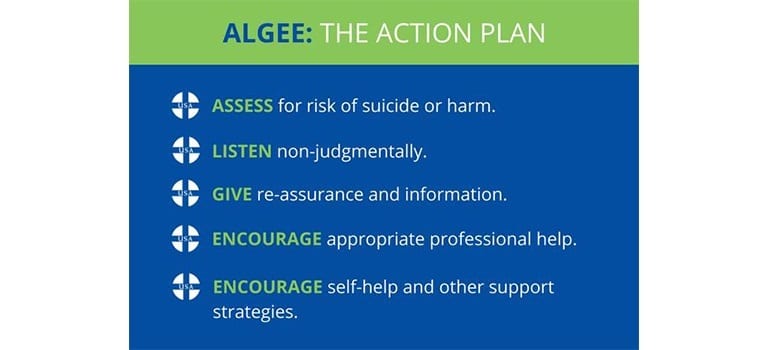
The Youth Mental Health First Aid program, taught locally by Jana Marie Foundation, is designed to teach adults who regularly interact with teens how to aid in a mental health crisis.
Jana Marie Foundation was formed in 2012 in memory of Jana Marie Vicere, a Penn State graduate of human development and family studies battled depression and died by suicide. Led by her sister Marisa Vicere, the organization aims to spark conversations and promote mental health and well-being.
“One of the big areas we work in is education, especially for adults or individuals who may be coming in contact with younger people,” Vicere says. “Youth Mental Health First Aid really provides that opportunity for us to educate. It is an evidence-based curriculum, so we know that there’s research behind it to show that it does make a difference in helping people understand about mental health, suicide prevention, and how to reach out to young people.”
Jana Marie Foundation has partnered with the Human Development and Family Studies Department at Penn State to offer this program to general education students this spring. Embedded in HDFS 239: Adolescent Development, this training will equip students with the ability to identify and intervene in a mental health crisis.
Aaron Miller is an instructor for several sections of HDFS 239 and has been at the forefront of bringing this partnership to fruition.
“The Youth Mental Health First Aid course is really a way to teach people who work with adolescents and young people how to help those in that 12-18 range with how to deal with a mental health crisis and how to get them to more professional help if they need it,” Miller says. “One thing I tell my students is that just as you might get certified for physical first aid or somebody has a physical emergency, that’s how we like to think of this mental health first aid.”
Learning beyond the classroom
Shannon Corkery, director of HDFS World Campus Programs, explains that this partnership has been in the works for a few years. The department has had informal connections in the past with Jana Marie Foundation because of the organization’s local advocacy, in addition to Jana Marie being a graduate of the program. After meeting with many faculty members from the department, they wanted to grow students’ abilities to have experiences that take learning beyond the classroom. With mental health awareness becoming more prominent in recent years, this program with Jana Marie Foundation was the perfect fit.
“Mental health first aid is available nationally, but we thought there was a real opportunity to find partnership in our own community with an organization that is doing important work and is serving all members of our community to get them this knowledge,” Corkery says. “And so if we have the opportunity to partner close to home, it just feels really meaningful. We’re not just creating this great experience for our students, but we’re also having a positive impact on our community through that partnership.”
Vicere hopes this collaboration will help combat the myths surrounding mental health, encourage help-seeking behaviors, and raise awareness of local and national resources. By normalizing mental health first aid and making the training readily available, it may soon become a standard health precautionary course.
“We have all of these courses for our physical health and well-being,” Vicere says. “There’s CPR, the Heimlich maneuver, all these different ones that are made so that we can step into action and be that person that can bridge between when somebody is in crisis and when they can receive appropriate professional help. Our hope is that this program can be just like that and have everyone learn it, because we never know when somebody is going to experience a mental health concern or crisis. So the more people that know this information, the faster that we can intervene and get somebody the help that they need.”

Within the HDFS department, the goal is for students to be able to connect what they learn in the classroom and apply it to their lives. Even if students gain a generalized understanding of mental health first aid, society is better equipped in a crisis.
“You can’t underestimate the impact of having people that know how to recognize warning signs, how to intervene when there’s a mental health crisis going on, and how to offer support,” Corkery says. “It’s what we need now more than ever.”
Courses are offered locally through Jana Marie Foundation and at other locations nationally. Visit janamariefoundation.org for more information. The National Suicide Prevention Line is (800) 273-8255.
This story appears in the March 2021 issue of Town&Gown