
t
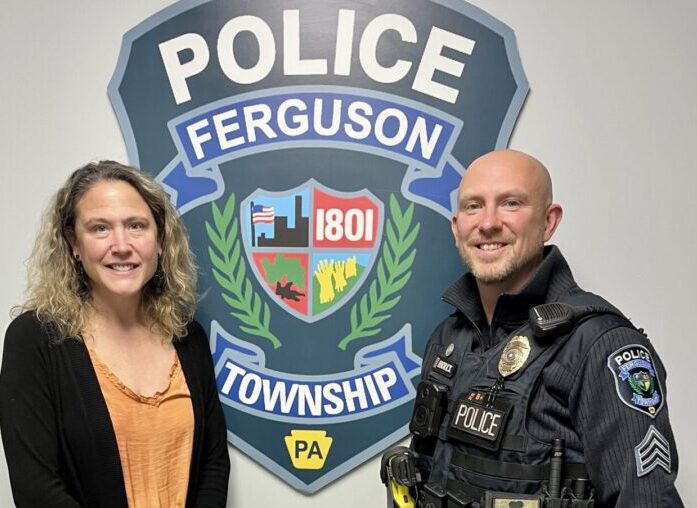
When Ferguson Township Police Sergeant Ryan Hendrick was honored as the Centre County Crisis Intervention Team’s officer of the year in 2018, a familiar face who showed up at the ceremony gave him pause.
“I thought, ‘This isn’t going to be good,’” Hendrick recalls.
But that moment proved meaningful for all the right reasons.
“He was one of our individuals that we deal with quite often and was not necessarily a big fan of me, just because we’re the ones that take him to the hospital,” Hendrick says. “But that said a lot to me that he actually took the time to come to the awards and actually shook my hand at that. He recognized the need and the work that we put into this program, that we’re truly all trying to help.”
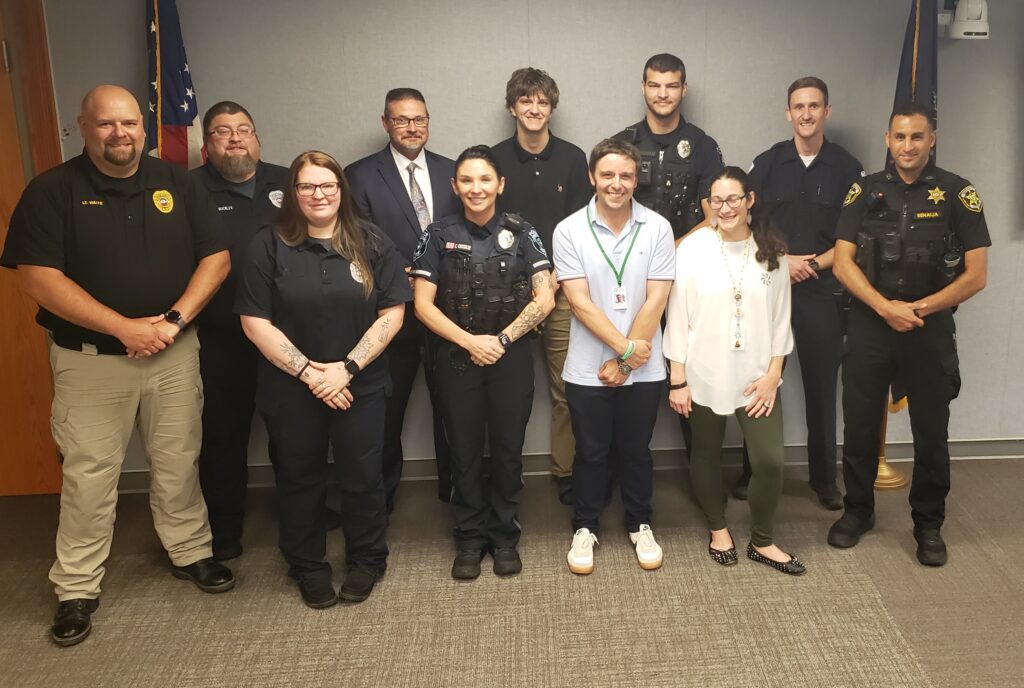
Since the CIT program was established in Centre County in 2010, 508 first responders have been trained in how to respond to mental health crises. Another class, the program’s 28th, is scheduled to graduate Jan. 16.
The CIT training — based on a program that began in Memphis, Tennessee — is open to law enforcement officers, sheriff’s deputies, correction officers, probation/parole officers, 911 telecommunicators, mental health professionals, emergency medical services staff, and other first responders. The 40-hour, one-week training class emphasizes mental-health related topics, crisis-resolution skills, de-escalation, and access to community-based services, says Tracy Small, the program’s coordinator since 2011.
That partnership among various professionals is key, Small says. And it’s particularly important as the number of mental-health related referrals in the county is rising, from 195 in 2011 to more than 700 in each of the past few years.
Those in the mental health and law enforcement communities become familiar with many of those using the services, and being able to share that knowledge from agency to agency throughout the county helps in the response.
“When they come up in crisis, you kind of know what the approach needs to be already because you’ve dealt with them many times before,” Small says. “It was put to me one time that we have 2% of our population that consumes 98% of our resources. And that is probably pretty accurate. … We have them in services. Crisis [services] is involved with them. It really doesn’t matter how much support you wrap around them; they just seem to really struggle with their mental health. So having law enforcement trained and EMS and the people that are on the front lines, even our dispatchers, they’re great with being able to flag those people in the system. Just working together to support, the best we can, those people that come up frequently.”
Small estimates that at least 90% of officers in police departments within the county have been through CIT training here, though she says participation rates for state police locally are lower. Department numbers fluctuate somewhat through attrition and the need to train new officers.
Hendrick, who completed the CIT training in 2016 and is now on the program’s steering committee, notes that he initially was skeptical of the need.
“I was flat-out wrong and at some point went to the training, and ever since then I’ve tried to get involved in absolutely everything I can because it completely changed me,” he says. “I had quite a few years on the job at that point, but I realized there’s just a huge need to know as much as we can, whether it’s myself, but the services too. There’s so many services out there that we just need to utilize to make this successful.”
Here is more from our conversation:
Can you share an example of a success story?
Small: Our [2025 honorees] from this year, it was actually a 911 dispatcher and a police officer who got it for the same call [Randi Smeal, a Centre County emergency communications public safety telecommunicator, and State College Police Lieutenant Bryan Foster, nominated separately by their peers].They were nominated for an individual who was suicidal who had a loaded firearm in his car and they were able to talk him down. It was someone from out of town who came into town and he was determined to die by suicide and called dispatch, thankfully. He was sitting in his car with the firearm on a seat and had called them and just said who he was and where he was, and they found him.
They took more of a tactical approach, because obviously with a loaded firearm, you’re going to want multiple officers and your response is going to be different than if you know there’s no weapon. They came up with a plan, and they were able to talk him out of the car and talk him into going to the hospital to get evaluated and get some help.
How do you balance public safety and the threat of violence versus dealing compassionately with someone who’s having a mental health crisis?
Hendrick: It’s tough. Every case is individual. We always know that officer safety comes first, their safety comes first. There’s a lot of training [involved]. We try to always have a cover officer. But it’s really just getting good at the skills of de-escalation. As long as we can do it from a safe place, we can sit there and slow things down. Law enforcement normally doesn’t like to slow things down. We like to speed things up.A lot of times in a tactical thing, the longer it goes on, the more advantage goes to said bad guy. Mental health is quite the opposite. … You’ve got to slow it down, and you’ve got to bring in your team members.
Mental health calls have increased quite a bit over the years. Why do you think that is?
Small: What I typically tell people when they ask that question is that as we train more officers in CIT to recognize mental health symptoms, more officers are completing the CIT Referral Forms so we have seen an increase in the number of referrals. I also couple this with the fact that the stigma of mental health, while it still very much exists, has decreased over the years, particularly for the younger generation. We are teaching children from young ages that “it’s okay to not be okay” and to ask for help when it comes to their mental health. I think we see more of the younger generation feeling comfortable reaching out for mental health assistance than we did years ago. This is obviously a good thing, and all the more reason we need to continue to train our first responders on how to recognize mental health and guide people who are struggling toward appropriate resources.
Did the Osaze Osagie tragedy impact your program?
[The family of Osagie, a 29-year-old Black man with mental health issues, contacted State College police in March 2019, concerned about his well-being. Police found Osagie at home and said he charged at them with a knife. An officer fatally shot him. The incident sparked considerable discussion and response in the State College community about policing, mental health, and race.]
Small: When everything first happened with that, I know there was a lot of negative about the CIT program not working, and if it would have worked, that he would still be alive. But one of the things that we really stress in our week [of training] is that if there’s a situation where you know there’s a weapon involved, things are very heated, you know it’s mental health, you go back to your department’s policies on use of force, and that’s where that verbal de-escalation kind of ends. If you can still do that [de-escalation] safely, that’s great, but if there are situations where it’s like, “Oh, my,” then you need to make sure that you’re safe doing what you need to do and following your department policies. And so, it shook us a little bit but we know that what we’re doing is good; we know that what we’re doing works. We didn’t really change much about what we did with our training.
What would you tell somebody if they have someone who’s in a mental health crisis and they need to call you? Is there anything that you wish people knew about how to deal with this when it happens?
Small: I go back to our dispatchers; I think they do a good job of asking questions. And on our county webpage [see QR code], we have some tips that are helpful for families to know. Maybe the officer might ask about medications; they’re going to ask about weapons. They might separate the parties and have one officer talking to the person in crisis, another officer talking to a family member. So, being prepared for what might happen when officers show up at the scene.
Also knowing that if people call for EMS, [police] respond to pretty much any EMS calls. They get there sometimes before EMS, and I think that throws families off. Sometimes they’re like, “I called for a medical emergency, and now you’re a police officer and you’re here.” Well, they’re trained in first aid, CPR, all the medical things that can buy time until the EMS gets there. But a lot of times EMS will respond, too, to those mental health calls. So, just understanding that there could be a lot of people that show up at your home that are first responders that might have different questions.
What we really want to push people to do, if there’s no immediate threat involved, is to call the 988 hotline, which is the suicide hotline, or our local county crisisnumber [800-643-5432]. That will get them at least somebody to evaluate them, assess the situation, and then maybe that person can say, we might need to do a little bit more here, you might need to go inpatient or maybe they can refer them to some programs or resources that we have in our community. I think just being aware that there’s a lot out there, that even if a police officer responds to somebody in crisis, they’re going to make sure that somebody from mental health knows that that person needs some help and that there’s going to be follow-up that will happen with that person.
Looking back at the program over 15 years, what are you most proud of?
Hendrick: Besides her [Small], because she does a phenomenal job,I’m convinced we’ve saved lives. And that’s what we’re all in this for. We’ve made people’s lives better, the two combined. It’s hard to show a stat [to] solidify that, but I know we have. I see how different the officers handle it. We have that connection with the community that we didn’t necessarily have before. I see it. The reaction to a uniformed officer is very, very different now than it was when I first started. People with special needs definitely will come to us. And a lot of times — not always — a lot of times they actually really like law enforcement. That takes time. I’m very proud that we made the efforts to make sure that they see the uniformed officer very differently and know that we’re there to help them.
Small: I’m just most appreciative of my team, just everybody who we collaborate with. … And even though the faces of my steering committee have changed over the years, the commitment has not. And that’s huge because I couldn’t do this without getting the data, without having the support and the buy-in and people sitting at the table to help make these decisions. And it is about the community, really. There’s been countless lives that have been saved by our first responders out there. T&G
Mark Brackenbury is a former editor of Town&Gown.



