
Emerging filmmaker Jacob Welsko brings young artists, big ambitions, and the joy of creating together to life in his independent series, “Da Capo”
For filmmaker Jacob Welsko, the phrase da capo means more than a musical direction.
In sheet music, da capo — Italian for “from the beginning” — instructs musicians to return to the start of a piece and play it again. For Welsko, it became the perfect title for an independent television pilot about an indie band forced to do exactly that: start over.
Written and directed by Welsko, “Da Capo” follows a group of young musicians scrambling to find a replacement band member just days before an important gig. But beneath the music, drama, and dialogue is a story about friendship, ambition, creativity, and what happens when young people are willing to work together to make something happen.
Now in post-production, the pilot represents years of ideas, writing, rewriting, and problem-solving for Welsko — and the determination of an emerging filmmaker who has repeatedly faced the question, “How are you going to make this happen?” with the same answer: Figure it out.
Finding the Story
Welsko’s path to filmmaking began with falling in love with words. In high school, he got involved in journalism, wrote album reviews, and learned the fundamentals of storytelling. The experience gave him an outlet for his creativity while deepening his appreciation for music.
“I’ve always been into writing,” he says.
When it came time to choose a college major, Welsko initially considered journalism. But after discovering media and video production, he realized filmmaking could combine his interest in writing with a new visual medium.
He studied media and video production at Northampton Community College in Bethlehem before transferring to Kutztown University, where his filmmaking education became more and more hands-on. He worked on sets, helped friends with short films, and gained experience with the collaborative nature of production.
When he set out to create his own project, he found himself asking: Why make a short film when he could make a television show? After all, he is a self-described television fan who is drawn to the possibilities of an ensemble series.
During winter break, the idea quickly took flight, and he started filling a notebook with ideas — character names, storylines, episode titles, and potential plots.
From there, the idea took off. In August 2024, Welsko began writing the script for the pilot. The first version was roughly 40 pages. He shared it with friends, refined it, and continued developing the story and additional episodes.
“I was like, all right, I think we could shoot the first episode,” he recalls.
And then the real work began.
‘You can do anything, anywhere’
Turning an idea into a television pilot is a daunting task, particularly for an independent filmmaker. There are locations to find, actors to cast, equipment to secure, schedules to coordinate, and countless challenges that inevitably emerge along the way.
Welsko approached each obstacle as a new puzzle to solve.
Knowing the story needed a city setting, he considered places such as Philadelphia or Washington, D.C. But rather than attempting to recreate a larger city, he made a decision that would become one of the defining characteristics of “Da Capo”: He would embrace the place where he was.
Bethlehem, Pennsylvania, was the closest small city to where he lived, so it became the setting. The production took place throughout the commonwealth, incorporating real locations rather than relying on constructed sets.
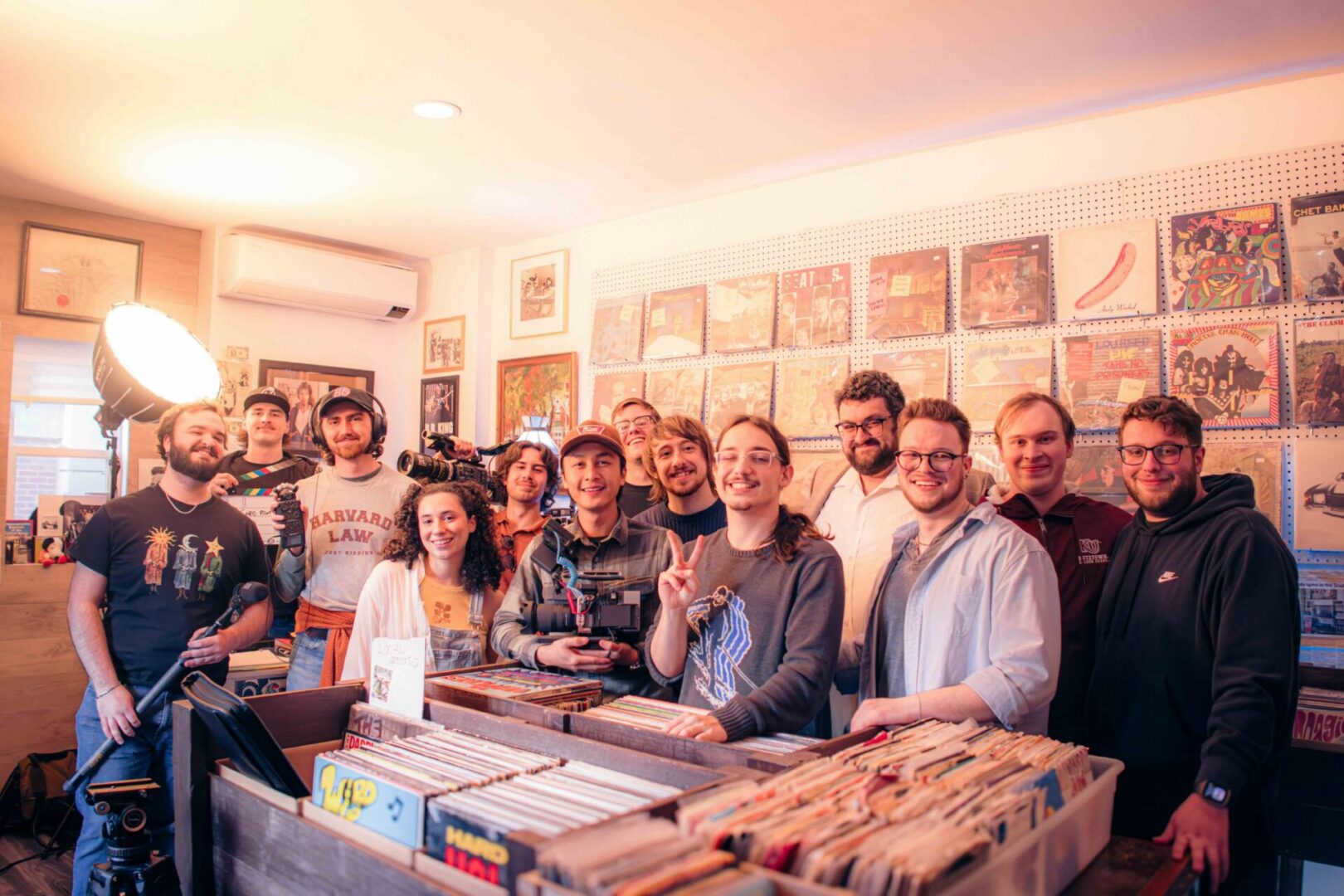
Northside, Bethlehem provides the urban atmosphere Welsko envisioned, while Bethlehem Public Library, Railroad Records, and DeSales University each contribute distinct visual identities to the story.
The locations aren’t simply backdrops. They become part of the world inhabited by the characters. For Welsko, that authenticity was important. While many television dramas about young creatives are set in Los Angeles or New York, “Da Capo” emphasizes that compelling stories can emerge from any location.
“I want to show that you could do anything, anywhere,” he says.
That philosophy extends beyond the show itself. Welsko sees the Lehigh Valley as a place where filmmakers and artists can create ambitious work without having to move to one of the country’s traditional entertainment hubs.
In a nod to Outkast’s memorable 1995 Source Awards moment, Welsko says, “The Lehigh Valley’s got something to say. It’s called ‘Da Capo.’”
A Story About Young Creatives
Music is at the heart of “Da Capo,” but Welsko isn’t a musician himself. In fact, that was part of the appeal.
“I love music, and very ironically, I am really not musically inclined,” he says. “I probably will never be in a band, so I’m like, all right, I’ll write a show about one.”
The story that emerged speaks to something larger than music. “Da Capo” explores the challenges of being a young creative — trying to establish an identity, build relationships, and accomplish something meaningful while navigating the uncertainty of your 20s.
Welsko also hopes the series offers a different portrayal of Gen Z. In “Da Capo,” rather than focusing on stereotypes of young people as lazy, unmotivated, or disconnected, he wanted to create flawed but relatable characters who genuinely care about one another and what they’re trying to accomplish.
At its core, the series is about young artists coming together to make something. It’s a theme mirrored in the production itself.
Nearly 50 actors auditioned for roles in the pilot, far more than Welsko expected when he first put out the casting call. Ultimately, seven days of filming took place throughout March, April, and May.
The cast and crew worked long days, often 10, 12, or even 14 hours at a time. Everyone volunteered their time, receiving food and gas money in return. Welsko says that while he can’t offer traditional pay — yet — he can offer an opportunity to create something memorable together. And for him, that collaboration is one of the best things about filmmaking.
“I can’t thank my crew enough for the hard work they put into the project,” he says. “I appreciate them so much and can’t wait to see their hard work on the screen, and for other people to recognize the talent, passion, and determination that went into this project.”
What’s Next for “Da Capo”
Today, “Da Capo” is in post-production. Welsko is assembling the final cut, working on music, sound mixing, and color correction before eventually sharing the completed pilot with audiences.
Once it’s ready, he plans to break it into shorter webisodes and share them through social media and YouTube — creating the feeling of a television series with weekly installments.
Eventually, he hopes to pitch “Da Capo” to studios, streaming services, and agents. He isn’t sure exactly how he’ll get there, but that has never stopped him before.
“I don’t really know what that looks like,” he says. “But I’m gonna figure it out like we figured out everything else.”
That determination may be the most fitting theme of “Da Capo.” The title tells its characters to return to the beginning. For Welsko, going back to the beginning isn’t about starting over with nothing. It’s about taking what you’ve learned, gathering the right people, and starting again — which is what motivates him to tell stories through filmmaking.
“Filmmaking can be challenging and exhausting, but the collaborative nature of it and the community keep me coming back,” he says. “For me, filmmaking is about being around a great community of people, growing, challenging [yourself], and learning alongside them. It’s why I want to keep creating.”
To follow Welsko and the “Da Capo” team, see behind-the-scenes updates and learn when the pilot will be released, follow @dacaposeries on Instagram. T&G
Cara Aungst is a freelance lifestyle and business journalist who writes about people, events, and how Happy Valley ideas change the world. She can be reached at caraaungst@gmail.com


