Penn State exhibit spans three centuries of Fraktur and Schrenschnitte
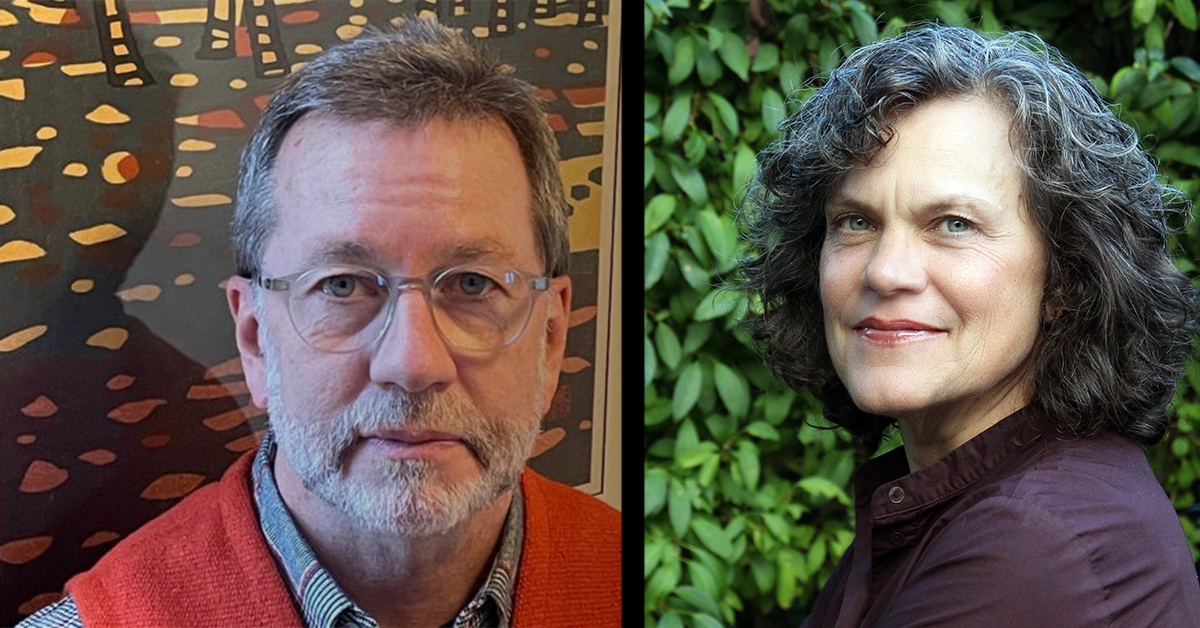
Inspired by the cultural value and beauty of the Pennsylvania German paper arts in the Special Collections Library, two Penn State professors, Julia Spicher Kasdorf and Christopher Reed, decided to plan an exhibit to share these objects with the public. Their exhibit, “Paper Paradise: Three Centuries of Pennsylvania German Fraktur and Scherenschnitte,” showcases 50 examples from the 18th to 20th centuries. The show begins on May 28 and will run through Oct. 30 in the Eberly Family Special Collections gallery. “We wanted to work with the collection here because it is so rich, and bring it to the attention of a new generation,” says Reed, a Penn State professor of English, and director of the Visual Studies program. Many Fraktur Penn State in the collection were donated by Philip Allison Shelley, a Penn State professor of German interested in Fraktur. His brother Donald Allison Shelley wrote a 1961 book about Fraktur for the PA German Society. “It’s folk art,” says Kasdorf, a poet and Liberal Arts professor of English. “It’s art that was made by untaught artists.”
She says the way folk art works is that people borrow images and motifs from one another. Visitors to the exhibit can see examples of this. Common images used in Fraktur include flowers, birds, and angels.
Over time, the Pennsylvania Germans (also known as the Pennsylvania Dutch), developed their own distinctive style for the crafts of Scherenschnitte (paper folding and cutting), and Fraktur (documents written or printed in a bold German blackletter font that often had accompanying images and designs). The papercuts sometimes included small, decorative pin-pricks in the paper.
The exhibit showcases a wide range of Fraktur — songbooks, bookplates, reward documents for students, advertisements by printers, and certificates commemorating births, baptisms, and marriages. Kasdorf says the certificates might serve as legal documents if they were the only record of the event.
The Fraktur artists were often schoolmasters who created their art with iron gall writing ink and watercolors, sometimes using papers pre-printed with texts and designs in black printers ink. They made certificates to reward their students.
Kasdorf says literacy — reading and writing — was highly valued. “People were also very interested in musical literacy. There is a connection between Fraktur and literacy, whether it’s reading, writing, or musical notation.” She has a personal connection to this art, as a Mennonite, descended from Mifflin County schoolmaster and Fraktur artist, Samuel Plank. Kasdorf’s motherin-law, Roma J. Ruth, continues to create Fraktur art in her 90s. Reed also has a Pennsylvania Dutch heritage.
“It’s important that this exhibit is not just artifacts from the past,” Kasdorf says. “We also have work by people who are still practicing these arts.”
New Fraktur and Scherenschnitte were commissioned for the show. The modern artists were asked to choose a historic artwork in the collection as an inspiration for their art.
A newly commissioned Fraktur, “Onion, Fruit of Grace,” by Lynn Sommer of Lancaster County, has some non-traditional elements. She used musical phrases of shapenotes in the Fraktur, reflecting her role as a musician and singer. She also included the words of a poem written by Kasdorf.
A Scherenschnitte by the late Harriet Rosenberg of Boalsburg, created circa 2019, used a vibrant modern lettering style for the traditional quote, “The reward of patience is patience.” Reed says “She updates old techniques but often quotes old mottos.” Rosenberg was equally skilled in making delicate, more traditional papercuts.
Kasdorf says Rosenberg often participated in Aaronsburg’s annual Snowflake Showdown, a paper snowflake cutting contest. A video of the January 2026 event, filmed by Penn State students, will play on the video monitor during the exhibit.
“We have in the exhibit the largest book printed in colonial America,” Kasdorf says. The “Martyr’s Mirror” was printed in 1740 The “Martyr’s Mirror” was printed in 1740 on the press at Ephrata Cloister, a utopian religious community in Lancaster County. She says the book contains only one illustration, a small printer’s device — an image of a man digging — that shows up later in a 1980 Fraktur. “These images get repeated and used again.”
To give visitors a taste of daily Pennsylvania German culture, Reed created reproductions of historic broadsides to mount on the pillars in the exhibit room. The broadsides advertise everyday events such as “Land for Sale,” and often include English and German together in funny combinations.
“There’s a whole series for summer picnics that was in 1932, 1933, and 1934, that say “Bolidix Verboten (Politics Forbidden),” he says. Reed says, “The library continues to collect both historical and contemporary examples of technique known as Scherenschnitte. These traditional arts came to America with the Pennsylvania German colonists and are still practiced today.”The Eberly Special Collections Library will be open from May 28-Oct. 30. For more information, please call (814) 865-1793 or send an email to spcollections@psu.edu. T&G
Karen Dabney is a freelance writer in State College.