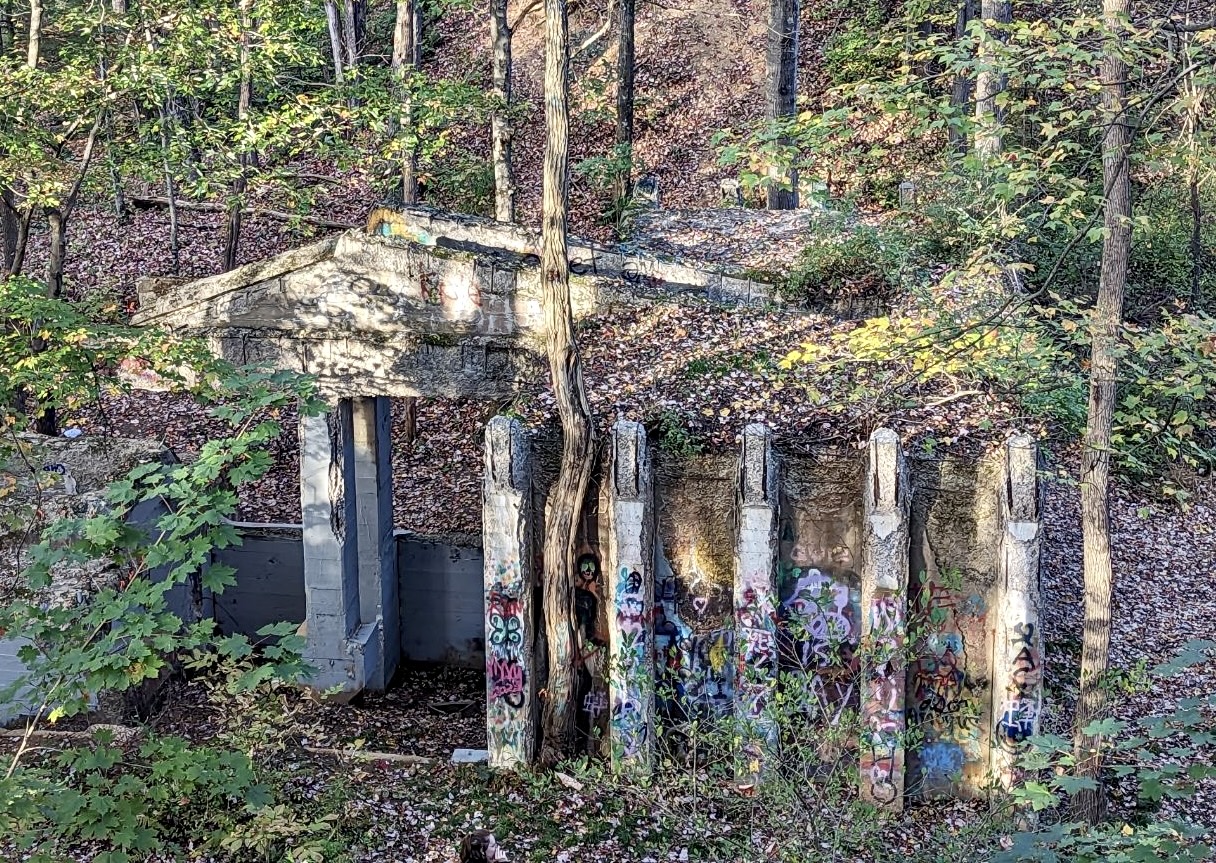
Every autumn, as warm sunshine makes way for chilly evenings and changing colors, “spooky season” creeps into our quaint towns and villages. Like clockwork, we forget summer fun to indulge in pumpkin spice, warm soups, crisp Friday nights, and even the occasional haunt. Fortunately for those with an affinity for the macabre, our communities are ripe with tales of the unworldly, the odd, the eerie, the paranormal. One local story, passed down around hushed campfires for generations, chills even the most skeptical to the bone: the “Black Ghost of Scotia.”
On a clear October night in 1910, Hulda Baudis made her way home from a visit with a friend on a lonely road in Scotia, an old mining village whose best years were behind it. The community was small — a town where “everyone knows everyone” and nobody kept a secret for long. Scotia was located miles from the nearest “big city” of Bellefonte or the Pennsylvania State College, and work had dwindled along with the town’s mines. A quick walk home at night would have been commonplace, and Mrs. Baudis would have scoffed at the idea of waiting until morning. She had seen this community grow, thrive, and fade, and knew these lands and the people better than anyone. She likely wasn’t even alarmed when she saw a figure approaching on the narrow pathway in front of her.
On the morning of Oct. 17, Mrs. Baudis’ body was found along the road not far from her home, throat cut. Investigations revealed several suspects, but Bert Delige was the most promising, based on his closeness with the family and issues with his alibi. Upon further questioning, it was discovered that Delige, who lived with his mother, brother, and several other family members, had left the house at 10 p.m. after a night of drinking and was unaccounted for until that morning. As the investigation proceeded, a guilty conscience drove Delige to confess to his family members, who in turn revealed his deed to police. Upon his arrest, Bert Delige confessed to the murder of Hulda Baudis.
During his trial in December, more details were uncovered about the heinous act. According to Delige’s testimony, when he came across Mrs. Baudis that night, he dragged her into the nearby woods and assaulted her, but initially let her go. Fearing she recognized him, though, he chased her down and murdered her on the road where she was found the following morning. He tossed the straight razor he used for the deed into a nearby bush, where it was discovered. When asked why he did these violent acts to old Mrs. Baudis, a woman Delige had known his entire life and even worked for, he blamed drunkenness and insanity.
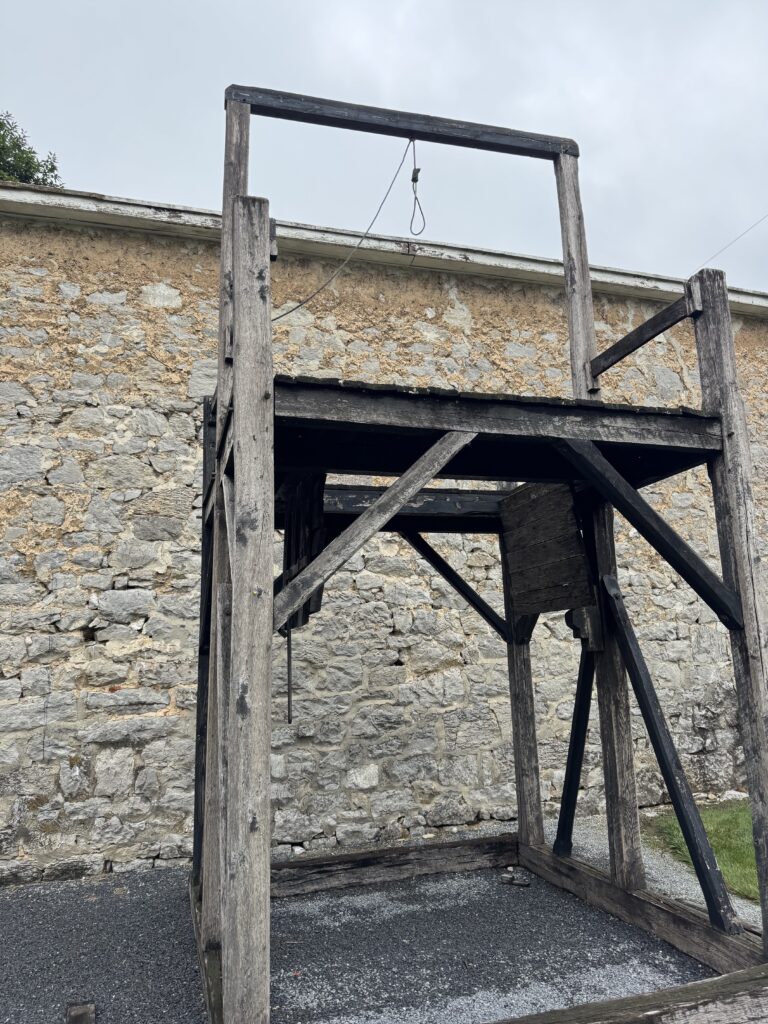
Delige’s crimes and confession led to a very speedy trial, and the resulting death sentence was carried out on April 25, 1911, in what would be the last hanging in Bellefonte. He was not permitted to be buried with family members in the Marysville African Methodist Episcopal cemetery, so he was laid to rest in an unmarked grave nearby.
According to some, Bert Delige didn’t rest long, and the legend of the Black Ghost of Scotia began. The late Hugh Manchester, a longtime local historian and writer for the Centre Daily Times, shared tales of the spectre. Most famously, he described a conversation he had in the 1970s at the Centre County Library with some travelers who had allegedly come across a figure lurking in and out of their view around some ruins in Scotia before disappearing entirely. Everyone in the group saw the figure, but nobody knew what to make of it. Upon further questioning, Manchester was able to deduce the location, based on the travelers’ description, to be the location of Delige’s grave. Several hikers have reported being followed by a figure at dusk while leaving the ruins, and many who brave the trails at night swear they feel like they’re being watched by a shadowy figure just out of view.
It’s curious how tales like the tragic death of Mrs. Baudis and the violent end of her killer, Bert Delige, have spawned a legend. Is it simply that abandoned places have eerie vibes and we desire explanations for how we feel when experiencing “the chills”? Or could it be something more? Could Bert Delige, the Black Ghost of Scotia, still stalk the Scotia Barrens? T&G
Local Historia is a passion for local history, community, and preservation. Its mission is to connect you with local history through engaging content and walking tours. Local Historia is owned by public historians Matt Maris and Dustin Elder, who co-author this column. For more, visit localhistoria.com.
Sources:
Delige found guilty. (1910, December 16). Centre Daily Times, pp. 1–4.
Grave of bert delige’s grandfather accorded honors on memorial day. (1959, June 10). Centre Daily Times, p. 4.
Made speech on gallows. (1911, April 26). The Patriot-News.
Manchester, H. (2006, October 26). Centre county ghost stories still hanging around. Centre Daily Times.