Early in my teaching career, I became obsessed with political drama TV shows. I would binge-watch episodes of “The West Wing” for hours, get lost in “House of Cards,” and thoroughly enjoy the more historical “John Adams” or the lighthearted “Veep.” These shows captured my imagination and offered a highly dramatized glimpse of the machine that is American politics.
While most might assume such turmoil only occurs in Washington, Centre County and its residents played a role in one of the most tumultuous political sagas in Pennsylvania history: the Buckshot War.
In 1838, Pennsylvania politics were sharply divided between two opposing forces: the Democrats and the Anti-Masons. The Democrats followed Andrew Jackson’s populist vision: small government, suspicion of banks, and support from farmers and rural voters. The Anti-Masons, increasingly merging into the rising Whig Party, favored industry, internal improvements, and a more active central government. Tension between the two groups had grown over the decade, with little compromise and a great deal of animosity. The gubernatorial election of 1838 was set to bring these tensions to a head — and several key Central Pennsylvanians found themselves at the center of the storm.
Centre County, still a young and developing region, had become a microcosm of the statewide conflict. Bellefonte in particular reflected this deep divide. Wealthy ironmasters, merchants, lawyers, and judges supported canal construction, roads, and other costly improvements, aligning naturally with the Whig belief in government-backed progress. But tradespeople, laborers, and farmers — who made up most of the population — saw these projects as expensive burdens from which they would reap little benefit. Many feared higher taxes and resented the influence of wealthy industrialists.
Heightening the stakes further was the intensifying push to carve Clinton County out of Centre County, centered around the fast-growing community of Lock Haven. To many residents, the 1838 election would determine not only the direction of the state but the very shape of their home county.
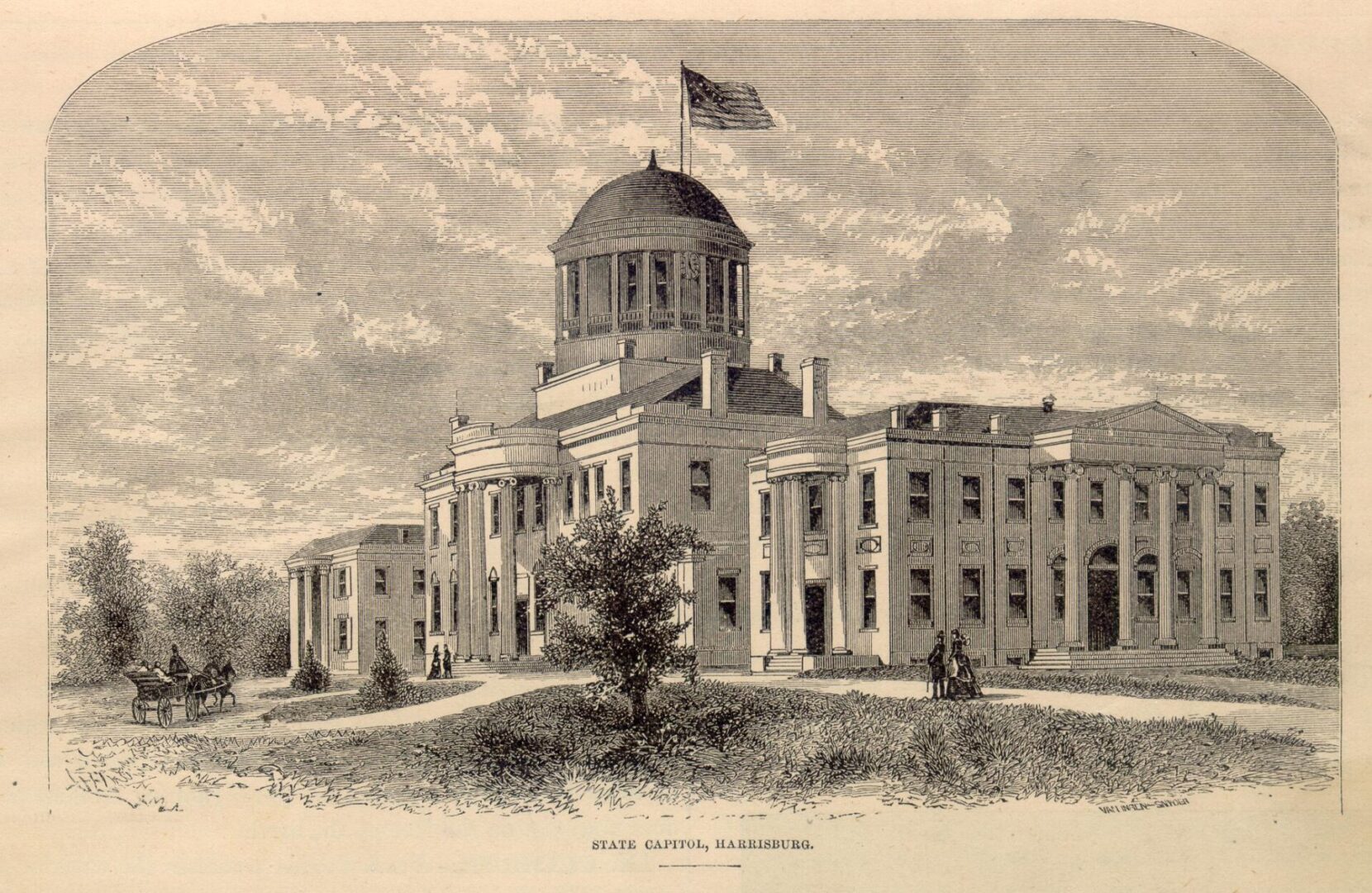
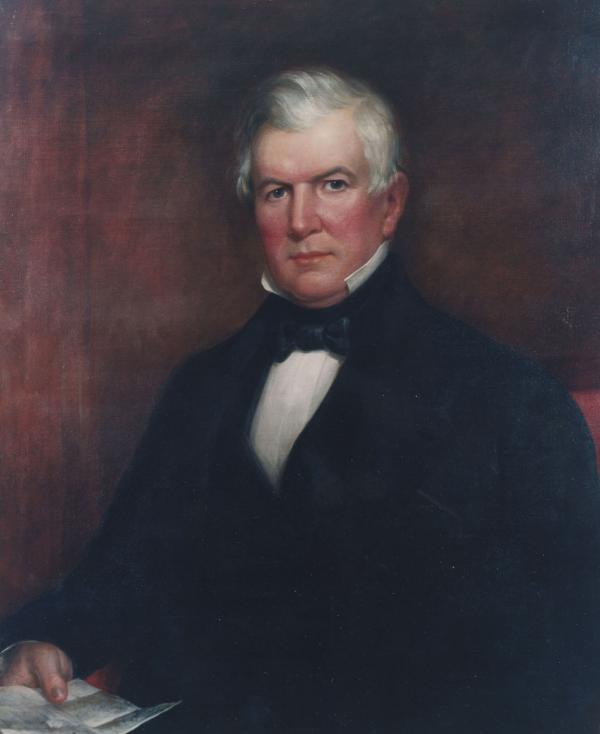
With so much at stake, the election was destined for controversy. After a bitter campaign full of slander and misinformation, the Anti-Masonic incumbent governor, Joseph Ritner, lost to Democrat David Porter by fewer than 5,000 votes. Ritner’s allies, led by the chairman of the Anti-Masonic Party — future Centre Countian and eventual Penn State president Thomas Burrowes — claimed voter fraud and demanded that the votes from one Philadelphia district be thrown out. Both Ritner and Porter insisted they had won. When the legislature convened, both parties attempted to organize their own versions of the General Assembly, each claiming the majority.
On Dec. 4, 1838, as the legislature met to seat new members, chaos erupted. Democrats and Whigs clashed over several contested Philadelphia seats, leading to a full breakdown in order. In a dramatic escalation, a crowd of Democratic supporters burst through the bar of the Senate chamber, allegedly shouting “Kill Burrowes!” Burrowes and several colleagues were forced to escape through a back window. The incident became the defining image of the crisis and pushed the state to the brink of armed conflict.
Desperate to restore order, Ritner requested federal troops, but U.S. President Martin Van Buren refused. Ritner then called out the Pennsylvania militia and ordered them armed with buckshot cartridges, a decision that gave the crisis its enduring name, the Buckshot War. Before the troops could be equipped, however, a local Committee of Safety opposed to Ritner seized the state arsenal, effectively halting the possibility of military confrontation.

In Bellefonte, political fervor ran high. Democrats and Whigs organized rival meetings, passed resolutions, and issued statements supporting their respective factions. Bellefonte Democrats, led by Centre County lawyer and future Penn State founder H.N. McAllister, drafted a statement urging their allies in Harrisburg to “persevere with peaceable but unyielding firmness in their opposition to the tyranny and usurpations of Governor Ritner and his officers.” The political temperature in the town mirrored the intensity in the state capital, demonstrating how deeply the crisis resonated throughout Centre County.
Although the Buckshot War ended without the violence many feared, its resolution reshaped Pennsylvania politics and had a lasting impact on communities like Bellefonte. When the Democratic legislature was finally recognized and David Porter took office, the constitutional crisis subsided, but the political fractures remained. For Bellefonte and Centre County, the episode affirmed the region’s growing political significance — its leaders, lawyers, and powerbrokers had been central in guiding the outcome. The turmoil accelerated local changes, most notably the successful creation of Clinton County the following year, a shift rooted in the same tensions that had divided neighbors during the crisis.
In the end, the Buckshot War stands as a reminder that even statewide political drama is shaped not only in capitols, but in communities like Bellefonte, where local passions and leadership helped chart the course of Pennsylvania history. T&G
Local Historia is a passion for local history, community, and preservation. Its mission is to connect you with local history through engaging content and walking tours. Local Historia is owned by public historians Matt Maris and Dustin Elder, who co-author this column. For more, visit localhistoria.com.
Sources:
Engle, W. H., & Ritner, J. (1899). The Buckshot War. The Pennsylvania Magazine of History and Biography, 23(2), 137–156.
Linn. (1883, January 1). History of centre and Clinton Counties, Pennsylvania : Linn, John Blair, 1831-1899. CN : Free download, Borrow, and streaming. Internet Archive. https://archive.org/details/historyofcentrec00linn
PHMC governor David Rittenhouse porter. PHMC > Pennsylvania Governors. (n.d.-a). https://www.phmc.state.pa.us/portal/communities/governors/1790-1876/david-porter.html
PHMC governor Joseph Ritner. PHMC > Pennsylvania Governors. (n.d.-b). https://www.phmc.state.pa.us/portal/communities/governors/1790-1876/joseph-ritner.html