
Some of the statistics are hard to fathom. Each day, according to the US Government Information on Organ Donation and Transplantation, 22 people die while waiting for an organ transplant. Currently, more than 119,000 people in the United States are on the national transplant waiting list — and every 10 minutes, another person is added.
Organ donation can be a difficult subject to discuss. Usually, someone has to die in order to help another person live.
For those whose lives have been impacted by an organ donation, they have become living testimonials to what may be the greatest gift one person can give another.
• • •
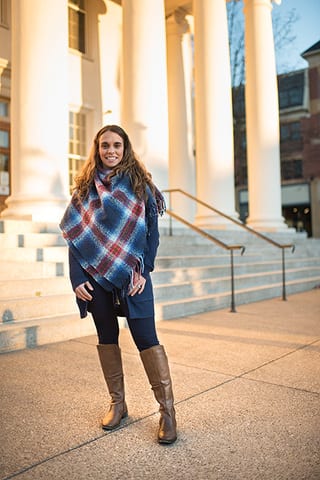
Jessica Gabel has seen her dad cry just a few times in her life. Once was at her wedding in 2015. Another time came a year earlier when she informed her father that she was going to donate one of her kidneys to someone she had never met.
As a parent, Gabel’s father was concerned, obviously, about what donating an organ meant for his daughter and the
effects it would have on her.
“He’s not an emotional man,” says Gabel, who is a senior tax accountant for Shaner Corporation. “I think he was concerned that I couldn’t have children. I can still have children — I would be a high-risk pregnancy, but people have done it all of the time.”
Gabel, now 32 and living in Bellefonte with her husband, Mike, has always been one who is looking for ways to help others. She volunteers at PAWS, does several 5K events that benefit charities, and donates blood regularly. So maybe it shouldn’t have surprised anyone what her reaction was after she read about Matt Crater — a man in his early 30s from Bellefonte, a husband and father, and someone who needed a kidney transplant because of his having chronic kidney disorder. Gabel, almost immediately, decided to be tested to see if she could donate one of her kidneys.
Even before the test results came back, Gabel knew in her heart that she would be a match — and she was. In September 2014, she had surgery to remove her left kidney, and Crater had surgery to have Gabel’s kidney put inside him.
“When I found out I was donating, I was like, ‘Oh, this is happening.’ And that’s when I got an overwhelming feeling,” Gabel says. “I would have never gone through all that to not do it, but it does become overwhelming at some point. You’re going through the motions, then when it hits you and sets in, it’s, ‘OK, I’m losing an organ.’ ”
When she woke up after the surgery, she saw her family and had just one concern. “I’m in a football pool,” she remembers, “and I said, ‘Did someone submit my football picks?’ My dad said, ‘She’s good!’ ”
And so was Crater, after his body had at first rejected Gabel’s kidney twice. While the organ donation was done anonymously, Gabel wanted to meet him, and she visited his house in January 2015.
“He gave me a hug, and we were crying,” she says. “He was watching football, and we started joking about football. I like the Eagles, so he just cracked some jokes about the Eagles. He said, ‘Do you think the kidneys can communicate telepathically?’ It was very relaxed. We just talked about the experience and how we were doing.”
Gabel talks about her decision and experience to anyone who wants to know about being a living organ donor. She tells people how they’ll be able to live a normal life, and in some ways their life becomes better. She says, in her case, she is always conscious of maintaining a healthy lifestyle to take care of her one remaining kidney.
And then, of course, there’s the sense of helping someone else and allowing that person to live a normal life.
“So many people need organs. … I see more people, tons of people who need kidneys. I never noticed it,” she says. “There’s a guy in my neighborhood who needed a kidney. He couldn’t find one and was about to start dialysis, and physically, to see him go from being healthy to being sick, that’s scary. He just got his kidney from a girl in Canada, and he’s doing so much better. … If I had another kidney, I’d donate it. … [Donating my kidney] was one of the best decisions I made in my life! I am perfectly healthy and happy two years later, and so is Matt, which is awesome!”
• • •
“There’s nothing more we can do.”
Those were the words Bill Thomasson heard from a doctor when he arrived at the trauma center in Altoona on November 13, 2007. The doctor was talking about his 18-year-old daughter, Taylor, who was his only child. Earlier that morning, Thomasson received a call from a Penn State representative telling him that Taylor, a freshman at the university, had been found on the ground outside Tener Hall, where she had lived on the eighth oor. She had been airlifted to Altoona. Thomasson immediately drove from his home in Virginia to be with her.
Taylor had attempted suicide and fell from her dorm-room window. Doctors said she was brain dead, and they showed the Thomassons her brain scans, as well as administering two apnea re ex tests.
“There’s nothing more we can do.”
But, actually, there was. The Thomassons met with a representative from CORE (Center for Organ Recovery and Education), and it was determined that some of Taylor’s organs could help others.
• Her liver helped a woman named Donna from Washington, Pennsylvania.
• Her kidney went to Tony, a Vietnam veteran who lives in Illinois.
• Her lungs went to a young woman who lives in Canada and is an artist — like Taylor was.
• Her heart went to a man from the Caribbean named Boodoo, who now lives in Virginia, about 30 miles from where Bill Thomasson lives.
• Her cornea went to a woman named Mona, who can now see.
“When you lose a child, it’s difficult, and a lot of people who have lost children find it difficult to talk about,” says Thomasson. “What I found out early on is that to me, it’s important to remember Taylor and have others remember her, and I started focusing on the good — the good in the life she provided to others.”
Thomasson talks as he sits in the HUB on the Penn State campus as the ninth anniversary of Taylor’s death nears. Every year, on the weekend around the anniversary of Taylor’s death, he drives from Virginia to Penn State. He places an ad in the The Daily Collegian — it’s a tribute to Taylor and a call to become an organ donor. He puts a dozen roses on the ground outside Tener Hall. He will usually visit a tree that he and Taylor’s mom, Patt, purchased and that was placed outside Findlay Commons in honor of Taylor — but on this visit, the plaque honoring Taylor that is usually underneath the tree is in storage because of construction.
After Taylor’s death and her organs were donated to help others, Thomasson wanted to meet with those who had received Taylor’s organs. His experience in meeting the organ recipients was documented for part of the film I Hope You Dance, which explores how that one song, made famous by Lee Ann Womack,
has helped change people’s lives. The song was Taylor’s favorite, and Thomasson says if his daughter was sitting next to him today, she’d say, “I hope you dance.”
In the film, Thomasson meets with four of the recipients. In one scene, he meets Boodoo, and, with a stethoscope, listens to Boodoo’s heart, which had been Taylor’s heart.
Each year since Taylor’s death, Thomasson gives more than 20 speeches about organ donation to various groups. He says organ recipients have approached him and talked about the guilt they feel — that someone had to die for them to live.
“I tell them, ‘Don’t ever feel like that,’ ” he says. “For me, I’m so happy that Taylor is living on through others.
“We want to have Taylor remembered as we remember her — loving, caring, giving. That’s her legacy, and I want to be sure that’s how she’s remembered by others.”
***
When Town&Gown first talked with Dana Hardy in the winter of 2013, it had been just a few months since she had received a new heart. She said, at the time, that one of her goals was to hike Mount Nittany without any issues.
Before her transplant, she and her husband and two kids would go on the hike, but while the rest of her family had little trouble reaching the top, Hardy had trouble breathing.
Hardy had been diagnosed at age 15 with having a heart-muscle disease that caused her heart to become enlarged. She was put on a donor-waiting list in 2010, and in the fall of 2012, she finally received the call from her doctors that they had a heart that was a match for her.
Now, four years after her transplant surgery, the 42-year-old from State College has a 62-year-old heart inside her and is a picture of health. Not that she appeared unhealthy while living with her heart condition — she even gave birth to both of her children even though her doctors said she shouldn’t have children because of her heart condition.
With her new heart, Hardy doesn’t just appear healthy on the outside, she also is healthy on the inside. Within that first year of receiving her surgery, she hiked Mount Nittany with no problems at all.
“And I ran a couple of 5Ks. No shortness of breath,” she says. “It’s very liberating! … I didn’t have that before. I couldn’t walk up a hill. I was limited. Now, I’m not limited!”
Hardy, who is a pediatric nurse with Bayada, still has a regimented routine of taking 50 pills each day. She also travels to Philadelphia twice a year for tests.
In the years since she received her new heart, she found out about her donor. The heart came from a woman who was about 20 years older than Hardy and she had two kids. Hardy has had the opportunity to talk with the donor’s mother.
“It’s a deep sense of humility. I am living because somebody died,” Hardy says. “I can never repay them. I owe my life to them. They gave me the best gift ever.”
She says she honors her donor by dedicating herself to a healthy lifestyle, eating well and exercising. She says she believes there is a stigma attached to people who receive an organ, with some people thinking that the only reason someone would need to have an organ transplant is because they abused their body somehow — whether through drugs, food, or alcohol.
“There’s viruses, genetics, people who have cancer and radiation treatment and chemotherapy — those damage organs,” she says. “It’s not what people think. It’s not about someone abusing their body.”
Since her surgery, she has heard and talked to others in the community who need organs and are on waiting lists. She continues to be an advocate and encourages people to become organ donors, citing a statistic from the US Government Information on Organ Donation and Transplantation that shows that while 95 percent of US adults support organ donation, only 48 percent sign up to be donors.
She knows she is here today and able to do the things she does because of a woman she never met deciding to donate her organs.
“Every day I thank my lucky stars!,” Hardy says. “My donor heart is 62, and I am 42. Truly amazing! Anyone can be a donor!”



