
UNIVERSITY PARK — The Palmer Museum of Art at Penn State will highlight the work of Pennsylvania artists in two fall exhibitions.
“Object Lessons: American Still-Life Painting in the Nineteenth Century” opens Tuesday, Sept. 4, in the first-floor special exhibitions gallery. The show highlights the rich tradition of still-life painting in the United States with an emphasis on Pennsylvania’s influential role in that history.
The 22 works featured in “Object Lessons” explore a variety of themes, including the brevity of life, the bounty of the continent and the poetic power and meaning of the commonplace. Rarely seen loans from private collectors will complement the holdings of the Palmer to explore how flowers, fruit and simple household items have transfixed viewers from the 19th century to the present.
“The Palmer is committed to presenting exhibitions that explore different periods and styles in American art,” said Erin Coe, the museum’s director. “This exhibition places masterworks from the collection in dialogue with loans from private hands to better understand the development and cultural significance of still-life painting in the 19th century, when the genre was at its height of popularity.”
Pennsylvania artists were at the forefront of the still-life genre, and the exhibition features works by a number of painters local to or identified with the commonwealth, including William Michael Harnett, Albert F. King, Rubens Peale, John Frederick Peto and Severin Roesen. “Object Lessons” also includes a varied roster of important artists who gravitated toward depicting inanimate objects amid the rising commodity culture and cosmopolitan networks of the Gilded Age, among them William Mason Brown, William Merritt Chase, Charles Caryl Coleman, Martin Johnson Heade and Elihu Vedder.
“The exhibition not only brings together a distinguished group of artists who excelled at still-life painting, but it is also an opportunity to consider premier, though seldom exhibited, examples by them,” said Adam Thomas, curator of American art at the Palmer.
Support for “Object Lessons” was provided by Art Bridges, a nonprofit started in 2017 by Alice Walton to share outstanding works of American art with those who have limited access to the country’s most meaningful works. Art Bridges partners with art institutions of all sizes on projects that engage their surrounding communities. The exhibition will run through Sunday, Dec 16.
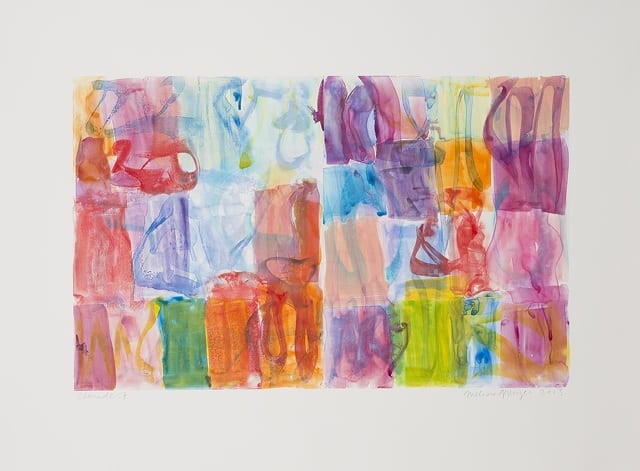
On Aug. 28, the Palmer opened “Instinctive Gestures: Recent Gifts from the Fishman-MacElderry Collection.” The exhibition spotlights 12 works from the gift of paintings, works on paper and prints by contemporary artists donated to the Palmer in 2016 by Marilyn Fishman and James MacElderry. Though distinctly individualistic, all of the works share a visual language indebted to the same painterly freedom and spontaneity of gestural abstraction.
Fishman and MacElderry began collecting prints and other works on paper soon after they married in 1977, and they have dedicated the last 40 years to acquiring works with “a real visceral impact.” “Instinctive Gestures” attests to the couple’s predilection for pieces that are colorful, seemingly improvisational and lyrically calligraphic in nature.
Several artists represented in the exhibition have forged their careers in the vicinity of Philadelphia, where major institutions like the Pennsylvania Academy of the Fine Arts and the University of the Arts have contributed to a rich environment for art students and professional artists alike.
“This exhibition celebrates the Fishman-MacElderrys’ remarkable generosity in sharing their collection with the public,” said curator Joyce Robinson. “It’s a wonderful testament to their decades-long support of emerging artists and their support of the Palmer.”
“Instinctive Gestures” runs through Sunday, Dec. 16.
More Arts & Entertainment
View all Arts & Entertainment
‘Rock the ’80s’ Benefit Concert Set to Return to State Theatre
2023's "Rock the '80s" concert will mark the annual fundraiser's first in-person event since 2019.

Your Vote Could Help Bring a Free Outdoor Concert Series to State College
You can vote by visiting levitt.org/vote or by texting 866-267-2023 and using the keyword "STATECOLLEGE".
Happy Valley Cornhole tourney returns
STATE COLLEGE — The second Happy Valley Cornhole Tournament will take place on Sunday, April 5 at the American Legion’s Post 245 location at 1950 Pine Hall Road in […]


