
The U.S. Census Bureau recently released initial data from the 2020 census count. As of April 1, 2020 the population of the United States of America was 331,449,281, a 7.4% increase from 2010.
On a local basis this is good news for those folks in Happy Valley who are adverse to growth and want our beautiful area to keep its small-town feel. Centre County’s population (if accurate) only increased 2.7% from 2010 to 2020, which is about one-third the growth rate of the country. Even if we look at only State College Borough and the four surrounding townships – where we would expect to see the most growth in the county – they still only grew at the same 2.7% rate over the last decade.
And this growth rate is only slightly higher than the 2.4% population growth Pennsylvania as a whole experienced. Considering that Pennsylvania was the eighth slowest-growing state in the country between 2010-2020, this is wonderful news for those who want small-town Happy Valley to remain small-town Happy Valley. We’re lagging well behind the rest of our nation.
But do we really want to be such slow growers? As a naturally competitive species, don’t we feel somewhat let down that our state is the eighth slowest-growing state in the country? Which, as it turns out, is not unusual. Between 2000 and 2010 Pennsylvania was the 10th slowest-growing state in the country. Between 1990 and 2000 it was the third slowest-growing and between 1980 and 1990 it was the sixth slowest-growing. As Pennsylvanians we’ve been slackers in population growth for decades.
Granted, because Pennsylvania is such a large population state to begin with – with just over 13 million people it is the fifth largest state in the country – growth as a percentage of the total is harder to come by. For example, the fastest growing state in the country between 2010 and 2020 as a percentage of population is Utah, with an 18.4% growth rate. But because their state population was only 2.8 million in 2010, that 18.4% growth rate means a population increase of just over 500,000 people. Whereas Pennsylvania, with its seemingly anemic 2.4% growth rate, still increased its population by over 300,000 people because it started with well over 12 million residents. So our seemingly anemic rate still translates into a good number of new residents.
However, real big-percentage population growth is still possible even if you are a large population state. Texas, which is the second largest state in the country by population with over 29 million people, was the third fastest-growing state by percentage at 15.9%, meaning they added almost 4 million new residents between 2010 and 2020. And Florida, which is the third largest state in the country by population with over 21.5 million people, was the eighth fastest-growing state by percentage at 14.6%, meaning they added 2.7 million new residents. Maybe we Pennsylvanians have some work to do if we want to grow a bit more than the bottom of the pile.
So let’s look at that No. 1 state for population growth – Utah – and see if we can identify any quality that would cause the 18.4% growth they’ve experienced over the last 10 years. Or the 23.8% growth and No. 3 ranking the 10 years before that. And the 29.6% growth and No. 4 ranking the decade before that. In short, Utah has been kicking proverbial butt in population growth for 30 years. Why?
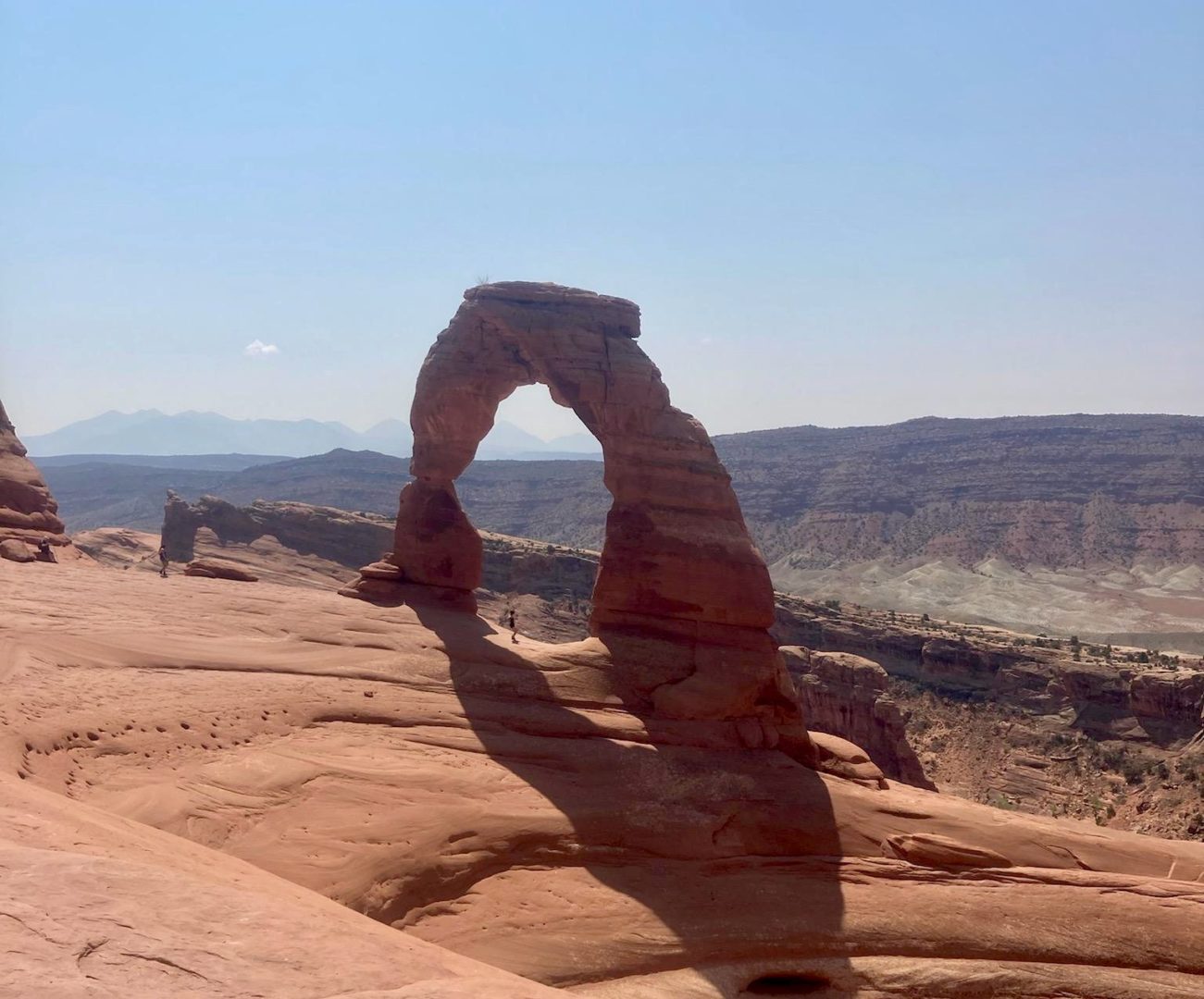
That’s a good question because as anyone who has spent time in Utah can tell you, large portions of the state are relatively uninhabitable. It’s either rocks or desert. According to Deseret News, one-third of Utah is true desert and one-quarter is mountainous regions. The rest is almost all steppelands that only get eight to 14 inches of precipitation annually, grow grasses, sagebrush and woody plants, and are good mostly to feed livestock — not build desirable neighborhoods.
Even the Utah Office of Tourism admits the state “primarily has a dry, semi-arid and desert climate” and “it is one of the driest states in the country.” Yes, there are several very nice ski areas in the Wasatch Mountains east of Salt Lake City, but on the whole the geography and climate of Utah don’t scream “utopian lush-green living.”
Plus, economically the state has a 4.95% income tax rate which places it in the middle-of-the-pack among all states for marginal individual income tax rates. This is likely not the driving force for population growth that it is in states such as Texas and Florida that have no individual income taxes. Add to that Utah’s sales tax rates, which are between 6.1% and 8.75% and vary among almost every city and town in the state. This places Utah 21st out of the 50 states in rankings of the highest combined sales tax rates – so again, no outstanding savings that would spur great population growth there.
So what is it? What’s driving this continued decades-long increase in population in a state seemingly unsuited for habitation?
Well, my wife and daughter just spent a week driving all over Utah. From the Great Salt Lake and Park City in the north, to Zion National Park in the southwest, through Bluff and Blanding in the southeast, to Moab and Arches National Park in the east. Up, down and across I-80, I-70 and I-15 and numerous two-lane roads throughout the state. And here’s what they will tell you: Utahns are just plain friendly.
Every Utah resident they encountered exuded a sincere niceness. A “we’re all in this together” vibe that resulted in so many positive interactions that both my wife and daughter noticed it and spoke glowingly about it. Which is the type of good PR a state can’t buy – it actually has to exist. It gave them both a feeling that Utah was a place where you could live and raise a family and at least check “no nasty people” off the list of parental concerns.
Which might be why Utah has by far the lowest median age in the United States at 31.2 years. The next closest state is Alaska at 35 years, and the country as a whole is 38.5 years. For comparison, Pennsylvania is the ninth oldest state with a median age of 40.8 years, almost a decade older than Utah. Perhaps Utah is such a family-friendly state that it drives population growth among the young.
Maybe we Pennsylvanians could work on being just a bit more friendly so that we’re not always bringing up the rear on population growth. Maybe just a little more growth would be a good thing. Maybe it would keep us younger and fresher. Maybe provide a little better family atmosphere. Not to get anywhere near the Florida and Texas-type growth scenarios, but just make a small improvement in our state and also Happy Valley.
Oh, and maybe we could get rid of those state and local income taxes, too.
More Columns
View all Columns
The 2 Kinds of Penn State Football Adversity: In-Game and Post-Game
Penn State coach Matt Campbell talks a lot about handling Adversity. A lot. It’s going to come, he says. It’s how you handle it. Adversity came to Beaver Stadium on […]

Penn State Lost to Wisconsin: How Bad Was it?
How bad was it? Ahead 17-0 just 18 minutes into the game and lost bad. Ahead 20-10 until Wisconsin scored with just 211 seconds left in the game and lost […]

Penn State Football: Tonight, the Haters Were Right
On Dec. 11, 2023, Twitter user @drewjanda put out a since-deleted post that now lives in sports meme infamy. It read as follows: “The haters said I couldn’t do it. […]


