For the majority of the 21st century, the south has ruled major college football.
With the exception of Ohio State in ‘02 and ‘14, up until 2023, the northernmost school to win a national championship this century was Oklahoma in 2000. As a geographical comparison for those of us in the east, Norman, Oklahoma – the home of the University of Oklahoma – is the latitudinal equivalent of Charlotte, North Carolina. It’s in the south. And now in the SEC.
Speaking of the SEC, of the 25 national championship years between 2000 and 2024, SEC teams won or shared 14 titles during that time, including a run of seven in a row from 2006 to 2012. And if we include Texas and Oklahoma, teams that are now part of the SEC, that goes up to 16 total titles.
The other southern schools to share in this winning-fest were Clemson (2), USC (2), Florida State, and Miami.
As I said, the south rules the 21st century when it comes to major college football.
Except… in 2023, something odd happened. The south didn’t win. In fact, neither of the two teams in the 2023 championship game – Michigan and Washington – were southern teams. And, if Washington had won, they would have been the northernmost team to win a major college football national championship ever. In the entire history of the game since 1869.
Then it happened again in 2024. The south didn’t win because both teams in the championship game were once again northern teams.
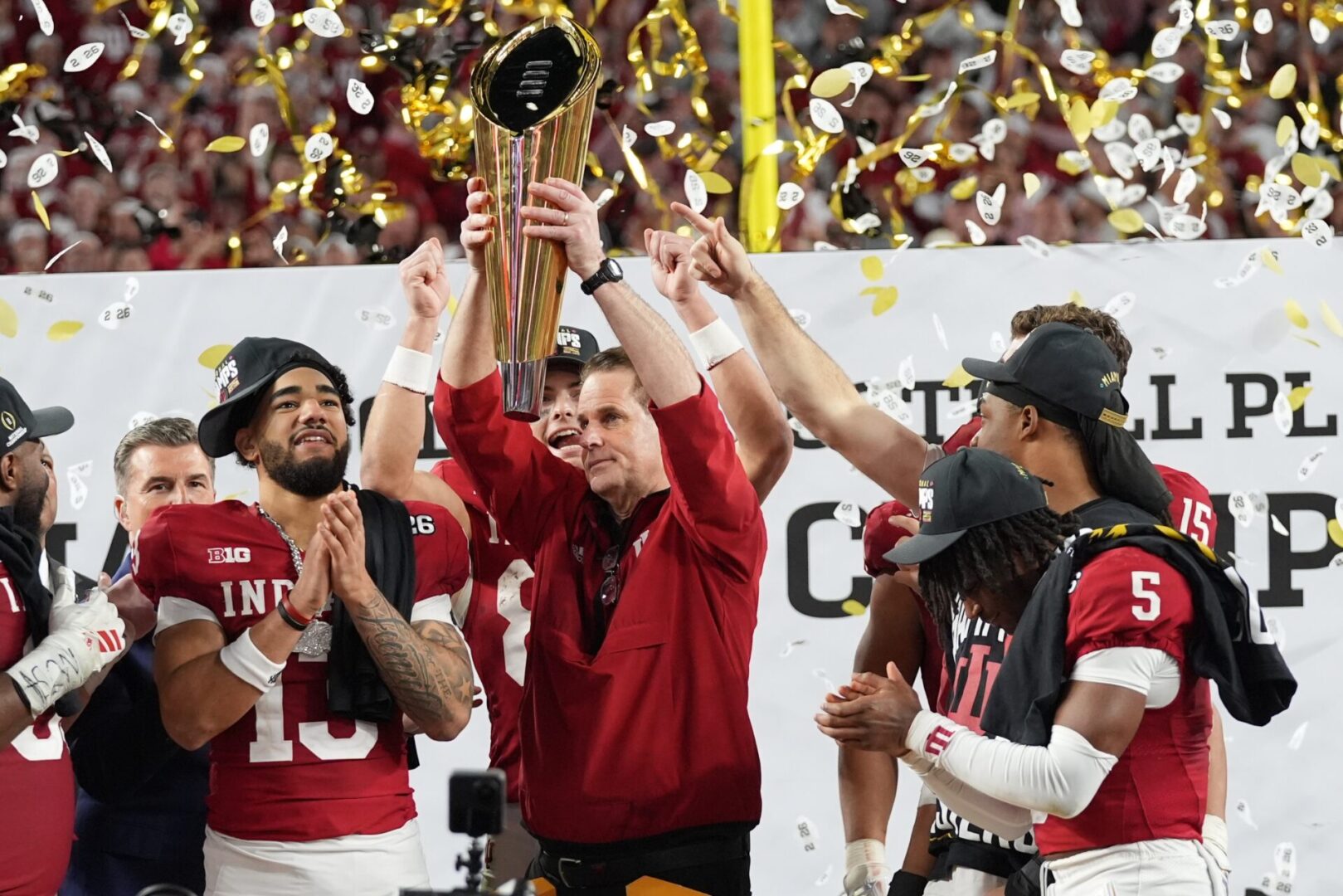
And now it has happened a third time in a row. This time it was, shock of shocks, Indiana who was crowned champion last night. A northern team that won its first-ever national title. And was, until earlier this year, the losingest team in major college history.
What gives?!
After winning only two titles in the first 23 years of this century, the north suddenly has a three-year winning streak going.
But even more surprising is that the SEC has not appeared in a championship game for three years in a row. The SEC, the conference with the slogan, “It Just Means More.” They even have a website ItJustMeansMore.com. But, maybe these days it no longer means more. At least as far as college football national championships are concerned. The question though is, why?
Well, there’s probably no single right answer to that question, but one component that could be playing a big part is, you guessed it, money.
In the last few years NIL (Name, Image & Likeness) payments to student-athletes have started, and the amounts being paid have exploded. There are rumors of some guys getting $1 million or more a year.
In addition, this past season was the first season where, due to the House settlement, schools could pay players directly. And, again, the rumors are that some players were getting a million dollars or more.
Now, we may eventually find out how much the schools are paying the student-athletes on a per-team basis, because those numbers are likely to be part of the annual financial reports the athletic department’s submit to the NCAA (Penn State’s are here). But how much each individual student-athlete gets paid may never be made public.
And NIL money is not public at all. All we have are rumors, hearsay and speculation. No one knows, and likely ever will know, how much NIL money is changing hands.
The point is that some student-athletes are making out very well playing college football. And it is all above-board. It’s approved. No one is being suspended or sanctioned for it, no one is receiving any penalties, and no one is giving up wins or trophies. Tattoogate is a thing of the distant past.
All of which means that teams with more money may have a better chance of doing well. The proverbial “you can buy your team a championship.”
But how do we know who has more money?
The annual NCAA financial reports I mentioned above will tell only a part of that picture. They may begin to include the school’s payments to individual student-athletes, and they’ll certainly tell us how much the schools are making from ticket sales, TV money, donations, etc. But, they won’t include NIL money.
So what are we to do?
Well, I would suggest we look at the size of these universities’ endowments. Because, a larger endowment usually means that a school has either more people giving to it, or people who are giving a lot more money. And if these people are doing it for the university as a whole, wouldn’t it make sense that they might also do it for the football team and NIL money?
And this is where the proverbial rubber hits the road.
In the chart below are the endowment sizes – in millions of dollars – of the schools in the Big Ten and SEC as of fiscal year 2024. This information comes from the National Association of College and University Business Officers (with the exception of Washington which is taken from their website), and although there is some nuance here, for general purposes this is interesting information.

Figure 1: Amounts in $millions
The total amount of the endowments should obviously favor the Big Ten because it has 18 schools to the SEC’s 16 schools. But the Big Ten’s average endowment size is 30% larger than the SEC’s. And the endowments of the bottom 13 schools in the SEC all fall below Nebraska – the fourth lowest school in the Big Ten.
However, in both conferences there are a few at the top that are causing the conference average to be higher than many of the schools in the conference, so I’ve included the median endowment size as well – the number where half the schools in each conference are higher and half are lower. And the Big Ten’s median endowment size is more than double the SEC’s.
So, is it possible that in this new age of above-the-table payments to student-athletes, that schools which have alumni and donor bases who have contributed more to their schools will have an advantage over schools that haven’t had, cultivated, or raised larger amounts for their school’s endowments?
At least these first few years of the new age of college football seem to suggest that might be so. I mean, Indiana’s endowment is over $3.8 billion. Miami’s? Not quite $1.6 billion. Maybe the south’s time as kings of college football has passed?