
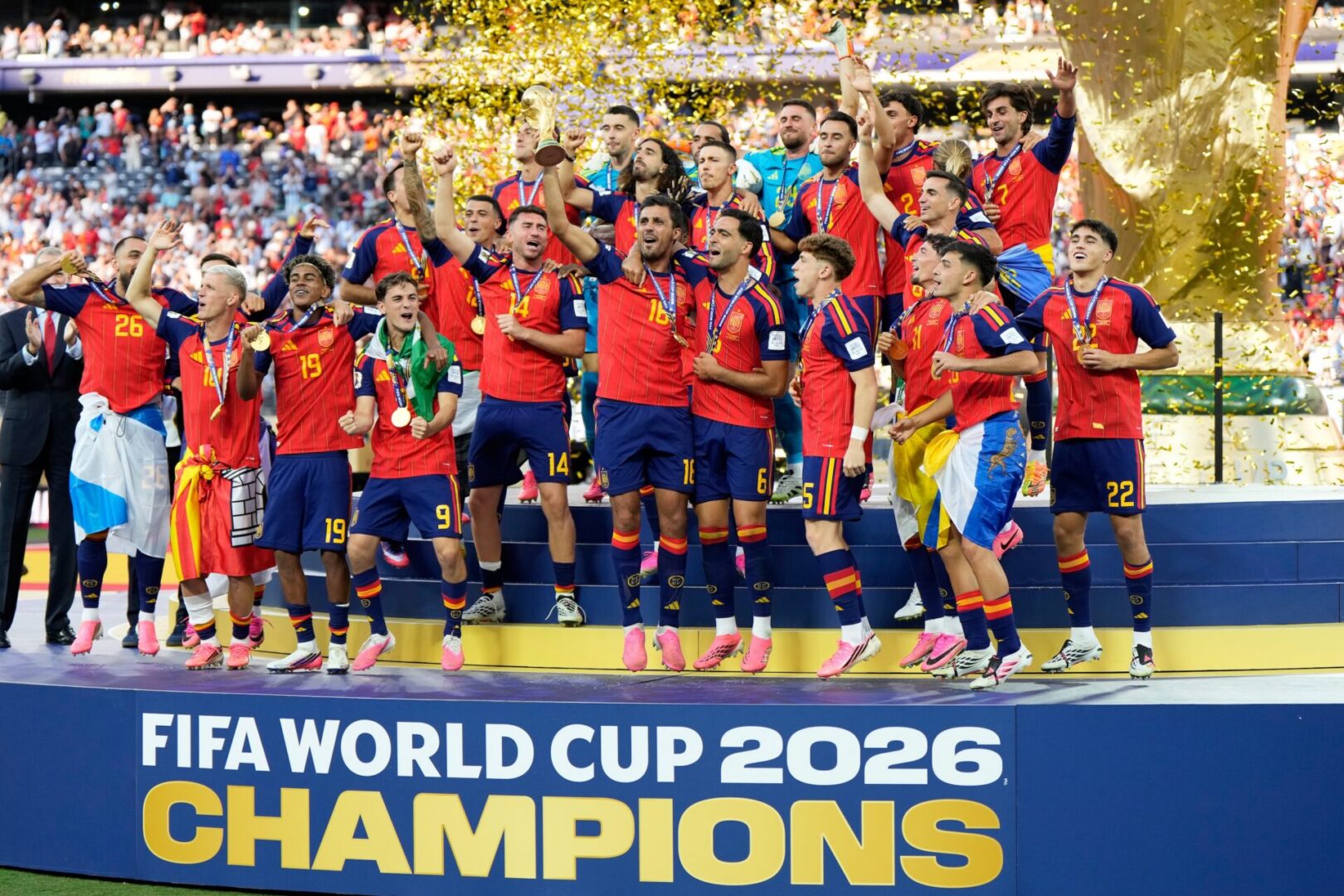
According to media reports, the FIFA World Cup final is the most-watched sporting event in the world, and although as I write this the viewership numbers have not been released for this past Sunday’s final match between Spain and Argentina, the belief is more than 1.5 billion people on the planet likely watched.
Now, many of the “offensively-minded” folks here in America probably preferred the third-place match on Saturday between England and France that ended in a 6-4 score, as opposed to the 1-0 final that took an extra 30 minutes on top of the full 90 minutes of play on Sunday. But that’s how soccer goes.
And before you ask the question on every American’s mind – how is it that a country of 342 million people can’t get past the round of 16 in the World Cup? – let me remind you that according to the U.S. Census Bureau the five most populated countries in the world are:
1. India 1,429,700,205
2. China 1,405,918,803
3. U.S.A. 342,620,143
4. Indonesia 285,562,809
5. Pakistan 261,714,024
Of those five, the United States is the only country whose men’s national team even made the World Cup. So, it seems that having a lot of people is not a great determining factor in having a quality men’s national soccer team. In fact, of the five smallest countries on the planet with at least 10 million people – Cuba, Sweden, Czech Republic, Azerbaijan and Portugal – three qualified for this World Cup.
So, even though we’ve got work to do in the worldwide soccer arena, as far as large-population countries go, comparatively we’re doing pretty good.
And this World Cup provided the usual assortment of good moments: Norway’s striker Erling Haaland embracing American western culture, Canada getting its first ever knockout stage win and Scotland getting to play.
In addition, there is always some intrigue at a World Cup and this version had several. Maybe most prominently when the United States’ striker Folarin Balogun was issued a red card during their round of 32 win over Bosnia and Herzegovina. Which the FIFA Disciplinary Committee then suspended so that Balogun was available to play in the round of 16 match against Belgium. Everyone had an opinion on that.
But of all the intriguing news in the last month-plus that has come out of this World Cup, the most interesting to me was a story in The Athletic last week that predicted the World Cup final in New Jersey would be the most expensive sporting event to attend in history.
According to their research, when FIFA first released tickets to the final, upper-deck seats were over $4,000 each, and the lower bowl seats cost more than $6,500. Then FIFA raised prices as the schedule of matches was announced so that the seats closest to the field were almost $11,000 each.
As of late last week, one online ticket resale platform reported that the average purchase price of a ticket to the World Cup final on their website was $12,751, more than $2,000 higher than their previous record set by the 2024 Super Bowl. Another online ticket tracker stated that the cheapest available ticket was around $7,600. For one seat.
By way of comparison, my ticket to the January 1, 1983 Sugar Bowl between Penn State and Georgia cost $20. In the 21st row in the lower bowl.
So, if two people – because who is going to a World Cup final by themselves – decided last week to attend the match between Spain and Argentina, it would have cost them over $15,000. And that was just to get into the stadium.
Which is simply another in the long line of indications that sports and money have become massively intertwined not only in our American culture, but all around the world, and that being part of the proverbial 1% sometimes isn’t even enough to get in the door anymore.
If we consider that there really were 1.5 billion people watching this match, but only 81,000 got to be there to see it live and in-person, that’s a mere 0.0054% of those worldwide with an interest.
Then consider that, as of December 2025, the annual household income per capita for Argentina is only $5,727, and Spain’s is $17,616, and it’s clear that only the top of the top income earners from those countries could afford to get in.
Heck, even here in this country, with an annual household income per capita above $43,000, a single ticket would set you back more than 15% of your yearly income. Which I guess means I should be thankful that my four Penn State season football tickets, parking and donation still cost less than one World Cup final ticket.
Luckily for me and the other 1.5 billion who probably couldn’t afford to get in, it was all on TV!
More Columns
View all Columns
Hook: The End of Summer and the Start of a New Era
Labor Day has come and gone, meaning summer is now unofficially over. But that unofficial line of demarcation of summer – Memorial Day to Labor Day – has lost the […]
Penn State vs. Temple: Lots Has Happened Since That Day in 2015
If Penn State vs. Temple is any sort of college football measuring stick of time, place and circumstance, let’s look at the trajectory of both schools since the Nittany Lions […]

Top 10 Ways Penn State’s Rocco Becht DOM-inated Against Temple
PHILADELPHIA — Penn State quarterback Rocco Becht is the glue. The eraser. The motivator. The fighter. The cheerleader. The playmaker. The spark. The Nittany Lions’ slow-starting 27-9 victory over Temple here […]


